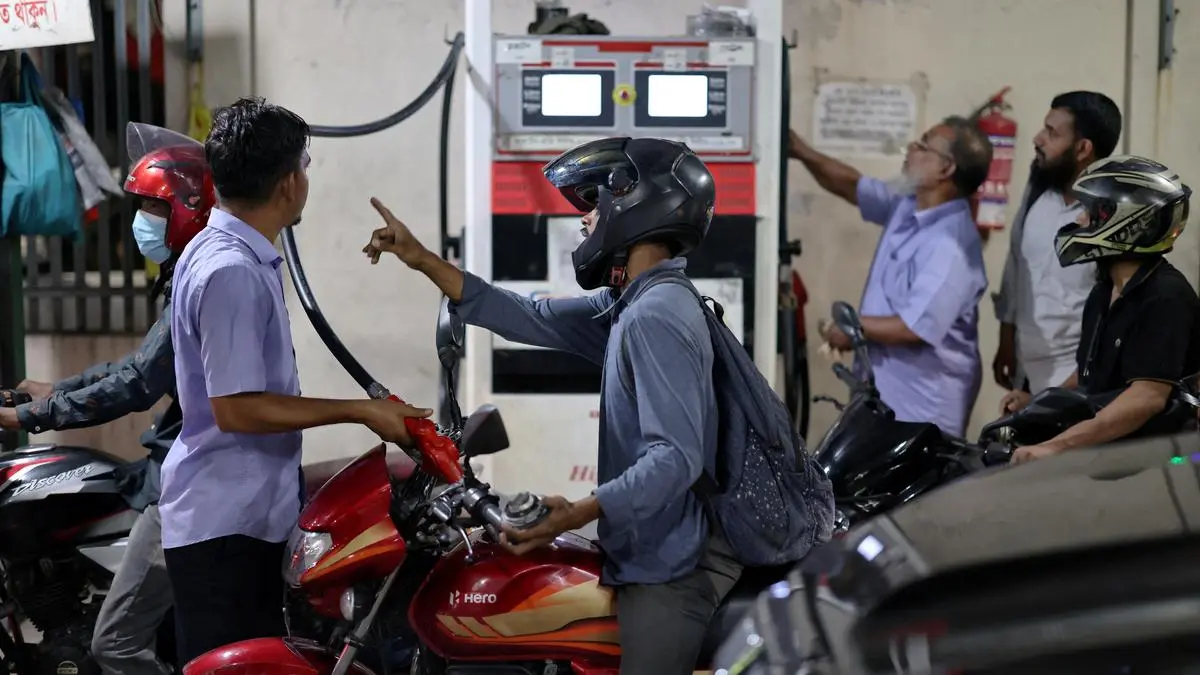
Indian Oil Corporation (IOC) moved Saturday to contain a growing narrative of fuel shortages in India. The state-owned retailer issued a statement denying any nationwide shortage of petrol and diesel, describing isolated outages as "highly localised and temporary". The denial itself is a data point: the company also disclosed that petrol sales rose 14% year-on-year and diesel sales jumped 18% during the first 22 days of May. Those growth rates are well above the typical seasonal pattern, signalling a demand surge that is testing the country's distribution network.
For traders and supply-chain analysts, the statement reveals three distinct pressures: a harvest-driven spike in diesel consumption, a shift of customers from private retailers to state-owned pumps, and migration of institutional buyers to public-sector outlets. Each driver points to a different part of the fuel value chain that is under stress.
Seasonal Harvest Demand and the 18% Diesel Spike
May is peak rabi harvest season in northern and central India. Combine harvesters, irrigation pumps, and farm transport all run on diesel. A normal seasonal increase is built into annual forecasts. IOC's own data shows 18% year-on-year growth in diesel sales for May 1-22. The company described it as "sustained and exceptionally high".
What That Means for Inventory
IOC operates more than 42,000 fuel stations. It said only a "very small number" experienced supply disruptions. The majority of outlets maintained normal stocks. The implication is that the demand spike is concentrated in agricultural regions where the harvest is most intense. Resupply trucks are running harder to keep up.
The Diesel Crack Spread Connection
Strong domestic demand for diesel supports the Asian gasoil market. If India continues to consume at this pace through the monsoon planting season, the country may need to import additional gasoil cargoes. That would put upward pressure on the diesel crack spread in Singapore. Refiners with export capacity benefit; OMCs that must buy replacement cargoes face higher procurement costs.
Customer Migration from Private Pumps: A Market Share Shift
IOC cited "temporary shift of customers from certain private retail outlets, owing to relatively higher retail prices at some private pumps." Private retailers – including Reliance BP Mobility, Nayara Energy (backed by Rosneft), and Shell India – have kept retail prices higher than state-owned OMCs. The gap exists because OMCs, under government price guidance, have absorbed part of the surge in international crude and product costs rather than passing them through.
The Arithmetic of the Gap
If a private pump sells diesel at ₹90 per litre and an OMC pump sells at ₹86, the price-sensitive driver switches. That 4-rupee difference matters more when fuel is a large household expense. The shift concentrates volume on the OMC network.
Institutional Buyers Join the Migration
Bulk diesel consumers – fleet operators, construction companies, industrial users – have also shifted to public-sector pumps. IOC said "bulk and institutional supplies are priced significantly higher in line with prevailing international market prices." Even at market-linked rates, OMC bulk prices are often lower than private retailer quotes for similar volumes. The reliability of supply from state-owned firms adds to the pull.
Sector Read-Through: Who Gains, Who Loses
IOC's statement has direct implications for three groups in the fuel value chain.
Private Fuel Retailers Face Volume Erosion
The immediate read-through is negative for private pump operators. Volume is shifting away from them. If the price gap persists – and it likely will as long as OMCs hold retail prices below parity – private retailers will see lower throughput per station. Margins will compress.
Risk to watch: Private retailers may cut retail prices to win back customers. That would compress their margins further, especially if crude stays elevated. The market share battle becomes a margin battle.
Bulk Buyers Concentrate Counterparty Risk
Large consumers who rely on bulk diesel supply contracts are moving to OMCs. That is rational pricing behaviour. It concentrates counterparty risk on state-owned firms. If OMC logistics stumble under the extra load, bulk buyers could face delivery delays.
Practical rule: Track the spread between the OMC retail diesel price and the international gasoil benchmark. A widening spread signals that OMCs are absorbing more pain. A narrowing spread signals that prices are being freed up, which could reduce the customer migration pressure.
OMCs Gain Volume but at Thin Margins
For the three public-sector OMCs – IOC, Bharat Petroleum (BPCL), and Hindustan Petroleum (HPCL) – the volume gain from private pump migration is a double-edged sword. More volume means higher revenue. Lower profit per litre if retail prices do not cover the cost of imported crude or product. The government faces a choice: allow retail prices to rise, or let the OMCs absorb the under-recovery and pay for it through future dividends.
The table below compares the three OMCs by network size and the potential impact.
For traders: watch the IOC stock for volume-related re-ratings. Also watch the diesel crack spread in Singapore. If domestic demand continues to outpace supply, India will import more gasoil, supporting the crack. That helps refiners but adds cost for OMCs that have to buy replacement cargoes.
Stress-Testing the IOC Narrative
IOC's claim that shortages are "highly localised and temporary" can be evaluated using three observable data points for confirmation and three for weakness.
Confirmation signals:
- No new shortage reports from major cities over the next two weeks. If disruptions remain limited to harvest areas, the statement holds.
- OMC retail prices unchanged or adjusted downward. That would confirm the government is content to keep the price cap in place, protecting consumers but squeezing margins.
- Private retailers hold market share without aggressive price cuts. If they do not try to claw back volume, the shift to OMCs was indeed temporary.
Weakness signals:
- New outage reports from multiple states. That would indicate a systemic logistics bottleneck or insufficient inventory.
- OMC bulk diesel prices jump again, accelerating the migration from private pumps. That concentrates demand further, risking longer supply delays.
- Crude oil prices rally above $80/barrel, worsening the under-recovery for OMCs. The government may then authorise retail price hikes, which could reverse the customer shift.
The Next Catalyst: Harvest End and Private Pump Response
The immediate catalyst is the May-June harvest season. Seasonal diesel demand typically eases by mid-June. If that happens, localised pressure should dissipate. If demand stays elevated – and early monsoon planting draws diesel for pumps and tractors – the risk of more widespread shortages grows.
Private retailers also have a decision to make. If they lower retail prices to win back customers, the volume shift to OMCs will reverse. That would relieve pressure on the OMC network. If they hold prices high, the shift persists and OMC margins remain under pressure.
IOC's statement is a tactical move to reassure the public and the market. The underlying arithmetic is unchanged: demand is growing at a double-digit clip, international product prices are elevated, and OMCs are carrying the burden of price stability. Denying a shortage does not remove the stress. It simply provides a baseline for measuring how localised the problem really is.
For a broader view of the retail price trajectory, see India Fuel Prices Rise Third Time in May and the analysis of CNG Price Third Hike in 10 Days. The same pricing dynamics that are squeezing transport fuel margins are now reshaping where and how fuel is sold in India.