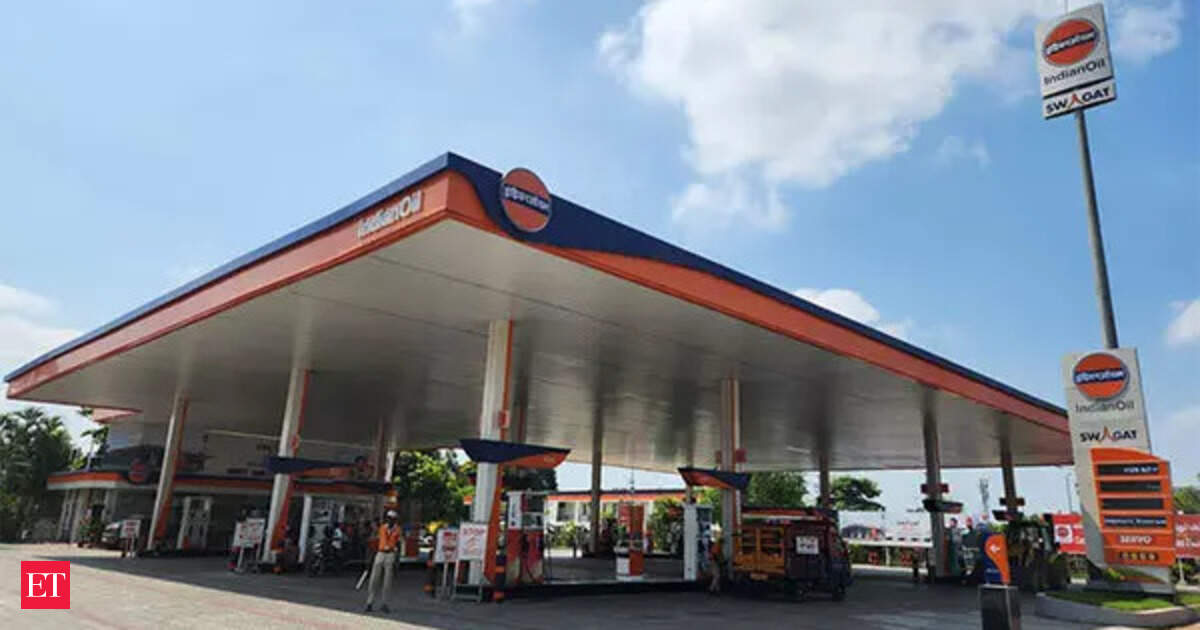
IndianOil, BPCL, and HPCL issued a joint statement confirming adequate stocks of petrol, diesel, and LPG across Assam. The three state-owned oil marketing companies (OMCs) said the entire supply chain is operating smoothly, with domestic LPG prioritised. They urged consumers to avoid panic buying. For traders tracking Indian energy stocks, the coordinated assurance removes one near-term supply-disruption risk.
Why Coordinated Statements Matter for OMC Margins
The simple read is that Assam will not face a fuel shortage. The better read is that a joint message from the three OMCs signals deliberate government monitoring of retail inventory. IndianOil (IOC.NS), BPCL (BPCL.NS), and HPCL (HINDPETRO.NS) control about 90% of India's fuel retail market. When all three align on regional messaging, it usually means they have coordinated refinery runs and inventory buffers. The call to avoid panic buying suggests the government is anticipating hoarding behaviour, often linked to seasonal flooding in the northeast or political events such as state elections. For OMC margins, stable regional supply avoids the cost of spot procurement and keeps pump-price divergence from national benchmarks minimal. The statement also reduces odds of a surprise spike in Indian gasoil or gasoline imports during the quarter.
The Supply Chain Infrastructure Behind the Assurance
The assurance points to adequate crude throughput at the Numaligarh and Bongaigaon refineries in Assam. These refineries feed the retail network that the three OMCs run in the state. The mention of a smooth supply chain implies that upstream crude flows from the Assam oilfields remain normal and that logistics from depots to retail outlets are not facing bottlenecks. For the broader commodity complex, the absence of disruption in Assam supports steady refinery utilisation in India’s northeast, which adds to the country's overall processing demand. Traders tracking global crude markets can look for continued steady demand from Indian refineries. A deeper look at global crude flows is available in the crude oil profile.
What Could Test the Current Buffer
The statement specifically prioritises domestic LPG over commercial refills. This implies that the supply chain is adequate for household demand only. The next test arrives with the winter heating season, when LPG demand typically rises 10–15% from summer levels. Any deviation from the normal fill rate at HPCL's LPG bottling plants or IndianOil's import terminals would strain the buffer. The government’s weekly stock disclosures for petrol and diesel will provide the first hard evidence of whether the assurance holds. For traders, the absence of such data for now means the Assam supply chain remains a non-event. That is itself a positive signal for OMC margins and for downstream logistics providers in the northeast.
Next Catalyst: Pre-Election Demand and Winter Pressure
State elections in Assam, due within the next 12 months, add a political layer. The government has historically intervened to prevent hoarding before polls. The joint statement can be seen as a pre-emptive move to keep fuel prices stable and availability normal. The next monthly petroleum planning data from the Ministry of Petroleum and Natural Gas will reveal whether the inventory picture matches the public messaging. Until then, the joint assurance gives energy traders one less worry in a region that occasionally creates supply shocks. The commodities analysis section tracks similar supply-chain read-throughs across Indian energy markets.