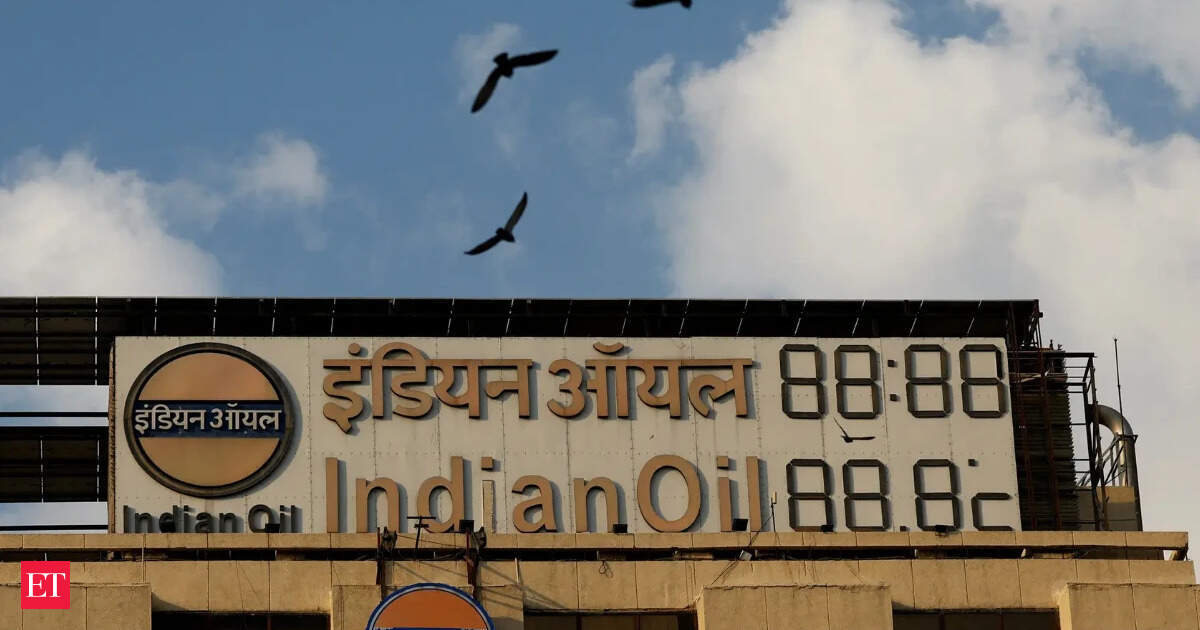
Indian Oil Corporation (IOC.NS) disclosed that its refineries are operating above 100% of nameplate capacity, a move that directly addresses supply security as retail petrol and diesel prices recorded a small increase. The dual signal – maximum throughput and a calibrated price adjustment – offers a clear readthrough for India’s state-run fuel retailing sector. For more on the company’s supply strategy, see IOC.NS Secures India’s Energy Future Through Supply Diversification.
Refinery Run-Rates Above 100% Signal Demand Strength
Running a refinery complex above its rated capacity is not a routine operational tweak. It indicates that Indian Oil is stretching its crude processing units to meet domestic demand without allowing inventory drawdowns to become disruptive. The company’s chairman stated that this ensures no fuel shortage at retail outlets, a commitment that matters when global crude markets remain sensitive to geopolitical supply risks.
For the broader oil marketing company (OMC) universe, the implication is that the largest refiner is acting as a swing supplier. When Indian Oil runs hot, it reduces the probability of localized pump dry-outs that could force other state-run retailers into emergency spot purchases. The readthrough is that supply-side discipline is intact, and the system is prioritizing volume over margin preservation in the near term.
Small Fuel Price Hike and the OMC Margin Equation
The small increase in petrol and diesel prices, while modest, confirms that global crude cost pressures are being passed through incrementally. Indian OMCs typically operate with a lagged pass-through mechanism, absorbing some input cost swings to smooth retail inflation. The fact that prices are edging higher, even as refineries run at full tilt, suggests that the government is allowing a gradual normalization of marketing margins rather than a sharp one-off adjustment.
This dynamic matters for the sector because it signals that the pricing environment is not frozen. A complete price freeze would eventually compress gross refining margins (GRMs) and marketing margins across the board. The small upward revision, combined with the capacity assurance, implies that the government is balancing inflation control with the financial health of state-run fuel retailers. For investors tracking the OMC basket, the takeaway is that the margin recovery path remains open, albeit at a measured pace.
Hydrogen Bus Deployment as a Long-Dated Diversification
Separately, Indian Oil provided two hydrogen-powered buses to Delhi Metro, a project that delivers zero tailpipe emissions. While the immediate financial impact is negligible, the move underscores the company’s push into alternative energy. State-run OMCs are under increasing policy pressure to invest in green hydrogen, and Indian Oil’s early deployment serves as a proof-of-concept for fuel cell technology in public transport.
The sector readthrough here is longer-dated. Hydrogen investments will require material capex over the next decade. The return profile remains uncertain. For a company that processes millions of barrels of crude daily, establishing a foothold in hydrogen distribution and refueling infrastructure is a logical hedge against eventual fossil fuel demand erosion. The Delhi Metro trial provides a small but tangible signal that the energy transition is moving from planning to pilot phase within India’s state-run oil sector. The broader commodities backdrop remains relevant; see commodities analysis.
The next concrete marker for the sector will be the fortnightly fuel price revision cycle. If global crude prices remain elevated and the government permits further small upward adjustments, it would confirm that the pricing mechanism is functioning normally. A sudden pause in revisions would signal renewed inflation anxiety and could weigh on OMC marketing margins. For now, Indian Oil’s full-capacity operations and the incremental price move suggest that the system is managing the balance between supply security and cost pass-through without acute stress.