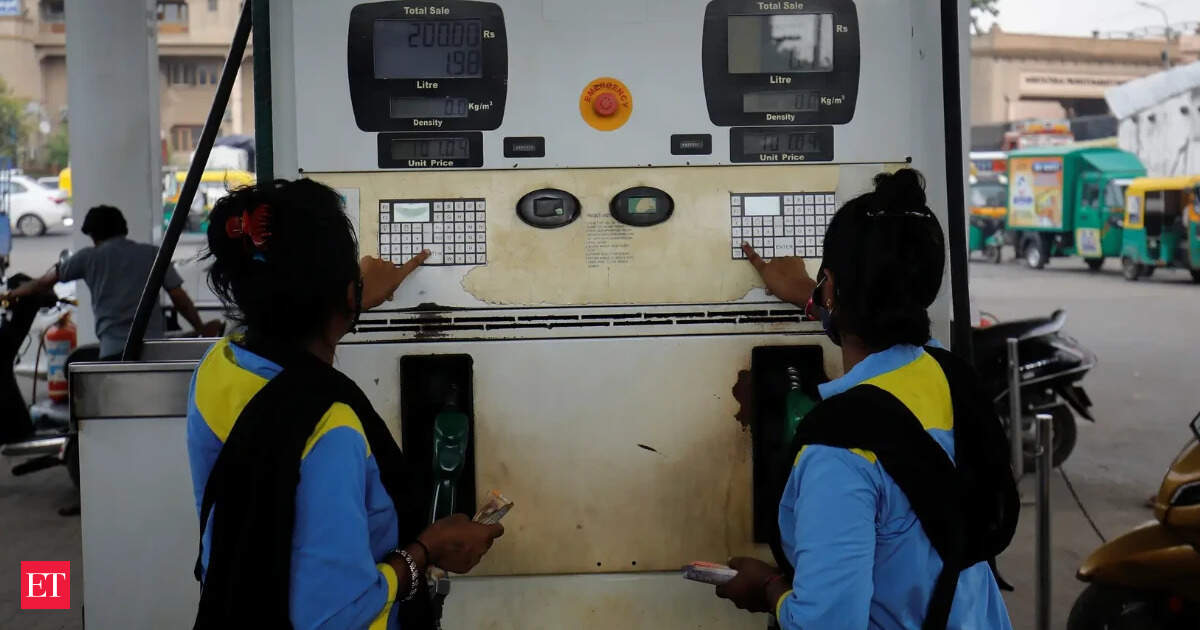
India’s state-run oil marketing companies raised petrol and diesel prices by Rs3 per litre on Friday, the first increase in over four years. The move directly addresses mounting under-recoveries as global crude oil prices spike. For traders, the reset is not just a pump-price story; it rewrites the margin calculus for Indian Oil Corporation, Bharat Petroleum, and Hindustan Petroleum, and sends a cost signal through logistics and industrial supply chains.
The Rs3/L Reset and OMC Margin Recovery
The three OMCs had held retail prices steady since April 2022, absorbing the gap between rising international crude costs and fixed domestic selling prices. That gap widened sharply after Brent crude surged, driven by the West Asia conflict and persistent Red Sea shipping disruptions. The Rs3 hike is a partial pass-through. The simple read is that OMC marketing margins improve immediately. The better read is that the hike is modest relative to the crude surge, and the real margin recovery depends on whether fortnightly price revisions now become a regular feature.
Before the hike, diesel under-recoveries were running at levels that threatened to erode quarterly profits (see India Fuel Hike: Rs3/L Petrol, Diesel Bump; Under-Recovery Near Rs97/L). A Rs3 adjustment narrows the loss; it does not eliminate it. If Brent stays elevated, the OMCs will need further increases to restore normative marketing margins. The stocks could benefit from improved sentiment, yet sustained outperformance requires either a softening crude curve or a clear policy signal that the government will allow full pass-through.
Crude Oil Pressure and the West Asia Premium
The trigger for the hike is the persistent risk premium in crude. Brent crude has climbed sharply since the start of the year, with the Indian crude basket tracking a similar trajectory (see crude oil profile). The West Asia conflict has not directly removed supply. The threat to Strait of Hormuz transit and the rerouting of tankers away from the Red Sea have raised landed costs for Indian refiners. Freight rates for Suezmax and Aframax vessels have jumped, and insurance premiums have climbed. These costs flow straight into the OMCs’ procurement bill.
India imports over 85% of its crude, so the rupee cost of the barrel is the dominant variable. The recent rupee depreciation adds another layer of pressure. The OMCs cannot hedge away the entire exposure, and the lagged pass-through means they carry the inventory loss until retail prices adjust. The Rs3 hike is a lagged response, not a forward-looking one. The next fortnightly review will show whether the companies are now committed to a dynamic pricing regime or whether this was a one-off correction.
Sector Readthrough: OMCs, Logistics, and Paints
The fuel price hike sends a direct cost signal to transport-intensive sectors and a raw-material signal to crude-derivative users.
- OMCs: Indian Oil Corporation, Bharat Petroleum, and Hindustan Petroleum are the immediate beneficiaries. The hike improves blended marketing margins. The refining side still faces volatile cracks. The stocks have underperformed the Nifty 50 this year; a sustained margin recovery could close that gap. The risk is that crude spikes further and the government resists another hike ahead of elections.
- Logistics: Higher diesel prices squeeze fleet operators. Listed logistics firms such as VRL Logistics, TCI Express, and Delhivery typically have fuel surcharge clauses that pass through a portion of the increase. The lag can compress margins for a quarter. The Red Sea disruption has already forced some freight forwarders to shift to air cargo, as seen in the recent Redington move (Redington Turns to Air Freight as Gulf Conflict Disrupts Sea Lanes). The combined fuel and route disruption is a margin headwind for the sector.
- Paints: Crude derivatives like titanium dioxide and solvents are key inputs for Asian Paints and Berger Paints. The fuel price hike itself is a minor direct cost. The signal of sustained elevated crude is negative for raw-material costs. Paint companies have taken price increases in the past year; further hikes would be needed if Brent remains high, testing volume growth.
The next decision point is the fortnightly price revision due in mid-March. If the OMCs hold or raise prices again, it confirms a shift to a pass-through regime and strengthens the margin recovery thesis. A retreat in Brent on ceasefire talks would make the Rs3 hike a one-off and cap upside. Traders should watch the Indian crude basket spread and any change in the government’s stance on fuel pricing as the election cycle approaches.