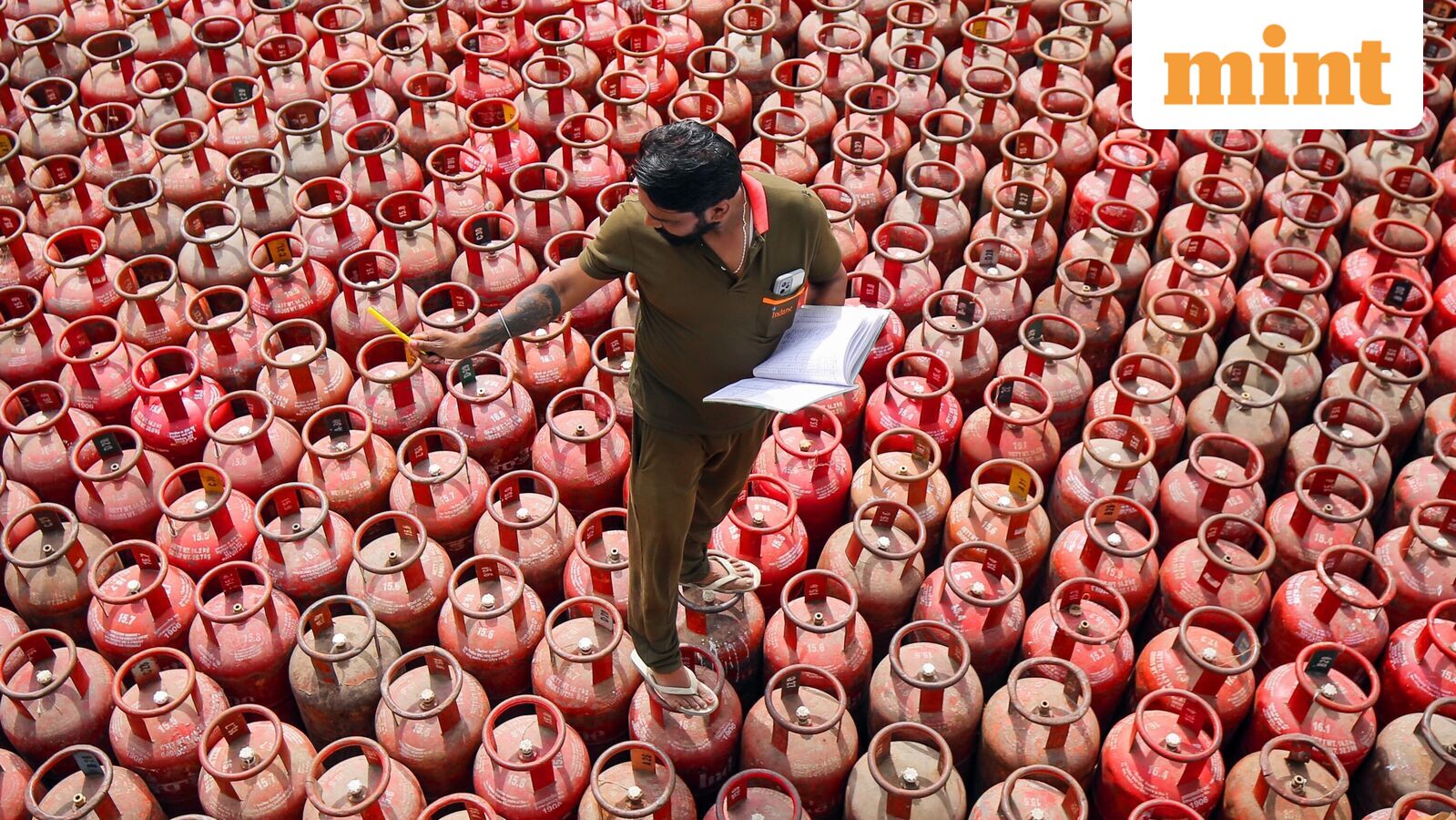
Domestic 14.2-kg LPG cylinder prices in Mumbai stayed unchanged at ₹912.50 on 13 May. The last revision – a ₹60 hike – came on 7 March, and no further moves have followed. Commercial LPG, sold in 19-kg cylinders, remained at ₹3,071.50 after an earlier ₹993 increase. The market-priced 5-kg FTL cylinder held near ₹810.50, up sharply from its previous ₹549 price point. (Track the crude price backdrop that drives LPG costs on our crude oil profile.)
The simple read says India’s cooking-fuel consumers are shielded from the global energy shock. The better read is that the insulation is being financed entirely by the balance sheets of Indian Oil Corporation (IOC), Bharat Petroleum Corporation (BPCL) and Hindustan Petroleum Corporation (HPCL). These three state-run oil marketing companies (OMCs) are absorbing under-recoveries estimated at ₹1,600–1,700 crore every day. Over the ten weeks since the West Asia conflict intensified, cumulative under-recoveries have already crossed ₹1 lakh crore, according to a PTI report cited by Mint.
LPG Price Unchanged, Yet OMC Under-Recovery Tops ₹1 Lakh Crore
The rate card: households vs commercial users
| Cylinder Type | Size | Price (₹) | Last Change |
|---|
| Domestic | 14.2 kg | 912.50 | +₹60 on 7 March |
| Commercial | 19 kg | 3,071.50 | +₹993 earlier |
| FTL | 5 kg | 810.50 | Revised from ₹549 |
None of these rates budged on 13 May. The price stability, however, masks an unprecedented balance-sheet hemorrhage at the listed OMCs.
Under-recovery mechanics and why the gap matters
An under-recovery is the gap between the international landed cost of a refined product – crude, freight, and processing – and the retail selling price set by the government. For LPG, that gap widened sharply as crude benchmarks climbed. The OMCs continued to supply petrol, diesel and LPG at prices below cost. No cash compensation from the Union Budget has been announced to offset these losses. The companies are funding the shortfall through higher working-capital debt and deferred discretionary capital expenditure.
This creates a policy bottleneck. The longer the price freeze holds, the deeper the hole in OMC balance sheets grows. A daily run rate of ₹1,700 crore translates to roughly ₹11,000–12,000 crore per week – a pace that will erode dividend capacity and capex plans for all three listed marketing entities.
Daily Loss Run Rate: ₹1,700 Crore and Cumulated Damage
The PTI report on under-recoveries of ₹1,600–1,700 crore per day covers the combined operations of IOC, BPCL and HPCL. Over ten weeks the cumulative tally has exceeded ₹1 lakh crore. For perspective, Indian Oil’s annual net profit in a recent normalised year – one without extreme crude shocks – was about ₹24,000 crore. The accumulated hole therefore represents more than four years of IOC’s earnings at that level. BPCL and HPCL, with smaller profit pools, are proportionally more stretched.
- IOC: The largest marketing-refining conglomerate. Its premium valuation multiple becomes a vulnerability when under-recoveries balloon, because earnings estimates must incorporate the ongoing daily loss.
- BPCL & HPCL: Smaller profit pools and the presence of divestment overhangs make them more sensitive to the daily burn. Any equity story built on privatisation is undermined if the government first recognises a massive under-recovery liability on the company’s books.
The OMCs have historically managed such gaps through a three-part system: direct government cash compensation, upstream discounts from producers like ONGC and Oil India, and internal accruals. This cycle, however, no explicit burden-sharing mechanism has been activated. The result is a record under-recovery period not seen since the previous crude spike.
The freeze extends far beyond LPG
Retail petrol and diesel prices, though technically deregulated, have also been held static at the pump. The freeze compounds the LPG under-recovery. The same three OMCs control the bulk of India’s refining capacity, and their crude oil input costs are marked to international benchmarks while output prices stay frozen. The margin squeeze therefore flows through to the entire refining-marketing complex.
Key insight: LPG price stability is a political choice financed by the OMCs. The absence of a compensation mechanism makes the stocks a leveraged bet on the timing of a policy intervention.
Modi’s Conservation Call Adds a Policy Ceiling
Prime Minister Narendra Modi addressed the energy strain directly on Friday, calling for restraint in petroleum use.
The statement carries two implications for the OMC readthrough. First, it signals that the government sees no quick end to elevated import costs and is preparing the public narrative for conservation rather than permanently suppressed prices. Second, it explicitly links demand restraint to foreign exchange savings – a macro priority that typically overrides sector-specific profitability. When the foreign-exchange argument dominates, fuel pricing reform becomes politically harder, not easier.
CNG expansion as a structural headwind for LPG demand
Modi also reiterated the government’s push for 100% LPG coverage and the expansion of piped natural gas (PNG) and compressed natural gas (CNG) infrastructure. Every new CNG connection in a city or industrial cluster reduces incremental LPG consumption, particularly in the commercial segment. The OMCs themselves are investing in city gas distribution through joint ventures, internalising part of the volume risk. The margin profile of PNG and CNG, however, differs markedly from that of subsidised LPG.
Practical rule: The government’s three-pronged narrative – import dependence, conservation and gas expansion – creates a ceiling on how aggressively it will compensate OMCs for legacy LPG losses. The state expects the companies to absorb near-term pain while managing an energy transition that shrinks the underlying LPG business.
Readthrough: IOC, BPCL, HPCL Face a Margin Squeeze
All three listed OMCs share the same regulated retail pricing regime. The LPG price freeze directly compresses marketing margins on the cooking-gas segment. Diesel and petrol, while formally deregulated, are also frozen in practice, compounding the drag.
The sector readthrough is not confined to LPG. The same forced margin compression flows through to standalone refiners and petrochemical units that rely on the same crude feedstock and pricing environment. For anyone tracking the Indian energy complex, the primary question is when the frozen-price regime will break, and in what direction.
Risk to watch: A lump-sum compensation via the Union Budget or a phased price hike after state elections could allow the OMCs to recover part of the piled-up receivables. That would trigger a one-time earnings uplift and a potential re-rating of the marketing segment. A permanent absorption of losses through margin compression, conversely, would shift the investment thesis toward long-term return-on-equity degradation.
What Would Force a Repricing? Three Scenarios
The West Asia conflict has layered a risk premium onto Brent crude. The forward curve has not steepened enough to signal a supply shock of the 2022 magnitude. That makes the OMC under-recovery a policy choice, not a market accident. The government is choosing to suppress retail prices as a macro stability tool. That choice could change under several scenarios.
- Phased LPG price hike after state elections. The ₹60 per cylinder increase in March occurred during a relatively quiet political window. A similar move later in the year could lift domestic cylinder prices toward ₹1,050–1,100, partially closing the under-recovery gap without shocking households in a single jump.
- Direct cash subsidy to consumers, with OMCs allowed to price at cost. This is the textbook reform: shifting from price suppression to targeted transfers. It requires fiscal headroom and political will to accept a higher sticker price at the pump and on the cylinder.
- Lump-sum compensation to OMCs through the Union Budget. This would clean up balance sheets but add to the fiscal deficit and attract scrutiny from credit rating agencies. It does not fix the structural problem; it simply restarts the clock.
Practical rule: Monitor the Indian crude basket price. When it stays above $85/bbl for four consecutive weeks, the probability of a policy intervention rises sharply. When it drops below $75/bbl, the urgency fades and the existing price freeze can be sustained with manageable losses.
Risk: Political Cycle May Extend the Freeze
The largest single risk to the readthrough is that political priorities keep prices frozen past the point of balance-sheet damage. The OMC stocks have historically de-rated before general elections, only to recover once pricing reforms resume. The current political calendar suggests a tight window for any large administered price increase. If that window passes without action, the next realistic opportunity shifts by months. In that scenario, the under-recovery pile grows, the dividend payout ratios of IOC, BPCL and HPCL come under threat, and the sector trades on a residual income model rather than on earnings multiples.
Bottom line for traders: The LPG price card on 13 May shows no change. The daily loss run rate of ₹1,700 crore, however, tells the real story. That mismatch cannot persist indefinitely. The day the OMCs get a price signal – through a hike, a subsidy or direct compensation – will re-rate the entire listed Indian energy marketing complex. Until then, every week of inaction is a bet against the balance sheet. The next catalyst is not a commodity price print; it is a government order.