Stocks● Neutral
VCK's TVK Support Call Scrambles Tamil Nadu Poll Calculus
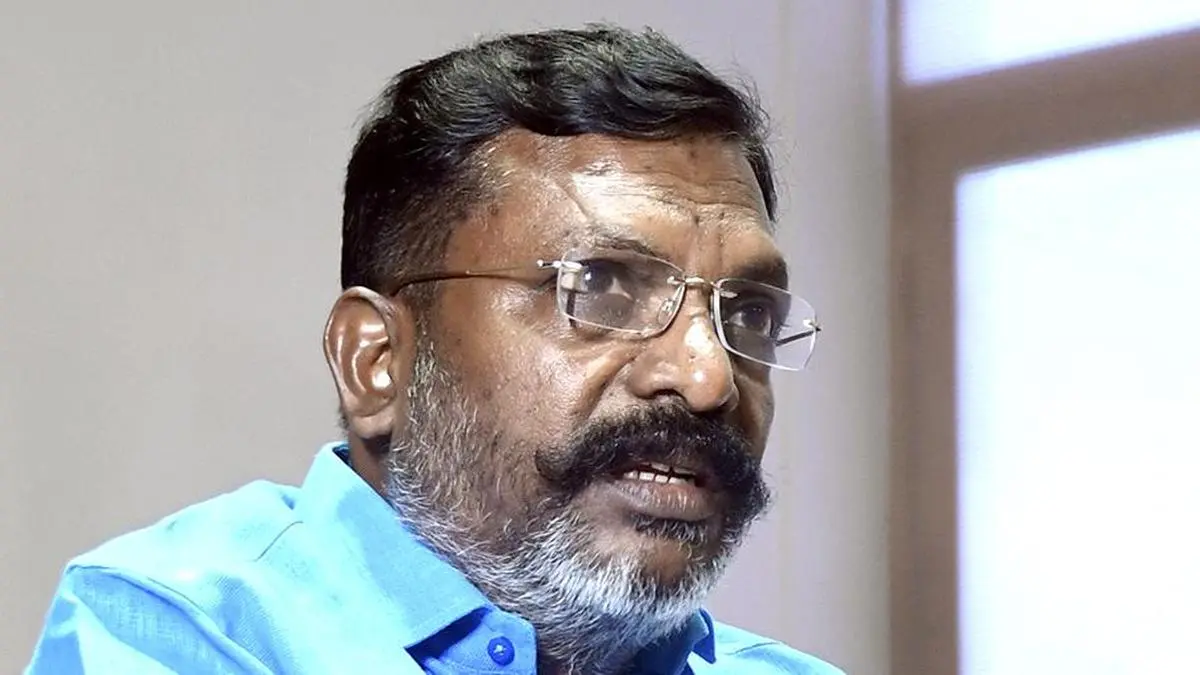
Thirumavalavan's 4 pm statement will clarify whether VCK backs actor Vijay's TVK, reshaping alliance math that has kept Tamil Nadu's policy risk priced tight.
Continue with
The political risk premium embedded in Tamil Nadu–facing assets gets a specific catalyst at 4 pm Saturday, when Viduthalai Chiruthaigal Katchi (VCK) chief Thol Thirumavalavan publicly states whether his party will back actor Vijay's fledgling Tamilaga Vettri Kazhagam (TVK) in forming the next state government. The announcement ends a day of deliberate delay that began Friday evening, after the party's high-level committee authorized Thirumavalavan to decide the stance. Until the words land, the Dravidian alliance arithmetic that has underpinned state-level policy predictability since 2019 sits on a binary event.
The surface take is straightforward: a Dalit party with roughly 3–4% vote share across northern Tamil Nadu pledges support to TVK, instantly making Vijay's outfit a more credible third-front contender. The better read requires understanding why VCK's endorsement is a bigger stress test for the incumbent DMK-led alliance than for TVK. VCK has been a DMK ally since 2019, and its cadre moves votes in constituencies where the margin between DMK and AIADMK often sits inside two percentage points. If those votes leave the alliance, the DMK's strike rate in 20–30 seats moves from probable to contested overnight. That changes the calculus for businesses that price contracts, permits, and enforcement based on a stable DMK majority.
The 4 pm Catalyst
The event is not just a political headline. It lands after the Left parties already declared their opposition to the DMK alliance and their openness to a broader anti-BJP, non-DMK alternative. VCK was the last major DMK ally yet to clarify. Thirumavalavan's repeated postponements since Friday evening have kept the state's political risk premium elevated, and a Saturday afternoon statement creates a full weekend session for market participants who need to re-weight Tamil Nadu state bond spreads, state PSU equities, and regulated-industry names before Monday open.
The simple binary is: support for TVK or continued allegiance to DMK. But the more tradeable instrument is the degree of conditionality. If the VCK announcement attaches specific policy demands to TVK support, such as a revised reservation matrix or a new land redistribution framework, the market read shifts from generic electoral uncertainty to sector-level repricing. Tamil Nadu's liquor distribution, real estate, and MSME clusters are particularly sensitive to how caste-based reservation interacts with state contracting and zoning.
VCK's Vote Math, Not Just Star Appeal
A common error is to treat VCK as a simple add-on to TVK's star power. VCK's base is concentrated among Paraiyar and other Scheduled Caste voters in the northern districts, a constituency that has shown high turnout variance in assembly elections. TVK, still an electoral unknown, needs organizational reach in exactly those rural pockets where VCK has the only non-Dravidian majoritarian micro-cadre. The trade is not whether Vijay's personal popularity can draw crowds; it is whether VCK's cadre can move 1.5 to 2 lakh votes in a tight seat from the DMK column to a TVK line that may still split the anti-incumbency vote. Past assembly data show that when VCK contests alone, its vote share holds only in alliance; the standalone candidate deposit loss rate is over 60%. That makes the quality of the support critical.