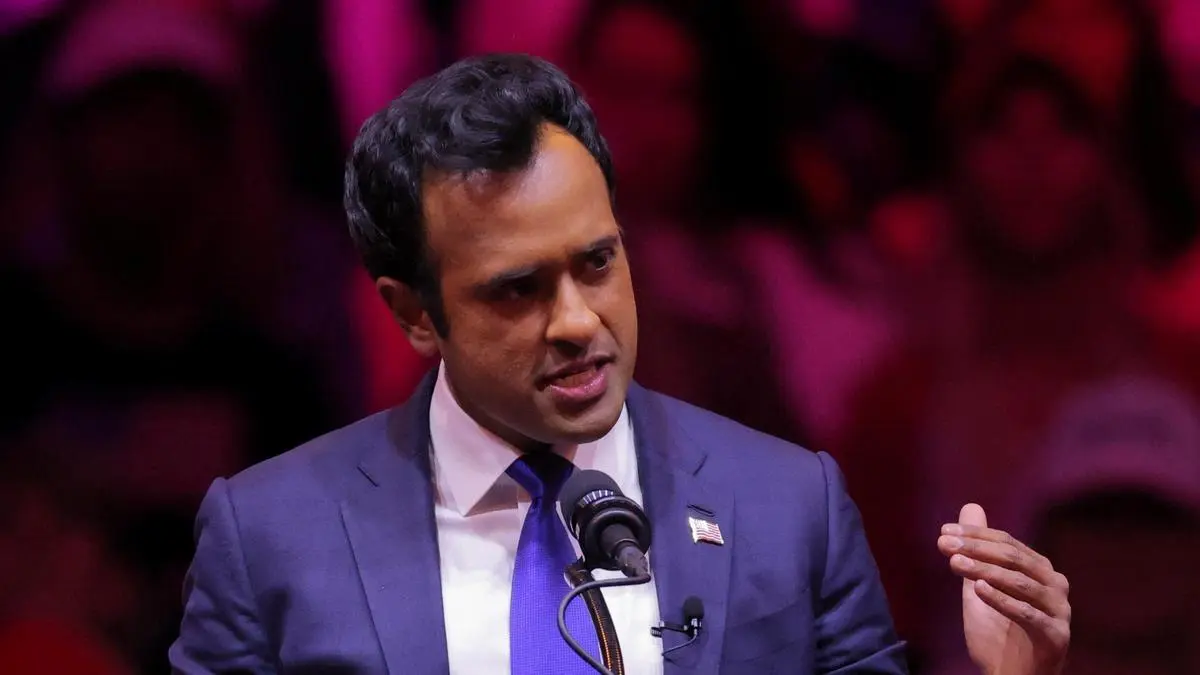
Vivek Ramaswamy has secured the Republican nomination for the Ohio gubernatorial race, setting the stage for a general election contest against Democratic candidate Amy Acton. The nomination follows a primary victory over small business owner Casey Putsch, as confirmed by CBS News projections on Tuesday. This transition from national political figure to state-level candidate marks a significant shift in the Ohio political landscape, as the state moves to replace term-limited Governor Mike DeWine.
The Path to a Cleared Field
The Republican primary dynamics were defined by a rapid consolidation of support that effectively neutralized potential internal competition. Early in the cycle, the field was expected to include high-profile figures such as Attorney General Dave Yost and former Ohio State University football coach Jim Tressel. However, the trajectory of the race changed when the state Republican Party and Donald Trump aligned behind Ramaswamy. Yost subsequently withdrew from the contest, and Tressel opted not to enter, leaving the path open for the former presidential candidate. This consolidation mirrors broader trends in state-level GOP politics where early institutional backing serves as a primary barrier to entry for challengers.
Financial War Chest and Campaign Liquidity
Financial disclosures reveal a significant disparity in campaign resources as the race enters the general election phase. Ramaswamy’s campaign reported raising 5 million dollars in early 2026, supplemented by a 25-million-dollar personal loan. This provides the candidate with approximately 30 million dollars in cash on hand, a figure that aligns with his earlier public commitment to invest 30 million dollars into the bid. In contrast, Democratic nominee Amy Acton, the former director of the Ohio Department of Public Health, has raised 5.1 million dollars with 3 million dollars in reserve. This 10-to-1 cash advantage in liquid reserves provides the Republican campaign with substantial flexibility regarding media buys, ground operations, and voter turnout infrastructure in the final months before November.
Institutional Alignment and Political Capital
Beyond the financial metrics, the campaign is bolstered by high-level political endorsements. Vice President JD Vance, an Ohio resident, publicly confirmed his support for the nominee on Tuesday. This alignment is critical given the state’s recent electoral history; Donald Trump carried Ohio by 11 points during the 2024 election. The candidate’s recent tenure as a co-leader of the Department of Government Efficiency, or DOGE, alongside Elon Musk, serves as a central pillar of his platform. His departure from that role one day after the presidential inauguration to focus on the gubernatorial bid underscores the priority placed on this specific executive office.
Regulatory and Operational Hurdles
The primary election process also faced specific legal and procedural challenges that influenced the final ballot composition. The Ohio Supreme Court intervened to rule that votes for candidate Heather Hill would not be counted after her running mate withdrew. Because state law mandates that candidates for governor and lieutenant governor must run as a single ticket, the withdrawal of a running mate effectively disqualified the campaign. This legal clarity prevented potential vote splitting that could have complicated the primary results. For market observers, the stability of the Ohio executive branch is a key variable for stock market analysis regarding state-level fiscal policy and regulatory environments.
Strategic Implications for November
The general election will serve as a test of whether national-level political branding translates into effective state governance platforms. While the Republican nominee holds a significant financial advantage, the Democratic opponent, Amy Acton, brings a distinct profile as a former public health official. The outcome will likely hinge on the ability of each campaign to mobilize their respective bases in a state that has trended toward the Republican party in recent cycles. Investors should monitor how these campaign platforms address state-level tax policy, infrastructure spending, and business regulation. As the race progresses, the primary risk for the Republican campaign is the potential for voter complacency given the 11-point margin in the 2024 presidential cycle. Conversely, the Democratic campaign must overcome a substantial funding gap to gain traction in a state where the current political climate favors the GOP. The next concrete marker for the race will be the first public debate, which will provide insight into how the candidates plan to bridge the gap between their disparate policy priorities. For those tracking broader political shifts, this race represents a critical data point in the ongoing realignment of state-level executive power. While companies like RACE and ALLY operate in different sectors, the regulatory environment in Ohio remains a consistent factor for regional economic health.