Stocks● Neutral
Saudi POS Dip to SAR 14.2B Sets Up Salary-Week Rebound Trade
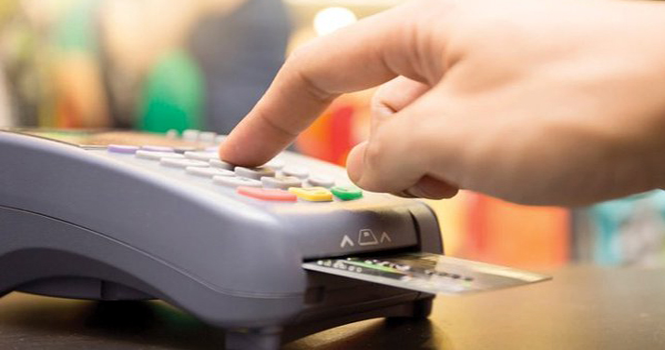
Saudi POS transactions fell to SAR 14.2B in the pre-salary week, a predictable trough. The 4-week moving average at SAR 13.8B points to a rebound when government salaries hit on the 27th.
Continue with
Saudi Arabia's point-of-sale transactions dropped to nearly SAR 14.2 billion in the week ended May 9, down from SAR 16.6 billion the prior week. The number of transactions fell to about 251.5 million from 270.7 million, according to Saudi Central Bank (SAMA) data. The decline lands squarely inside a well-documented seasonal pattern. Consumer spending routinely contracts in the week before government salary disbursements, which fall on the 27th of each month.
The raw week-on-week drop looks sharp. The better read is that the pullback is a mechanical feature of the Saudi payroll calendar, not a signal of weakening demand. For traders tracking consumer-exposed equities, the data provides a clean setup: the next salary week should produce a rebound, and the four-week moving average remains the most reliable trend gauge. stock market analysis
Pre-Salary Dip: SAR 14.2B Fits the Calendar Pattern
SAMA's own historical commentary notes that POS spending rises during weeks that coincide with government salary disbursements, school vacations, and the run-up to Eid Al-Fitr and Eid Al-Adha. Spending then falls in the weeks immediately before salary payments and at the start of the back-to-school season. The week ended May 9 sits in that pre-disbursement window.
Key insight: The pre-salary dip is a mechanical feature of the Saudi payroll calendar, not a signal of weakening demand.
A trader looking only at the headline SAR 14.2 billion figure might misread it as a softening consumer. The context of the 27th-of-the-month cycle reframes the number as a predictable trough. The real question is whether the subsequent salary-week bounce will carry spending back toward the upper end of the 2025 range.
The Transaction Count Confirms the Pattern
The drop in transaction volume, from 270.7 million to 251.5 million, mirrors the value decline. Both metrics fell roughly 14% week-on-week. That symmetry reinforces the calendar effect. The decline reflects a broad-based pullback in activity ahead of payday, not a shift in average ticket size.
Four-Week Moving Average at SAR 13.8B: The Cleaner Trend
SAMA reports a four-week moving average of about SAR 13.8 billion. That figure smooths the payroll noise and provides a cleaner signal. The 2025 weekly range has spanned SAR 11.4 billion to SAR 15.3 billion, compared to previous years.
| Year | Weekly POS Range (SAR billions) |
|---|---|
| 2025 | 11.4 – 15.3 |
| 2024 | 11.5 – 13.8 |
| 2023 | 10.4 – 12.7 |
| 2022 | 9.4 – 11.6 |
The year-over-year uplift in both the floor and the ceiling of the range is unambiguous. The 2025 average is running roughly SAR 1.5 billion to SAR 2 billion above the 2023 average. That reflects a structural expansion in electronic consumer spending, not just inflation.
Bottom line for traders: The 4-week moving average at SAR 13.8B is the cleanest trend signal; a break below SAR 13.5B would be a caution flag.
How to Use the Moving Average in a Watchlist Decision
A simple rule: treat the SAR 13.8 billion moving average as the neutral line. Weeks above it, especially those that coincide with salary disbursements, are bullish for consumer-exposed names. Weeks below it that are not explained by the calendar, such as a post-salary week that fails to clear the average, would be a genuine warning.
Food & Beverage and Restaurants: 28.4% of Spending
Two categories dominate the spending mix. Food and beverages accounted for 15.9% of total POS value, or SAR 2.26 billion. Restaurants and cafes contributed 12.5%, or SAR 1.77 billion. Together they represent 28.4% of the week's transactions.
This concentration matters for equity selection. Listed names in the food retail and quick-service restaurant space see a direct read-through from the weekly POS data. When the salary-week spike arrives, these two categories typically capture an outsized share of the incremental spend. A failure of F&B and restaurant spending to rebound in the next data print would be a more meaningful caution flag than the headline dip itself.