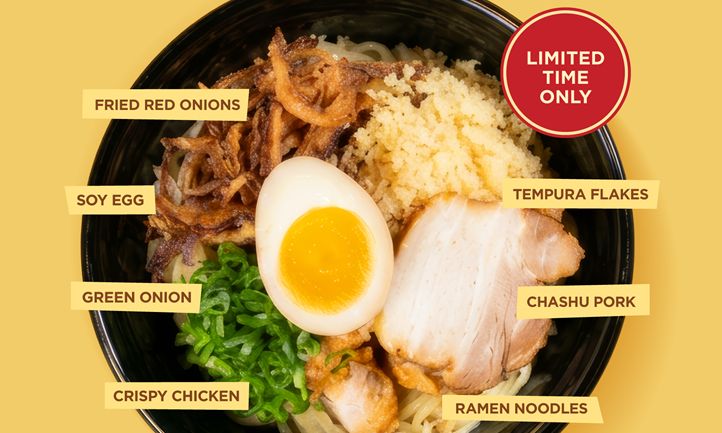
Kura Sushi USA added a limited-time Tonkotsu Mazemen to its revolving sushi bar menu, a brothless ramen dish available through July 31, 2026. The launch is a direct traffic-driving tactic during the summer dining season, a period when casual dining chains compete aggressively for footfall. For a company with more than 80 locations across 22 states, menu innovation is the primary lever to lift same-store sales without opening new units. The immediate question for traders is whether a single limited-time offering (LTO) can shift the narrative for a stock that carries an Alpha Score of 22 out of 100, a reading that flags weak underlying momentum.
The simple read is that new menu items attract customers. The better market read requires examining the mechanism, the execution risk, and the valuation context that already prices in growth that has been inconsistent.
The Tonkotsu Mazemen Launch: What the Dish Brings to the Conveyor Belt
Kura Sushi's new item combines braised chashu pork, crispy chicken, a soft-boiled ajitama egg, green onion, fried red onions, tempura flakes, ramen noodles, and a tonkotsu sauce. It is served cold or at room temperature, described by the company as a "complete and satisfying meal without the heat." The dish targets ramen enthusiasts and expands the menu beyond sushi, sashimi, and tempura, giving the conveyor belt a higher-ticket, protein-heavy option.
LTO Mechanics in the Revolving Sushi Model
Kura Sushi's business model relies on high table turns and a mix of priced plates and premium items. An LTO like the Tonkotsu Mazemen sits on the express lane, a separate conveyor belt that delivers ordered items directly to the table. This bypasses the standard revolving belt and encourages incremental orders. Because the dish is priced as a single item rather than a per-plate selection, it can lift the average check if it converts a portion of diners who would otherwise stick to lower-priced sushi plates.
The limited availability through July 31, 2026 creates urgency. Restaurant chains use summer LTOs to combat the seasonal dip that can hit indoor dining when vacation travel pulls customers away. Kura Sushi's own marketing frames the dish as a way to "unlock new umami flavor," a direct appeal to repeat visitors who have already cycled through the core menu of more than 100 items.
What the VP of Marketing Signaled
Newton Hoang, Vice President of Marketing at Kura Sushi USA, stated:
The language targets a specific consumer segment: ramen enthusiasts who may not yet consider a revolving sushi bar as a ramen destination. The phrase "without the heat" is a deliberate positioning for summer, when hot broth-based ramen can be a harder sell. The company already offers four broth-based ramen bowls on its everyday menu: Miso Ramen, Shoyu Ramen, Tantanmen, and Tonkotsu Ramen. The new mazemen is not a replacement. It is a seasonal complement, which means it tests whether a cold noodle dish can expand the addressable audience without cannibalizing existing ramen sales.
KRUS: The Stock and the Same-Store Sales Challenge
Kura Sushi USA is the largest revolving sushi brand in the United States, a subsidiary of Japan's Kura Sushi, Inc., which operates more than 600 restaurants internationally. The US entity went public in 2019 and has grown from a niche concept to a 22-state footprint. The stock trades as KRUS.
Unit Growth vs. Organic Traffic
The investment case for KRUS has always been unit growth and brand differentiation. The revolving sushi format, with its technology-driven service model and no artificial additives, occupies a unique position in the fast-casual space. The company has consistently opened new locations, and each opening generates a burst of local interest.
Same-store sales growth has been uneven. The broader consumer cyclical sector faces pressure from inflation-weary diners who are trading down or cutting frequency. Kura Sushi's average check is moderate. A meal for two with drinks and a few premium items can easily exceed $50, putting it in competition with full-service casual dining. When consumers pull back, experiential dining concepts like revolving sushi can lose traffic faster than value-oriented quick-service chains.
The Alpha Score Signal
The proprietary AlphaScala Alpha Score for KRUS sits at 22 out of 100, a reading labeled Weak. This score aggregates technical, fundamental, and sentiment signals. A score this low typically indicates that the stock has not demonstrated the kind of institutional accumulation, earnings momentum, or price trend strength that traders look for in a catalyst-driven setup. The Tonkotsu Mazemen launch, while a legitimate operational move, lands into a stock that the market is already treating with skepticism.
Practical rule: A limited-time menu item only matters for the stock if it can be linked to a measurable traffic lift in the same quarter. The dish must prove it can move traffic before the market will reprice the shares.
The Decision Point: Can an LTO Move the Needle?
Traders watching KRUS now have a discrete, date-bound event to monitor. The dish is available through July 31, 2026, which means the company will likely comment on its performance during the next earnings call or in interim business updates. The decision point is not whether the dish tastes good. It is whether the LTO strategy can produce a measurable bump in traffic that shows up in the data.
What Confirms the Setup
For the catalyst to matter, several conditions need to align. First, the company would need to report a sequential improvement in same-store sales that it attributes, at least in part, to the LTO. Second, social media engagement and app download activity around the dish would need to spike, indicating that the marketing spend is converting into foot traffic. Third, the stock would need to hold above key technical levels on any positive news, signaling that institutional investors are using the catalyst to build positions.
What Weakens the Thesis
If the LTO passes without any discernible impact on traffic, the bear case strengthens. A weak Alpha Score already suggests that the stock is vulnerable to negative surprises. A failed LTO would reinforce the narrative that Kura Sushi's growth is dependent on unit expansion alone, with existing stores struggling to generate organic growth. The competitive landscape adds pressure. Larger chains with bigger marketing budgets can drown out a single dish launch, and regional revolving sushi competitors are expanding.
Tracking the Catalyst: Concrete Data Points for the Watchlist
Traders who want to track this catalyst should focus on a few concrete data points rather than the press release narrative. The dish itself is a product story. The market story is about whether the company can convert menu innovation into sustained traffic growth.
- Earnings call language: Listen for any mention of the LTO's contribution to same-store sales. A specific percentage lift is a strong signal. Vague positive commentary is noise.
- App download trends: The Kura Sushi Rewards app is the gateway to reservations and loyalty perks. A sustained increase in app store rankings during the LTO window would suggest new customer acquisition.
- Social media volume: Track mentions of "Tonkotsu Mazemen" and "Kura Sushi" across platforms. A spike that sustains beyond the first week of launch indicates genuine interest, not just initial curiosity.
- Foot traffic data: Third-party location data providers can show whether store visits are rising during the LTO period compared to the same weeks in the prior year.
Risk to watch: The LTO ends July 31, 2026. If the stock has not responded positively by mid-August, the catalyst window closes without a payoff, and the weak Alpha Score becomes the dominant signal again.
Kura Sushi's Tonkotsu Mazemen is a well-constructed menu addition that fits the brand's strategy of blending Japanese authenticity with American accessibility. For the stock, the dish is a test of whether product innovation alone can overcome the headwinds that have kept KRUS in a weak technical and fundamental position. The next earnings print will reveal whether the bet paid off or simply added a temporary headline.