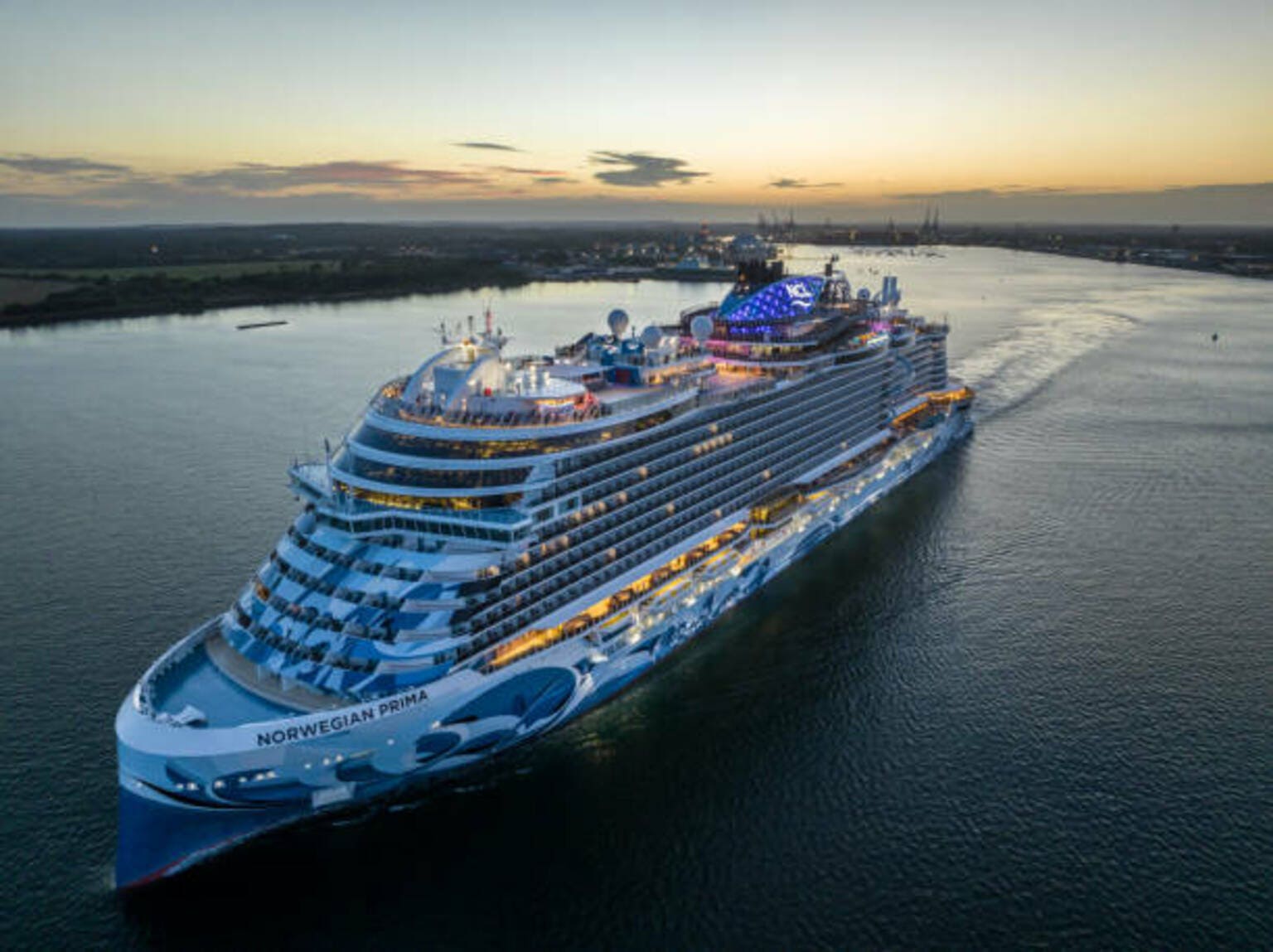
Norwegian Cruise Line Holdings Ltd. (NCLH) shares are facing downward pressure following the release of its first-quarter financial results. While the company managed to report profits that exceeded initial expectations, the headline figures were overshadowed by a revenue miss and a downward revision to forward guidance for 2026. This combination of top-line weakness and long-term uncertainty creates a difficult setup for shareholders looking for immediate stability.
Revenue Shortfalls and Long-Term Guidance Revisions
The primary concern for the market is not the current quarter's profitability, but the signal sent by the 2026 guidance adjustment. When a company beats on earnings but misses on revenue, it often points to a mismatch between cost-cutting efforts and actual demand. If the revenue miss is a result of pricing power erosion or lower-than-expected occupancy, the lowered guidance for 2026 suggests that management anticipates these headwinds to persist well beyond the current fiscal year. Investors are now forced to recalibrate their valuation models to account for a slower growth trajectory in the medium term.
Sector Read-Through and Valuation Mechanics
Within the broader consumer discretionary sector, cruise operators are highly sensitive to discretionary spending patterns and fuel cost volatility. The market reaction to this report suggests that investors are losing patience with companies that cannot demonstrate consistent revenue growth, regardless of their ability to manage margins. For NCLH, the challenge is to prove that the revenue miss is an isolated event rather than a structural issue within its booking pipeline. The current Alpha Score for NCLH sits at 51/100, reflecting a mixed outlook that balances current operational efficiency against these emerging growth concerns. Detailed performance metrics and historical data for the company are available on the NCLH stock page.
Operational Execution and Market Confidence
When guidance is lowered, the burden of proof shifts entirely to the next few quarters of execution. The market will look for evidence that the company can stabilize its revenue base before the 2026 targets become the new baseline for valuation. If subsequent reports show continued revenue stagnation, the stock may face further multiple compression as the market prices in a more conservative growth profile. Conversely, a return to revenue growth in the upcoming quarters would be the primary signal needed to stabilize the share price and restore investor confidence in the long-term strategy. Traders should monitor upcoming booking trends and yield data as the most reliable indicators of whether this guidance revision represents a temporary hurdle or a deeper operational shift. The next concrete marker for this narrative will be the subsequent quarterly update, where management must demonstrate that the revenue trajectory has begun to align with their revised expectations.