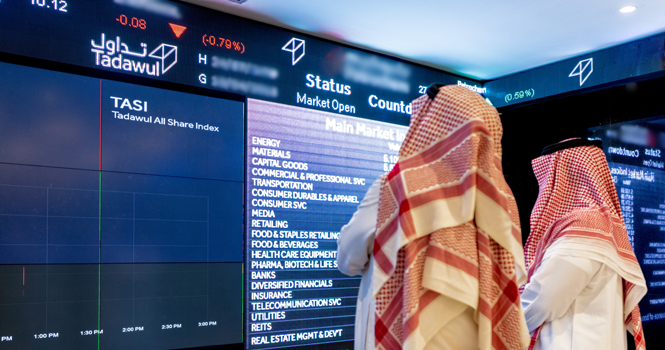
Foreign institutional investors executed a net purchase of SAR 362.98 million in Saudi Exchange (Tadawul) equities during the trading week concluding April 30. This influx represents a notable shift in liquidity dynamics, as foreign institutions accounted for 35.39% of total buy-side volume against 34.09% of total sell-side transactions. While the headline figure suggests a robust appetite for regional exposure, the underlying mechanics of TASI participation reveal a more fragmented landscape where domestic retail and corporate entities continue to dictate the broader price action.
Institutional Positioning and Liquidity Dynamics
The net inflow of SAR 362.98 million from foreign institutions serves as a primary indicator of external sentiment toward the Saudi market. When foreign institutional participation exceeds 35% of buy-side trades, it typically signals a period of index-level accumulation rather than tactical rotation. However, the data suggests that these flows are not operating in a vacuum. The presence of foreign individual investors, who contributed an additional SAR 7.52 million in net purchases, confirms that the interest is not limited to large-cap institutional mandates.
For traders analyzing these flows, the critical distinction lies in the velocity of capital. Institutional mandates often prioritize long-term index weighting, whereas the domestic retail and corporate segments, which recorded significantly higher net purchase volumes, are more sensitive to short-term volatility and local macroeconomic catalysts. Understanding this bifurcation is essential for those tracking stock market analysis within the region, as institutional buying often provides a floor for valuations during periods of domestic profit-taking.
Domestic Retail and Corporate Counterflows
The most significant liquidity provider during the week was the Saudi individual investor segment, which recorded net purchases totaling approximately SAR 852 million. This figure is heavily skewed by the specific behavior of retail and high-net-worth (HNW) participants. Retail investors contributed SAR 169.6 million in net buying, while HNW individuals added SAR 202 million. These figures dwarf the foreign institutional contribution, suggesting that the domestic base remains the primary driver of TASI momentum.
Conversely, individual professional investors acted as a liquidity drain, recording net sales of SAR 395.87 million. This divergence between retail optimism and professional caution is a classic signal of a market in transition. When professional participants move to the sell side while retail and institutional cohorts accumulate, it often indicates a divergence in valuation expectations. Professional managers, likely operating under stricter risk-management mandates, may be trimming positions to lock in gains or rebalance portfolios, while retail and institutional buyers are focused on long-term entry points.
Corporate and Institutional Interplay
Saudi corporate investors added a net SAR 351.16 million to their positions, reinforcing the trend of domestic institutional support. When combined with the foreign institutional inflow, the total institutional bid for the week suggests a coordinated effort to stabilize or elevate index levels. This institutional alignment is a key metric for evaluating the sustainability of current price trends. If corporate and foreign institutional buying persists, it creates a structural buffer against the selling pressure exerted by professional individual investors.
For those evaluating the broader real estate or financial sectors, it is worth noting that institutional capital often flows into assets with high Alpha Scores, such as WELL (Welltower Inc.), which currently holds an Alpha Score of 52/100. While WELL operates in a different jurisdiction, the mechanism of institutional accumulation remains a universal indicator of confidence in underlying asset quality. On the TASI, the current institutional behavior suggests a preference for stability over speculative growth, as evidenced by the concentration of buying among corporate and foreign institutional entities.
Strategic Implications for Market Participants
The data from the week ended April 30 highlights a market where institutional confidence is high, but professional domestic sentiment is cooling. The net purchase of SAR 362.98 million by foreign institutions acts as a validation of the Saudi market's integration into global portfolios. However, the net selling by professional individual investors suggests that the market is not without its skeptics.
Investors should monitor the relationship between foreign institutional flows and the professional individual sell-side volume in the coming weeks. If the professional sell-side volume begins to accelerate, it could signal a shift in local sentiment that may eventually force foreign institutions to reconsider their entry points. Conversely, if the retail and corporate bid remains steady, the market is likely to maintain its current trajectory, supported by a strong domestic foundation. The interplay between these groups remains the most reliable indicator of short-term price direction on the Tadawul, far more so than any single macroeconomic headline.