Stocks● Neutral
Tampa’s $115M Château Listing Tests Florida’s Luxury Market Shift
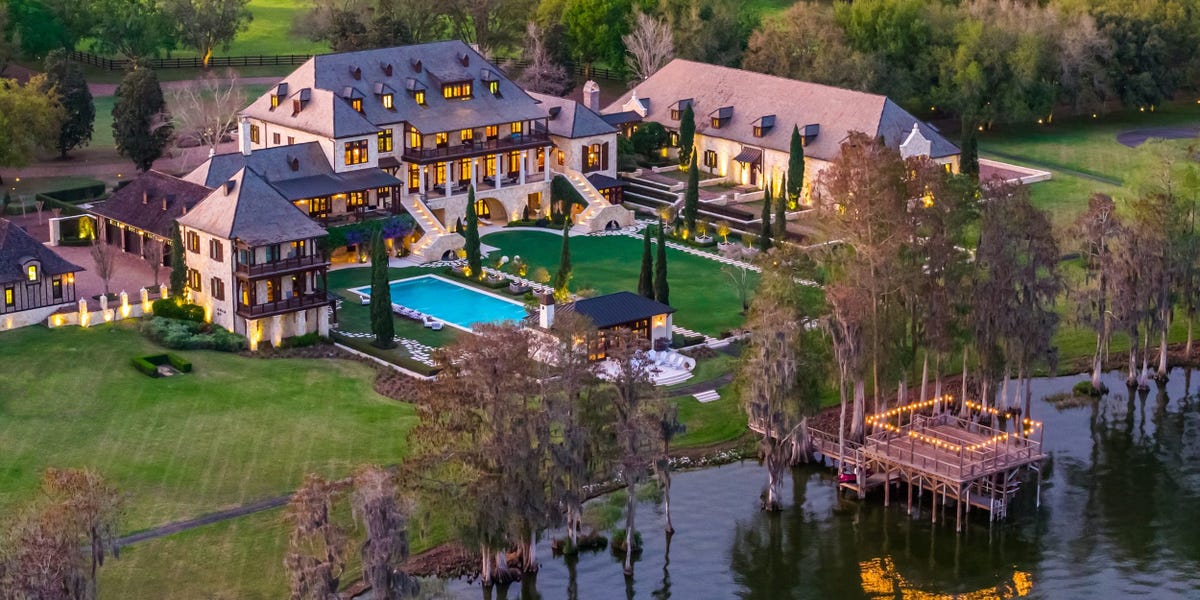
A Chicago energy executive lists his Tampa estate for $115 million, aiming to break local records and signaling a shift in Florida’s luxury market away from South Beach.
Continue with
A Chicago-based energy executive just put a $115 million price tag on his Tampa estate, a French Normandy-style château with a private spa and a go-kart track. The listing, by Steven Lempera, isn’t just another trophy home hitting the market. It’s a deliberate attempt to reset the ceiling for Florida’s Gulf Coast luxury real estate, far from the traditional South Beach epicenter. The property aims to break local sales records, and the sheer asking price forces a recalibration of what ‘luxury’ means in a market that has historically played second fiddle to Miami’s oceanfront condos and Palm Beach estates.
The immediate read is simple: a wealthy seller is testing the upper bound of Tampa’s residential market. But the better market read is about the structural shift in where ultra-high-net-worth capital is flowing within Florida. For years, the narrative was that global money concentrated in Miami and Palm Beach, driven by tax advantages, waterfront scarcity, and international buyers. Tampa, despite its growing finance and tech sectors, rarely saw nine-figure listings. This château changes that conversation. It suggests that the pool of buyers willing to deploy $100 million-plus on a single property is now looking beyond the established luxury corridors, drawn by larger land parcels, relative value, and a different lifestyle proposition.
The $115 Million Tampa Listing
The estate itself is a compound designed to be a self-contained resort. Beyond the main residence, the property includes a private spa and a go-kart track–amenities that signal a shift from passive ocean views to active, experiential luxury. The listing doesn’t just compete on square footage or bedroom count; it competes on the idea that a primary or secondary home can replace a country club membership and a vacation itinerary. That’s a bet on a post-pandemic buyer who values privacy and on-site entertainment over proximity to a city center.
For Tampa, a sale anywhere near the ask would instantly revalue neighboring estates. Currently, the area’s luxury market tops out well below this level. A successful transaction would pull up comps for waterfront properties along Bayshore Boulevard and the Davis Islands, potentially triggering a wave of re-listings from owners who have been waiting for a new benchmark. The listing also tests whether the influx of corporate relocations to Tampa–particularly in financial services and tech–has created enough local wealth to absorb a property of this magnitude, or whether the buyer will come from out of state, likely from the Northeast or California.