Crypto▼ Bearish
South Korean Crypto Wallets Drop $42 Billion as Traders Flee to Equities
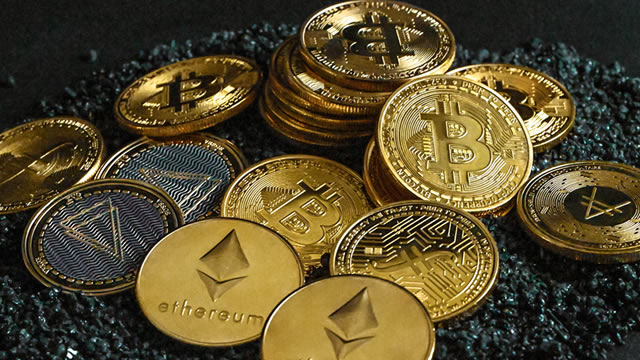
Digital asset holdings halved from $83B to $41B in 12 months, with capital rotating into stocks. The exodus leaves exchanges facing a credibility problem and no clear catalyst for a reversal.
Continue with
South Korean crypto investors just cut their digital asset exposure in half. The aggregate value of crypto held in local wallets fell from $83 billion to $41 billion over twelve months, a $42 billion exit that reshapes one of the world’s most active retail trading markets. The capital did not evaporate into cash; it rotated directly into equities, where a rallying stock market and a less hostile regulatory environment offered a cleaner risk-reward.
The headline number is stark, but the speed and composition of the move matter more for anyone tracking crypto liquidity, exchange risk, or the Korean won pair flows. This is not a gradual rebalancing. It is a conviction shift that emptied wallets and left domestic exchanges scrambling for volume.
The $42 Billion Hole in Korean Crypto
The simple read says crypto volatility scared off retail traders while stocks rallied. That is true but incomplete. South Korean equities did climb, and the KOSPI’s steady grind higher made the switch look obvious in hindsight. But the better market read is that a self-reinforcing cycle of regulatory pressure, vanishing arbitrage, and thinning order books accelerated the exodus.
Start with the regulatory backdrop. Over the past year, South Korean authorities tightened reporting requirements for exchanges, introduced stricter tax guidelines for digital assets, and signaled that enforcement would be real. For a retail base that had grown accustomed to a relatively hands-off environment, the shift was jarring. Traders hate ambiguity, and when the rules keep moving, capital moves first and asks questions later. Equities, by contrast, operate under a mature, predictable framework. No one is waking up to a surprise tax bill on their Samsung shares.
Then there is the kimchi premium. During the last bull cycle, Bitcoin and Ethereum often traded at a 5% to 20% premium on Korean exchanges relative to global spot prices. That premium was a magnet for arbitrageurs and a signal of intense local demand. Over the past year, it collapsed. The premium is now negligible or negative on most days, which tells you that the buying pressure that once defined the Korean market has evaporated. When the premium dies, so does a key reason for capital to sit on domestic exchanges.
Why ‘Just Volatility’ Misses the Point
Volatility alone does not explain a 50% drawdown in aggregate holdings. Crypto markets are always volatile. The difference this time was the absence of a compelling narrative to keep capital parked. Bitcoin failed to break through key resistance levels repeatedly. Altcoins bled against BTC and against fiat. The opportunity cost of staying in crypto became measurable every week that equities posted gains.
More importantly, the outflows were not just from weak hands. Institutional and high-net-worth traders who had allocated to crypto through Korean exchanges also pulled back. The data shows a broad-based reduction, not just a shakeout of small accounts. That matters because it suggests the remaining $41 billion is concentrated among die-hard holders and those underwater on their positions, not a base ready to re-enter aggressively.
The rotation into stocks was not purely defensive. Korean tech giants like Samsung and SK Hynix offered growth without the constant threat of a flash crash or an exchange outage. For a trader who had just watched a major altcoin lose 40% in a week, the relative stability of a large-cap equity with a dividend yield looked like a rational upgrade.
The Kimchi Premium’s Death Spiral
The kimchi premium was never just a quirk. It was a barometer of local demand and a liquidity engine for Korean exchanges. When the premium was wide, market makers and arbitrage desks moved capital onto platforms like Upbit and Bithumb to capture the spread. That flow supported deep order books and tight spreads, which in turn attracted more retail volume.
Once the premium vanished, that virtuous cycle reversed. Arbitrage capital left. Order books thinned. Slippage increased. For a retail trader trying to execute a meaningful size, the cost of trading on a Korean exchange became worse than routing through an offshore venue. That pushed more volume away, which further reduced the premium, and so on. The $42 billion outflow is partly a reflection of this liquidity drain, not just a change in asset preference.