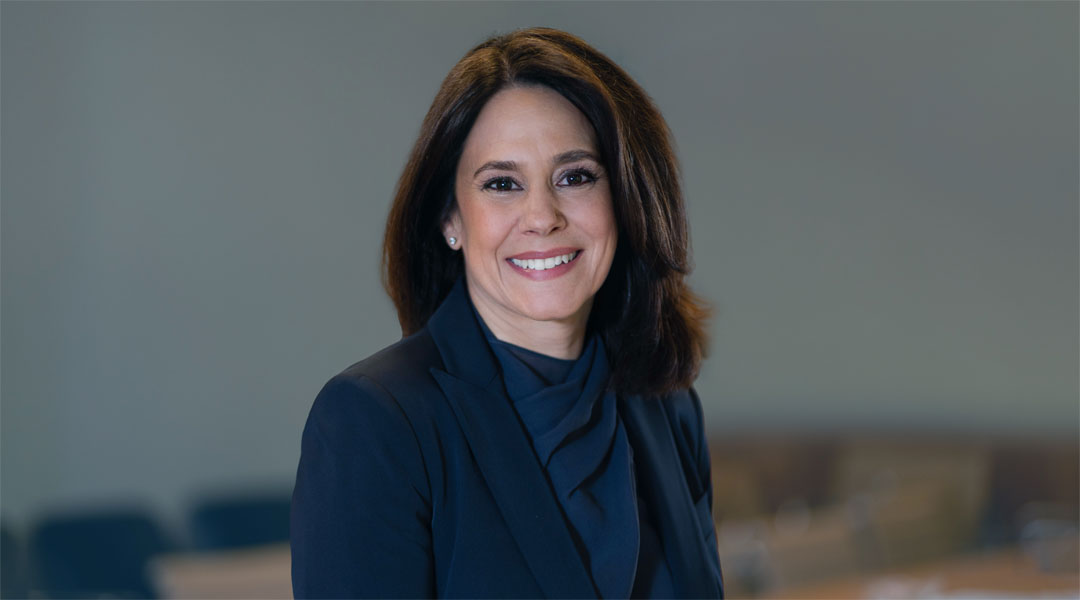
Dallas Federal Reserve President Lorie K. Logan told graduates at Duke University on Sunday that inflation remains too high, a blunt assessment from a voting member of the Federal Open Market Committee that pushes back against any near-term pivot to rate cuts. Speaking at the economics department commencement, Logan said the Class of 2026 is entering a turbulent economy marked by a global energy shock, slow hiring, and an inflation problem that has not been solved.
Her remarks, though delivered in a personal capacity, carry weight because Logan holds a vote on monetary policy in 2026. The speech contained no explicit policy guidance, but the simple statement that inflation is still too high reinforces the Fed's higher-for-longer posture. For traders, that means the transmission channel from a hawkish Fed to financial conditions remains wide open.
Logan's Remarks Cement the Higher-for-Longer Rate Path
Logan did not mince words. "Inflation is still too high," she said, in the only direct reference to the central bank's dual mandate. The line landed in a speech otherwise devoted to inspiration and life lessons, which made it stand out as a deliberate signal. A voting Fed president does not casually drop that phrase into a commencement address without understanding how markets will parse it.
The context she painted was one of persistent price pressures layered on top of supply shocks. "War in the Middle East has caused a global energy shock," Logan noted. That shock feeds directly into headline inflation and complicates the last mile of the disinflation process. At the same time, she described a labor market that is in balance but where many employers are slow to hire, a nuanced view that suggests the Fed sees neither an overheating jobs market nor a collapsing one. That removes urgency to cut rates to protect employment, leaving the inflation fight as the dominant priority.
For the rate outlook, the speech implies no imminent easing. The fed funds rate, currently in the 5.25%-5.50% range, will stay there until inflation data convincingly retreat toward the 2% target. Logan's words align with the patient stance that Chair Jerome Powell and other officials have telegraphed in recent weeks, but coming from a 2026 voter, they carry extra weight for the year ahead.
Treasury Yields React: Short-End Anchored, Long-End Uncertain
The immediate transmission of Logan's inflation warning runs through the Treasury market. Short-term yields, which are most sensitive to the policy rate, are anchored by the expectation that the Fed will not cut soon. The 2-year yield, a proxy for rate expectations, is likely to remain elevated near its recent range above 4.80%. That keeps the yield curve deeply inverted, a condition that has persisted for over two years and that Logan's remarks do nothing to resolve.
Longer-dated yields face a more complex calculus. The 10-year yield must balance the Fed's tight policy against the risk of an economic slowdown and the term premium demanded by bond investors. Logan's acknowledgment of a global energy shock and AI-driven job transformation adds uncertainty to the growth outlook, which could cap long-end yields even as the short end stays high. The result is a curve that may steepen not because the Fed cuts, but because long-end yields drift lower on recession fears. That scenario would invert the usual recession signal: an inverted curve that steepens from the long end down, rather than from the short end up.
For bond traders, the playbook is to stay defensive on duration. The front end offers attractive carry with limited price risk, while the long end remains a bet on a growth scare that has not yet fully materialized. Logan's speech gives no reason to front-run a dovish pivot.
Dollar Strength and the Oil Price Feedback Loop
A Fed that keeps rates high while other central banks begin to ease widens the interest rate differential in favor of the dollar. Logan's inflation warning therefore supports the greenback. The dollar index (DXY) has been rangebound but with an upward bias, and her remarks reinforce that trend. A strong dollar acts as a tightening force on global financial conditions, particularly for emerging markets that borrow in dollars, and it also puts downward pressure on commodity prices denominated in the U.S. currency.
But here the transmission gets tangled. Logan cited the Middle East war as a source of an energy shock. That shock raises oil prices independently of the dollar. A stronger dollar might normally dampen oil demand by making it more expensive for foreign buyers, but a supply-driven spike can override that channel. The net effect is that oil prices could remain elevated even with a strong dollar, creating a stagflationary impulse that keeps the Fed on edge. Crude oil has already seen volatile swings tied to geopolitical headlines, and the Middle East peace deal hopes that surfaced recently have only added to the two-way risk.
Gold, which typically benefits from lower real rates and a weaker dollar, faces a headwind from Logan's stance. Higher nominal rates with sticky inflation keep real yields elevated, reducing the appeal of a non-yielding asset. Gold has held up remarkably well in this cycle due to central bank buying and geopolitical demand, but a sustained hawkish Fed caps its upside. The metal's next move likely depends on whether inflation data softens enough to revive rate-cut bets.
Growth Stocks Face the Discount Rate Headwind
Equity markets price off the discount rate mechanism. When the risk-free rate stays high, future cash flows are worth less today, and that hits growth stocks with long-duration earnings profiles hardest. The Nasdaq and high-multiple tech names are therefore the most exposed to Logan's signal. Her speech did not mention equity valuations, but the math is straightforward: a 5.5% fed funds rate makes the equity risk premium less compelling unless earnings growth accelerates meaningfully.
At the same time, Logan highlighted that artificial intelligence is transforming jobs and industries. That transformation could boost productivity and corporate profits over time, but the near-term effect is disruptive. Tech layoffs have surged 33% as companies redirect spending from headcount to AI infrastructure. That creates a bifurcated market: companies that can monetize AI may thrive, while those facing obsolescence or heavy capex without immediate returns could struggle. The higher discount rate adds pressure to justify valuations with current cash flows, not just future promises.
Value sectors, particularly energy and financials, tend to hold up better in a high-rate environment. Energy companies benefit directly from the oil price shock Logan referenced. Financials can earn wider net interest margins, though they also face credit risk if the economy slows. The transmission from Logan's speech thus favors a rotation toward value and away from unprofitable growth, a trade that has been working intermittently for two years.
Real Estate and Financials Under the Microscope
The real estate sector is acutely sensitive to the rate path. Higher rates raise cap rates and lower property values, while also increasing borrowing costs for REITs. Welltower Inc. (WELL), a healthcare REIT with an AlphaScala Alpha Score of 50 (Mixed), illustrates the tension. The company benefits from demographic tailwinds, but the macro environment of elevated rates keeps a lid on multiple expansion. A sustained higher-for-longer stance could delay the recovery in real estate valuations that many investors have been anticipating.
Financials present a more nuanced picture. MetLife Inc. (MET), with an Alpha Score of 56 (Moderate), is a beneficiary of higher interest rates through its investment portfolio and insurance float. However, Logan's mention of slow hiring and a balanced labor market hints at a cooling economy, which could eventually lead to higher credit losses. The sector's performance will hinge on whether the net interest margin expansion outweighs the credit cycle risk. For now, the hawkish signal is a net positive for financials, but that could flip if the data deteriorate.
What Would Change the Calculus?
Logan's speech did not offer a roadmap for policy shifts, but the transmission chain she set in motion will be tested by incoming data. The next CPI and PCE reports will either validate her inflation concern or challenge it. A downside surprise in inflation would be the most powerful catalyst to reverse the hawkish trade, pulling yields lower, weakening the dollar, and lifting rate-sensitive assets. Conversely, a hot print would reinforce every link in the chain.
The next FOMC meeting, scheduled for June, will provide a formal update through the statement and the Summary of Economic Projections. The dot plot will show whether the median committee member still expects rate cuts this year. Logan's remarks suggest she will be among the more hawkish dots, and if enough of her colleagues share that view, the median could shift to fewer cuts. That would be a further tightening shock for markets.
For now, the practical takeaway is that the Fed's inflation fight is not over, and a voting official just reminded the market of that fact in plain language. The transmission from that reminder runs through every asset class, and it keeps the higher-for-longer regime firmly in place.