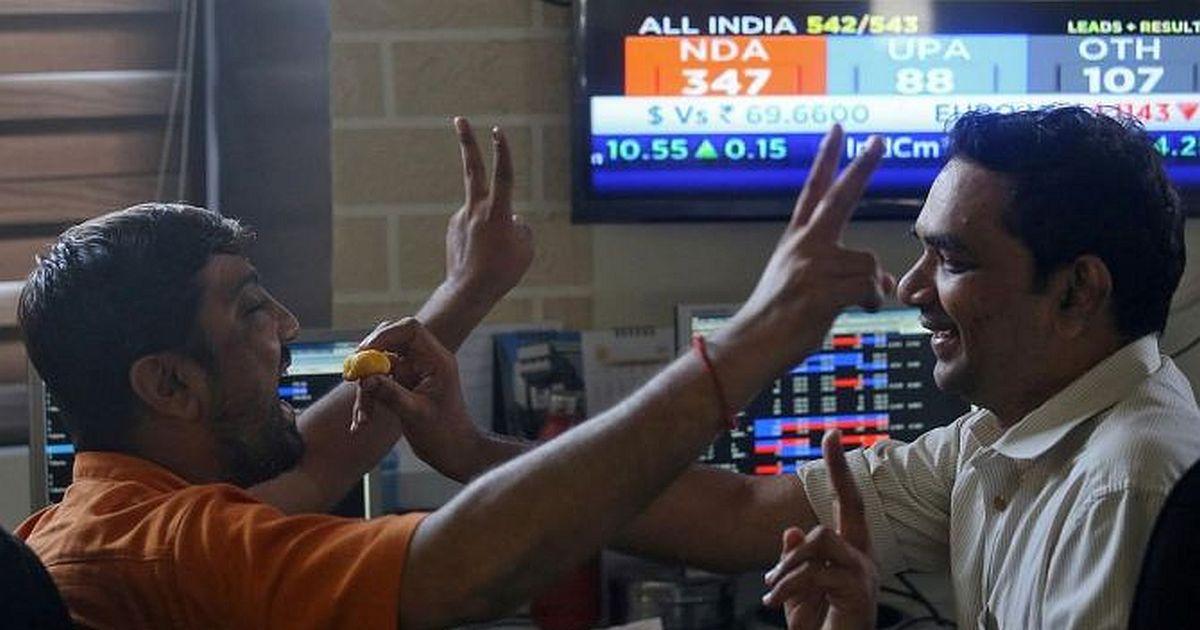
The Indian equity market experienced a notable shift in sentiment on Monday, as the BSE Sensex climbed 355.90 points, or 0.46 percent, to close at 77,269.40. This move followed a session where the index hit an intraday high of 77,910.75, reflecting a 1.29 percent gain. The rally was primarily driven by a convergence of favorable domestic political outcomes and resilient corporate performance, which allowed participants to look past lingering global volatility. The NSE Nifty 50 mirrored this momentum, adding 121.75 points to settle at 24,119.30.
Election Outcomes and Domestic Sentiment
The primary catalyst for the session was the alignment of state election results with pre-existing market expectations. Specifically, trends from West Bengal provided a domestic trigger that stabilized investor confidence. This political clarity acted as a counterweight to broader macroeconomic anxieties, allowing blue-chip stocks to recover from recent periods of consolidation. The market's ability to digest these results suggests that the current risk-on environment is heavily predicated on the assumption of policy continuity and stability in key regions.
While the headline numbers were positive, the internal market dynamics revealed a tug-of-war between institutional flows. Exchange data indicates that Foreign Institutional Investors (FIIs) remained net sellers, offloading equities worth Rs 8,047.86 crore on Thursday. Conversely, Domestic Institutional Investors (DIIs) acted as a primary support pillar, purchasing Rs 3,487.10 crore worth of shares. This divergence highlights that while domestic liquidity is currently sufficient to absorb foreign outflows, the sustainability of the rally depends on whether DIIs can continue to offset FII selling pressure if global risk premiums widen again.
Energy Prices and Geopolitical Risk Premiums
Beyond domestic politics, the market is closely monitoring the energy complex, particularly the sensitivity of indices to crude oil fluctuations. Brent crude recently traded at USD 109.8 per barrel, a 1.48 percent increase. Despite this rise, the fact that prices have remained below the USD 110 threshold has provided a degree of near-term comfort to the market. This psychological barrier is critical for sectors like FMCG, where input costs are highly sensitive to energy prices. For instance, Hindustan Unilever (Alpha Score 57/100) was among the top gainers on the Sensex, benefiting from strong operational updates that helped investors overlook broader sector-wide cost pressures.
Market participants are now weighing the potential impact of the US 'Project Freedom' initiative, which aims to reopen the Strait of Hormuz. While there are signs of progress in US-Iran discussions, the uncertainty surrounding this initiative continues to trigger intermittent profit-booking. The market is currently pricing in a gradual resolution path, but any escalation in the Strait of Hormuz would likely force a repricing of the geopolitical risk premium, potentially reversing the gains seen in interest-rate-sensitive sectors.
Sectoral Performance and Institutional Positioning
The rally was not uniform across the board. While Adani Ports, Reliance Industries, Larsen & Toubro, and Maruti Suzuki joined Hindustan Unilever in leading the gains, the laggards included Bharti Airtel, Kotak Mahindra Bank, Tata Consultancy Services, and ITC. This bifurcation suggests that investors are rotating into stocks with strong operational visibility rather than betting on a broad-based market beta.
For those tracking the market analysis, the current setup requires a close watch on the interplay between US tech indices and domestic institutional flows. The strength in global markets, particularly the record runs in US tech, has created a favorable risk environment that has temporarily masked the impact of FII selling. However, if the correlation between global tech performance and domestic sentiment weakens, the reliance on DII buying will become more pronounced. Traders should look for sustained volume in the gainers to confirm that the current move is supported by institutional conviction rather than just short-covering. If the index fails to hold the 77,000 level on a closing basis, it would likely signal a return to the range-bound trading that characterized the previous week, potentially inviting further profit-taking in the blue-chip names that led Monday's session.