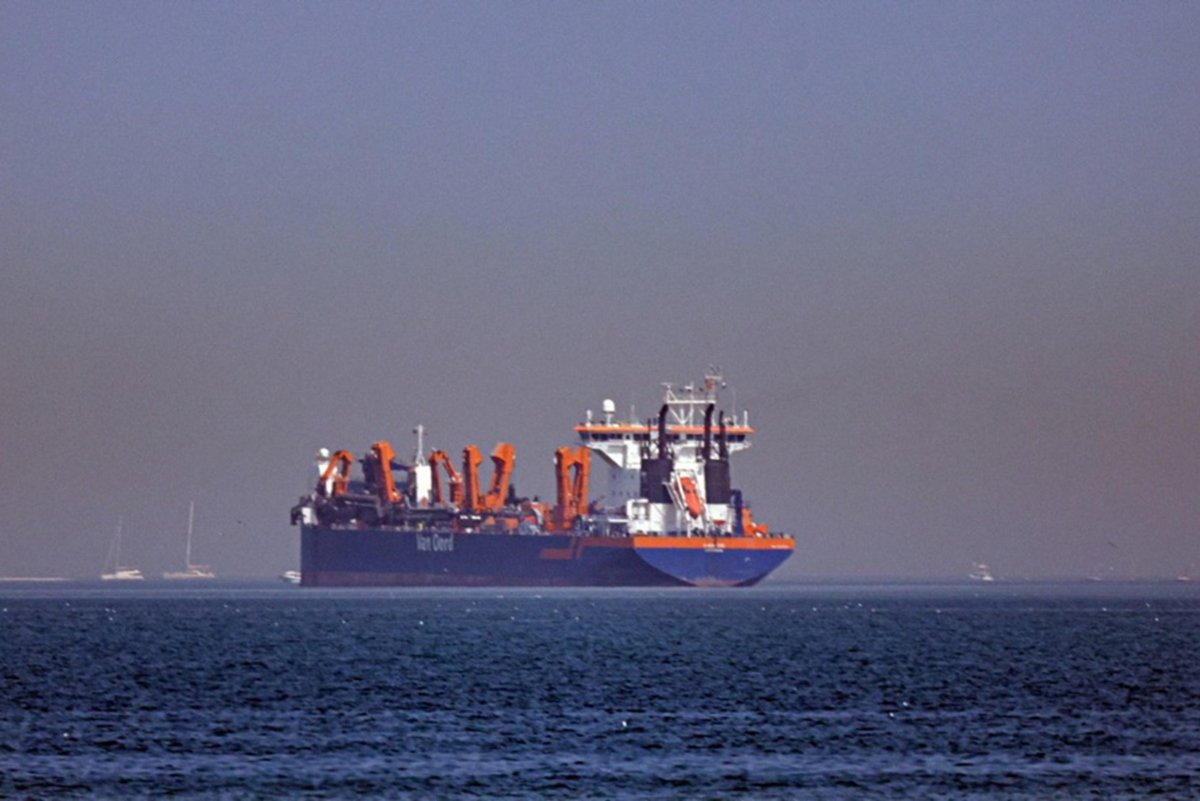
The geopolitical landscape in the Persian Gulf shifted dramatically on Monday as the Iranian military issued a direct threat against U.S. forces. The warning, delivered by Maj. Gen. Ali Abdullahi, commander of the Khatam al-Anbiya Central Headquarters, explicitly stated that any foreign armed force attempting to facilitate the transit of ships through the Strait of Hormuz would be met with military action. This escalation follows President Donald Trump’s announcement of "Project Freedom," a U.S.-led initiative designed to escort commercial vessels trapped in the region by Iran's effective blockade.
The Mechanics of the Hormuz Blockade
The Strait of Hormuz serves as a critical artery for the global economy, facilitating the transport of approximately one-quarter of the world's seaborne oil trade. Current estimates from the U.N.’s International Maritime Organization indicate that 2,000 commercial vessels are currently marooned in the Gulf, impacting the livelihoods of 20,000 merchant sailors. The situation reached a breaking point on Sunday following reports of attacks on an oil tanker and a bulk carrier near the strait.
U.S. Central Command has mobilized a significant force to counter this disruption, including guided-missile destroyers, 15,000 marines, and over 100 land and sea-based aircraft. Adm. Brad Cooper, commander of U.S. CENTCOM, emphasized that the mission is defensive in nature and intended to restore freedom of navigation for all commercial shipping, excluding vessels servicing Iran. However, the operational reality of this mission faces severe skepticism from industry experts. BIMCO, the world's largest international shipping association, has publicly questioned the viability of the evacuation plan, noting that the success of any transit depends heavily on the risk appetite of individual ship owners and the absence of a formal agreement with Tehran.
Operational Risks and Market Sensitivity
For investors, the primary risk is not merely the potential for kinetic conflict, but the sustained disruption of energy and commodity supply chains. The threat from Iran extends beyond U.S. forces, encompassing regional neighbors and U.S. allies. This creates a high-stakes environment where the cost of insurance, shipping rates, and energy premiums could see rapid volatility. The market is currently pricing in a binary outcome: either a successful de-escalation through naval escort or a prolonged, high-risk standoff that keeps essential fuel and fertilizer products from reaching global markets.
While the U.S. military presence is substantial, the logistical challenge of coordinating 2,000 ships through a contested chokepoint under the threat of military engagement is unprecedented. The Iranian demand that all transit must be coordinated with their Armed Forces suggests that the blockade is not merely a temporary obstruction but a strategic leverage point. Traders should look for shifts in maritime insurance premiums and spot oil prices as the primary indicators of how the market is discounting the risk of a full-scale closure.
Evaluating Sector Exposure
Companies with heavy reliance on global supply chains, particularly those in the consumer staples sector, face indirect exposure to these regional tensions. For instance, firms like ADM operate within complex global logistics networks that are sensitive to transit delays and increased shipping costs. While the current Alpha Score for ADM sits at 49/100, reflecting a mixed outlook, the broader implications of a sustained Hormuz closure could force a re-evaluation of margin expectations across the agricultural and energy sectors. Similarly, SAFE maintains a profile that requires monitoring of broader macroeconomic stability, as real estate and infrastructure assets are often the first to feel the secondary effects of energy price shocks.
Ultimately, the efficacy of "Project Freedom" hinges on whether the U.S. can establish a credible deterrent without triggering the very conflict it seeks to avoid. The market is currently in a wait-and-see mode, but the presence of 15,000 marines and a massive air contingent suggests that the U.S. is prepared for a long-term deployment. Investors should avoid the trap of viewing this as a simple naval exercise. It is a fundamental test of global trade security. If the U.S. fails to secure the transit of the first few vessels, the risk premium on global energy will likely spike, leading to a broader repricing of risk across equity markets. Conversely, a successful passage would likely lead to a rapid normalization of shipping costs, though the underlying geopolitical friction would remain a persistent overhang for the foreseeable future. For a deeper look at how such macro events influence broader stock market analysis, it is essential to track the correlation between regional security updates and commodity futures rather than relying on headline-driven volatility.