The recent volatility in energy markets, punctuated by the interplay between Iran blockade headlines and equity market optimism, reveals a fundamental disconnect between geopolitical reality and current price action. While equity indices have responded to diplomatic proposals with reflexive buying, the underlying supply-side risks remain unresolved. The market is currently treating the Mideast situation as a temporary disruption rather than a structural shift, a sentiment that ignores the persistent nature of the Iranian blockade and the lack of progress on core diplomatic demands.
The Blockade Mechanism and Supply Fragility
Oil markets have shown a distinct pattern of weakening in response to diplomatic headlines, specifically following testimony from Hegseth and the subsequent floating of plans to maintain the Iran blockade. This reaction is a classic example of a market pricing in a best-case scenario while ignoring the mechanical reality of transit risks. When headlines suggest a potential easing of tensions, crude prices retreat, yet this move is consistently met with a lack of follow-through in the physical markets. The reality is that the blockade remains a potent tool for supply restriction, and the market's tendency to treat these events as non-events is a dangerous oversight.
For traders, the current setup is less about the headline itself and more about the failure of the price to sustain lower levels. If the blockade persists, the inventory risk for major importers remains elevated. We are seeing a divergence where credit markets and the dollar are pricing in a higher-for-longer rate environment, yet stocks are ignoring the potential for a renewed supply shock. This creates a fragile equilibrium where any escalation in kinetic activity would likely trigger a rapid repricing of energy assets, as the current risk premium is effectively zero.
Credit Markets and the Dollar Divergence
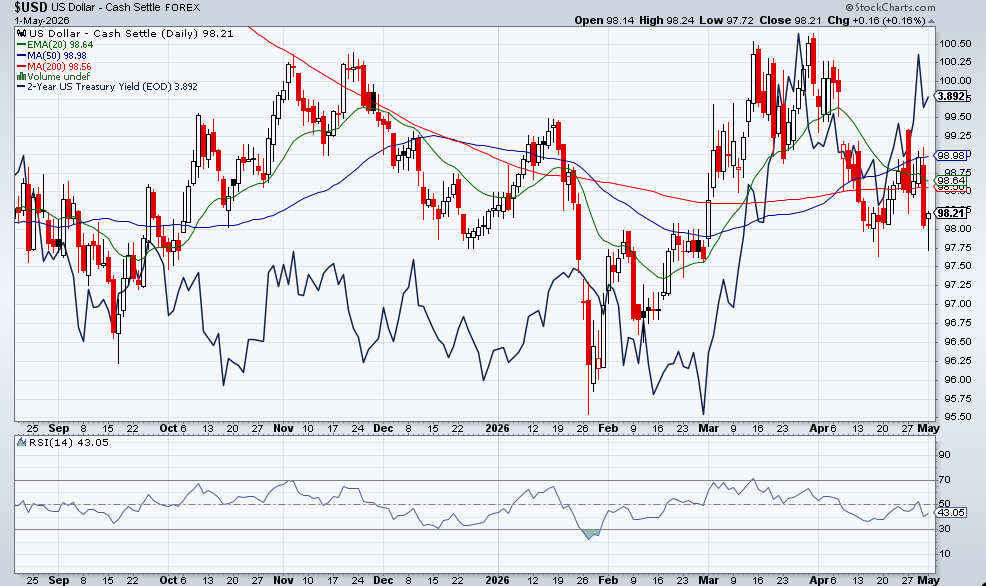
Bond market volatility and credit spreads are currently providing a more accurate read on the macro environment than equity indices. While stocks are betting on a soft landing and treating energy costs as a nuisance, the dollar has failed to act as a significant safe haven since the onset of the current conflict. This suggests that the market is not yet pricing in a recessionary shock, but it also indicates that the dollar is no longer the primary hedge against Mideast instability. As yields continue to grind higher, defying the dissent within the FOMC regarding rate cuts, the traditional correlation between rising rates and a stronger dollar has weakened.
This breakdown in correlation is a signal that the market is operating on a singular, optimistic thesis: that the conflict will not escalate into a full-scale shooting war. If this thesis is invalidated by a shift in Iranian policy or a failure of the current diplomatic window, the resulting volatility will likely be amplified by the current lack of positioning for such an event. Traders should monitor the commodities analysis for shifts in physical delivery premiums, which often precede price moves in the futures market.
Evaluating the Equity Headfake
Equity markets have demonstrated a tendency to use diplomatic headlines as a catalyst for short-term rallies, often referred to as a headfake. These moves are frequently driven by algorithmic responses to news wires rather than fundamental changes in supply or demand. The risk for investors is that these rallies are built on a foundation of underappreciated geopolitical risk. When the market ignores the potential for a return to kinetic hostilities, it creates a vacuum where a small amount of negative news can cause outsized price action.
For those looking at the broader sector, companies like SAFE (Safehold Inc.) operate within a real estate environment that is highly sensitive to these broader shifts in rate expectations and risk sentiment. With an Alpha Score of 54/100, the current outlook for such entities remains mixed, reflecting the uncertainty in the broader macro landscape. The key for any position in this environment is to distinguish between the noise of the daily news cycle and the structural reality of the supply-demand balance in energy and credit markets.
Risk Assessment and Invalidation Points
To confirm the thesis that the market is underpricing the blockade risk, one must look for a failure of crude oil to break below established support levels despite positive diplomatic headlines. If the price of oil holds its ground in the face of news that would typically be bearish, it is a strong indicator that the market is becoming desensitized to the headlines and is instead focused on the underlying supply constraints. Conversely, a sustained break below these levels would suggest that the market has successfully priced in a diplomatic resolution, and the risk of a supply shock has diminished.
Ultimately, the current market environment is one of high-stakes optimism. The failure of the dollar to rally and the persistence of high yields suggest that the market is not as confident in a peaceful resolution as the equity indices might imply. Traders should remain skeptical of rallies driven by headline-sensitive algorithms and focus on the physical realities of supply and the structural risks inherent in the current Mideast blockade. The next concrete marker will be the expiration of the 60-day Congressional window, which serves as a hard deadline for the current diplomatic framework. Until then, the market remains susceptible to rapid reversals if the reality of the blockade begins to outweigh the rhetoric of the negotiators.