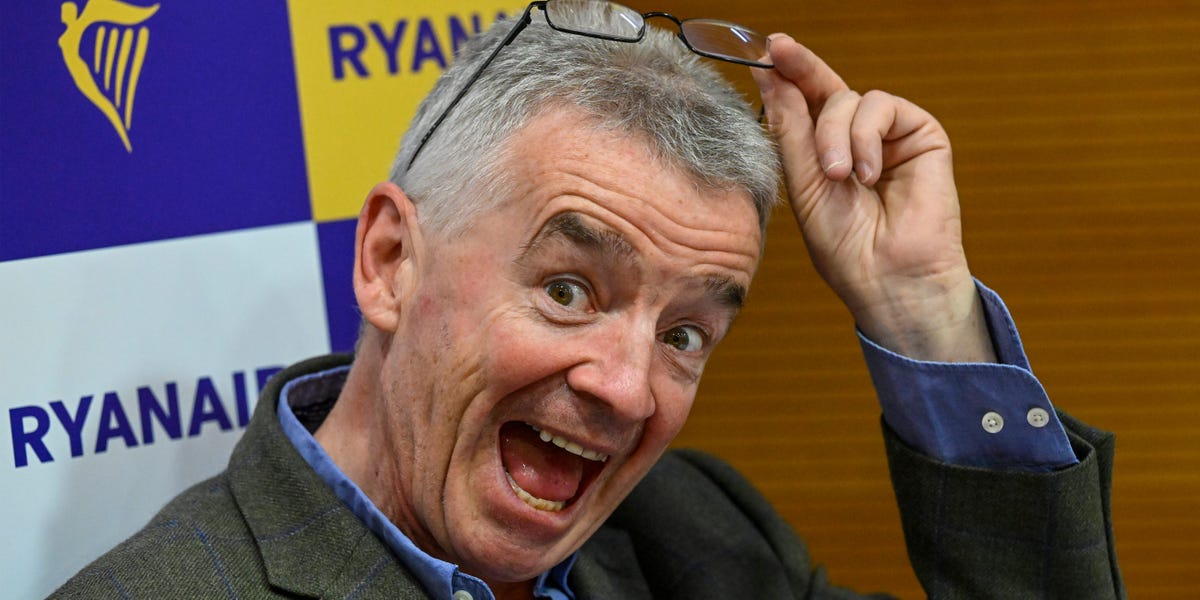
Ryanair disclosed on Monday that CEO Michael O'Leary is negotiating a new contract that could grant him share options worth roughly $300 million. The potential award is tied directly to Ryanair's stock performance, meaning O'Leary only collects if the share price hits predetermined targets. The timing of the announcement–bundled with Ryanair's annual results–frames the option package as a retention tool for the executive who has run the airline since 1994.
O'Leary's Compensation and the Low-Cost Carrier Reading
The size of the potential grant signals that Ryanair's board expects meaningful share price appreciation. For investors tracking European low-cost carriers, this is a data point on management confidence. Ryanair operates with the lowest unit costs in the sector, a structure that allows it to undercut rivals on fares while maintaining operating margins. A CEO with a direct financial incentive to expand capacity, hedge fuel, and grow ancillary revenue reinforces that competitive posture.
The $300 million figure is not a guaranteed payout. The options will vest only if Ryanair's market capitalization–currently about $20 billion–grows enough to clear the exercise price. The board will set that strike price in the final contract. A high strike aligns O'Leary with long-term shareholders. A low strike would draw investor skepticism. The annual results provided the headline; the proxy statement will reveal the mechanics.
Catalyst Path: Shareholder Vote and Performance Triggers
The next concrete event is the annual general meeting, where shareholders vote on the new contract. The board faces a balancing act. Too rich a package risks a contested vote, especially among institutional investors who monitor CEO-to-worker pay ratios. Too restrictive a strike price could fail to retain O'Leary, who has previously exercised options worth hundreds of millions and delivered strong returns each time.
Ryanair’s stock reaction to the announcement offers a real-time gauge. A positive reception suggests the market views the options as a retention mechanism rather than a giveaway. A negative response would indicate the size exceeds what the market considers reasonable, potentially pressuring the board to adjust terms before the vote.
Next Decision Point: The Proxy Filing
O'Leary’s existing contract is due for renewal. The proxy statement, expected in the final contract, will include the exact share price targets, vesting schedule, and dilution impact. That filing is the next concrete marker for anyone evaluating Ryanair’s governance and incentive structure.
For the broader sector, the O'Leary negotiation raises a question about executive compensation benchmarks in European aviation. If Ryanair sets a precedent with a $300 million option package, other low-cost carriers may face pressure to compete for top talent, potentially affecting their cost structures. Investors in airlines should watch the proxy filing for the strike price details and the shareholder vote outcome. The durability of the low-cost model depends partly on aligning management incentives with shareholder interests. Ryanair’s board is making a deliberate bet that its current CEO can continue to generate the growth that justifies the payout.