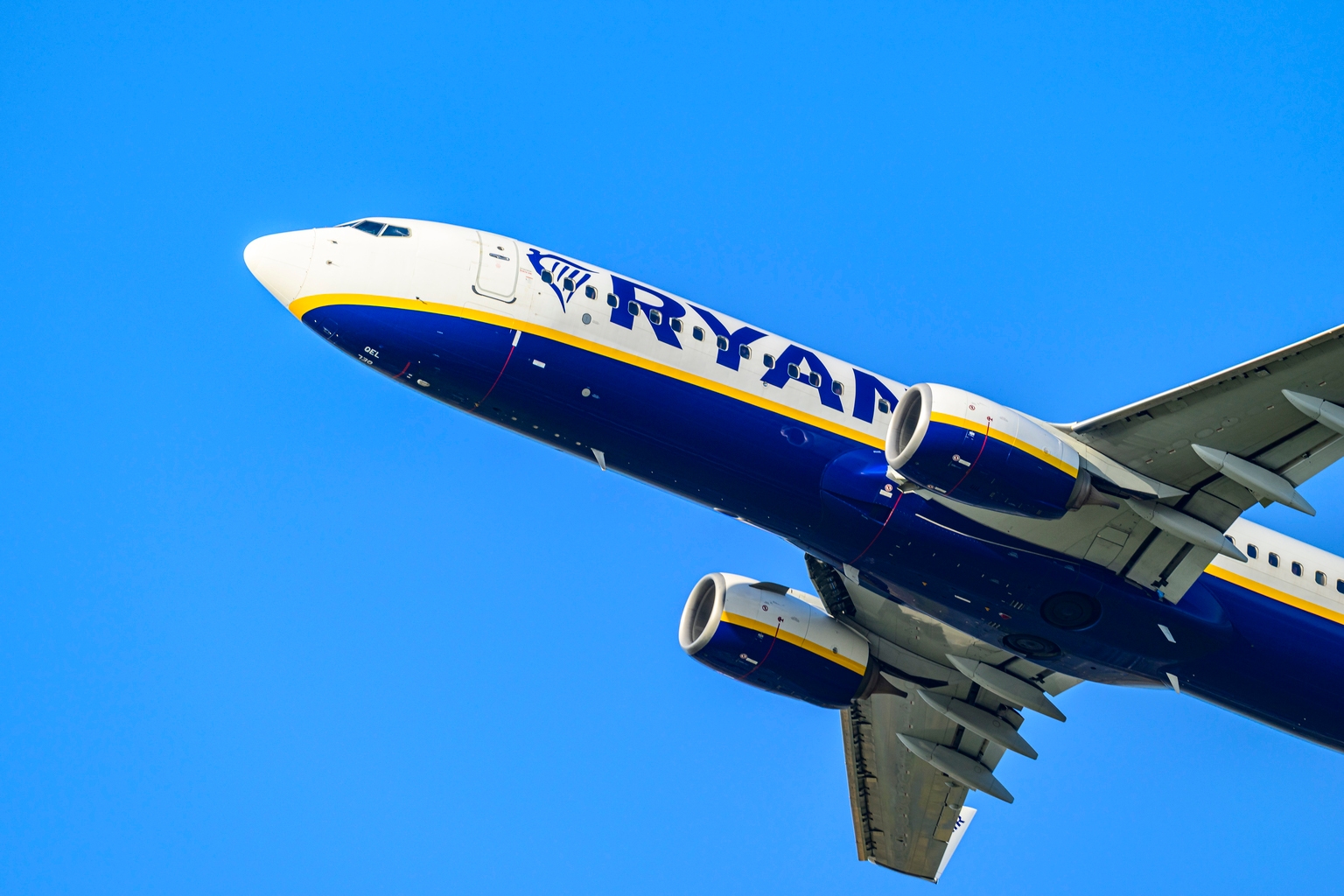
Ryanair Holdings has taken a hit since the Middle East conflict escalated in early October, tracking a sector-wide selloff that swept through European carriers. The stock now trades at roughly 12 times forward earnings, a discount to its five-year average.
The selloff assumes all airlines face the same risk stack: higher fuel costs, longer flight paths, weaker demand for travel to the region. Ryanair's route map tells a different story.
The carrier operates exclusively within Europe. It has no routes to Tel Aviv, Dubai, or any Middle Eastern destination. It does not fly over Iran or Iraq. The network is concentrated on short-haul intra-European flights, with the bulk of revenue from Western and Central Europe. The conflict's direct operational impact on the airline is close to zero, according to flight tracking data and the carrier's published route map.
What the market priced in was a broad risk-off move across travel and leisure stocks. EasyJet and Wizz Air, which also have limited Middle East exposure, fell alongside Ryanair. Airlines with direct exposure – including Emirates, Qatar Airways, and El Al – have seen larger and more sustained declines. The gap suggests a disconnect between the stock price move and the actual business impact for Ryanair.
Fuel is the variable traders focus on. A spike in crude oil hits every airline. Ryanair hedges fuel more aggressively than most peers. The carrier had roughly 90% of its fuel requirements hedged through the end of the fiscal year at prices below current spot levels, according to its half-year results. That buffer insulates its cost base from the immediate oil price jump that followed the conflict's start.
Revenue exposure tells a different story from network carriers. Ryanair does not depend on long-haul traffic or connecting hubs that could lose traffic from Asia-Pacific reroutings. Its base is European leisure and business travel, which has shown little sign of weakening. Forward bookings through the winter months remain within the company's guidance range, executives said on the post-earnings call.
The risk that could change the calculus: an escalation that closes European airspace or triggers widespread travel restrictions. That scenario would hit all carriers, including Ryanair. A prolonged conflict that pushes Brent crude above $100 a barrel and keeps it there through spring 2025 would erode the hedging advantage as contracts roll off. Neither scenario is the market's base case today.
The stock's decline creates a valuation gap relative to the underlying business. Ryanair trades at roughly 12 times forward earnings, a discount to its five-year average and to some European peers when adjusted for the network exposure differences. The recovery path is simple: if tensions ease, the sector rotation unwinds, and Ryanair's stock should revert to a level consistent with its earnings power, traders said.
The next catalyst is the carrier's winter season update, due next month, when management will publish December-quarter traffic and load factor data. A solid print would reinforce the message that Middle East fears do not apply to Ryanair's actual operations.