New Auction Mechanism Distorts Nifty Close, Ends Four-Day Rally
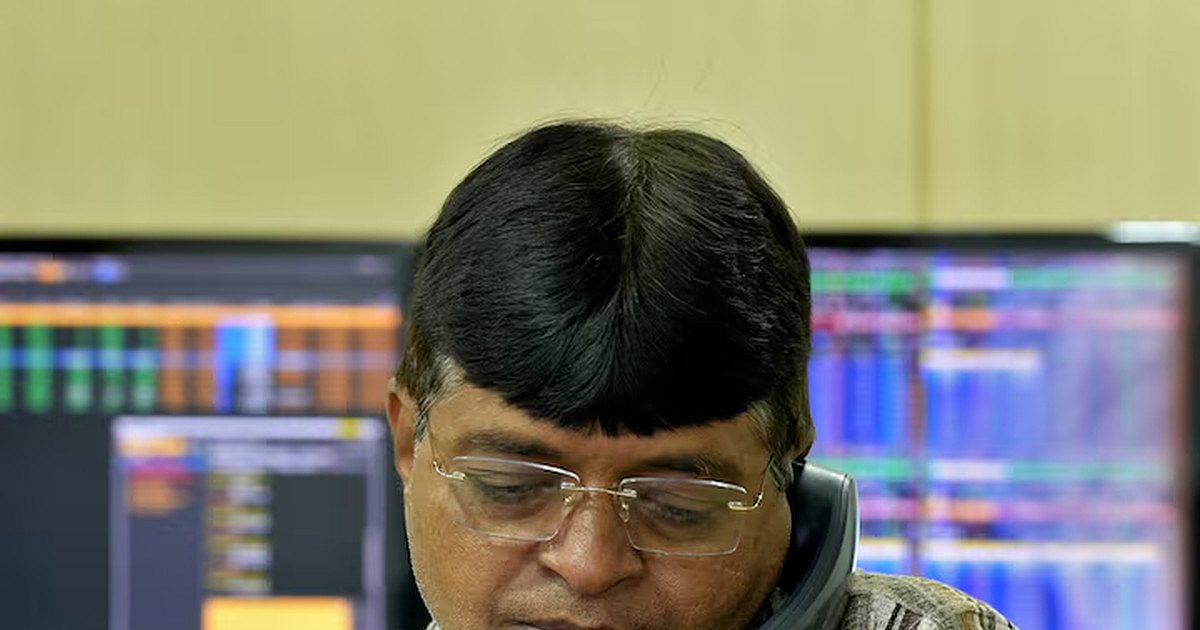
The new closing auction for F&O stocks skewed Nifty's close, down 159 points to 24,614.90, as traders recalibrated after Monday's auction lifted heavyweights.
Sensex and Nifty closed lower on Tuesday, ending a four-day rally, after the new Closing Auction Session (CAS) for stocks with futures and options contracts skewed closing prices for a second straight session.
The 30-share BSE Sensex fell 210.08 points, or 0.27%, to settle at 78,428.95. The index swung 931.28 points intraday, touching a high of 79,143.15 and a low of 78,211.87. The 50-share NSE Nifty dropped 159.40 points, or 0.64%, to 24,614.90, after sliding as much as 346.35 points, or 1.39%, to an intraday low of 24,427.95.
The CAS went live on Monday in the equity cash segment. It replaces the previous closing-price calculation with an auction-based mechanism that determines the closing prices of eligible stocks carrying F&O contracts. The change is aimed at making the price discovery process more transparent. The first two sessions produced an unusual divergence between the two benchmarks, which normally move in step.
Monday's session ended with the same aberration, the first visible effect of the new mechanism. The auction lifted closing prices in several index heavyweights, setting up Tuesday's profit-taking as prices reverted toward levels reached during continuous trading.
"The introduction of the Closing Auction Session for F&O stocks has added a new layer of volatility to benchmark indices, with Tuesday's trade reflecting an early adjustment to the revised market structure," said Hariselvan Radhakrishnan, Founder and CEO of HST Wealth, a research analyst firm.
"After Monday's auction lifted closing prices in several index heavyweights, investors spent much of today's session recalibrating positions as prices gravitated back toward levels established during continuous trading," Radhakrishnan said.
The adjustment has been more evident in the Nifty than in the Sensex, Radhakrishnan said, because stocks most influenced by the new auction mechanism witnessed sharper profit-taking. "The divergence appears to reflect market mechanics rather than any meaningful change in underlying fundamentals," he added.
"Tuesday's weekly expiry, combined with the implementation of the new mechanism for determining F&O closing prices, has led to a distortion in market trends," said Vinod Nair, Head of Research at Geojit Investments Limited.
The distortion is concentrated in the index heavyweights that dominate the F&O universe. From the Sensex pack, Hindustan Unilever, NTPC, HDFC Bank, Reliance Industries, InterGlobe Aviation and Tech Mahindra were the laggards. Trent, Bajaj Finance, Bharat Electronics and Tata Steel closed higher.
Both analysts framed the move as a market-mechanics issue rather than a fundamental one. Radhakrishnan called the divergence an "early adjustment" to the revised market structure, and Nair pointed to the weekly expiry as a compounding factor. The CAS is now the permanent method for setting closing prices of F&O stocks, and the market is still absorbing its effects.
HDFC Bank, which carries an Alpha Score of 36/100 on AlphaScala's gauge, was among the decliners.
Foreign institutional investors bought equities worth Rs 922.26 crore on Monday, exchange data showed. The recent FII buying has accompanied the market's four-day advance. Brent crude climbed 2.49% to USD 85.86 per barrel.
In Asian markets, South Korea's KOSPI, Japan's Nikkei 225 and Shanghai's SSE Composite ended higher, while Hong Kong's Hang Seng settled lower. European markets were mostly in positive territory, and US markets closed sharply higher on Monday.
Drafted by a large language model from the source reporting linked above, then screened by automated publishing checks. It is not read by a journalist before publication. Some articles cite our Alpha Score. Verify prices and figures against the original source. Educational coverage, not personalized advice.