Gartner Sees $379B Digital Twin Market by 2034 as GE, Unilever Report Savings
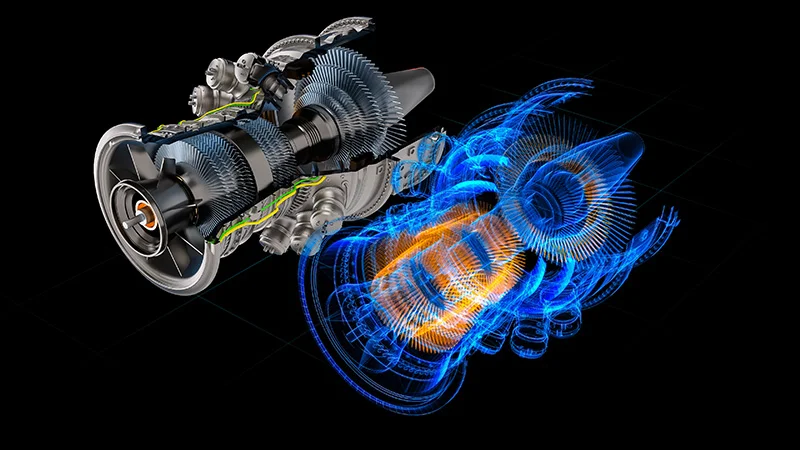
Gartner projects $379B digital-twin revenue by 2034. GE saved $1.6B via SmartSignal. Unilever raised capacity 20% in Brazil. Hong Kong airport digitised 700,000 sq m Terminal 1.
Gartner projects the market for digital-twin-enabling software and services will reach $379 billion in global revenue by 2034, up from $35 billion in 2024. The forecast follows detailed reports from industrial companies that have already deployed the technology at scale, showing measurable cost reductions and efficiency gains.
General Electric's SmartSignal platform monitors over 7,000 critical assets worldwide using digital twin technology. The platform has saved clients a total of $1.6 billion. One airline customer using GE's Analytics-Based Maintenance programme improved engine time-on-wing by 20 percent and cut unscheduled engine removals by a third.
Unilever has deployed digital twins across 124 factories and 2,100 production lines, covering more than 75 percent of its manufacturing capacity. At its Indaiatuba facility in Brazil, the world's largest laundry detergent factory, the system raised production capacity by 20 percent and delivered nearly €3 million in savings in 2024. At the Tinsukia plant in India, packaging trials conducted via digital twin reduced virgin plastic usage by 21 percent and slashed trial duration by 84 percent. The number of annual trials jumped from two to 30 between 2019 and 2023. Across all sites, Unilever reported a 3 percent rise in overall equipment effectiveness, a 5 percent increase in labour productivity, and an 8 percent reduction in costs.
Hong Kong International Airport built a digital twin of its Terminal 1, covering 700,000 square meters across nine floors. The airport uses real-time IoT data from sensors embedded throughout the facility to track passenger flows and send predictive alerts for maintenance and resource allocation. The twin was digitised using laser scan surveys and as-built engineering data, including architecture, structural, mechanical, electrical, and plumbing systems. The airport said the system supports comprehensive management, predictive decision-making, and maintenance across the lifecycle of its buildings.
A digital twin is a dynamic virtual replica of a physical asset, process, or system, updated continuously with real-time data from IoT sensors. Sensors gather temperature, vibration, pressure, and throughput data into a model that uses physics-based simulation and AI analytics to interpret current conditions and predict future developments. The two-way, real-time connection with the physical world sets a digital twin apart from a traditional 3D model or simulation. The virtual replica evolves as the asset ages, is stressed, or undergoes repairs, allowing operators to run what-if scenarios without risking downtime or damage to the actual asset.
The intellectual roots of the concept date back decades. During the Apollo 13 crisis in 1970, NASA engineers used 15 simulators fed with live telemetry from the damaged spacecraft to rehearse rescue procedures. In 1993, computer scientist David Gelernter described mirror worlds as software models that depict slices of reality. Michael Grieves formalised the framework for mirrored spaces in 2002 at the University of Michigan. NASA engineer John Vickers coined the term digital twin in 2010. Industrial adoption accelerated in the mid-2010s as IoT platforms matured and became more widespread.
Companies that intend to deploy digital twins face several business challenges. Most organisations will not build a twin from scratch on their own. Internally they need domain experts who understand the physical asset, IT architects capable of managing data pipelines and system integration, and a programme owner with authority to promote cross-functional alignment. What most organisations lack are the simulation engineers, physics-informed AI specialists, and platform developers essential for constructing and maintaining the twin. The choice between a vendor platform and a custom build depends on asset complexity, data volume, and how proprietary the processes are.
GE holds an Alpha Score of 56 out of 100 and Unilever scores 57 out of 100. Both are labelled Moderate. Investors can track the companies on their GE stock page and UL stock page.
The organisations highlighted here did not adopt digital twins as a mere experiment. They integrated the technology into core operations because the economic benefits are evident: per-incident savings in the hundreds of millions, double-digit efficiency gains, and sustainability outcomes that satisfy both regulators and shareholders. As more companies in advanced industries begin to use digital twins at some level, the remaining organisations face the question of how quickly they can bridge the gap before it becomes too difficult to do so.
Drafted by a large language model from the source reporting linked above, then screened by automated publishing checks. It is not read by a journalist before publication. Some articles cite our Alpha Score. Verify prices and figures against the original source. Educational coverage, not personalized advice.