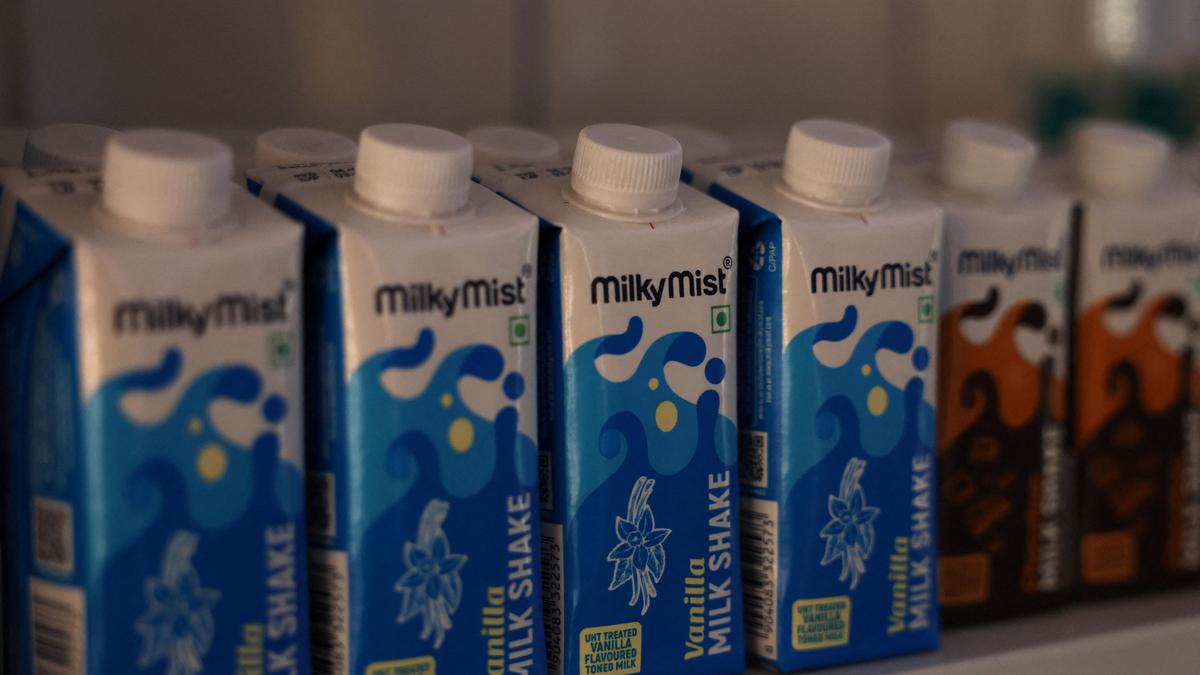
Milky Mist raised ₹482 crore from Temasek-affiliated Jongsong Investments, marking a key step toward its ₹2,035 crore IPO. The company reported FY26 revenue.
Milky Mist Dairy Food Limited has secured approximately ₹482 crore in a pre-IPO funding round anchored by Jongsong Investments Pte. Ltd., an affiliate of Singapore-based Temasek Holdings. This capital injection serves as a critical institutional validation for the dairy major as it prepares for a public market debut. The transaction structure includes a primary capital raise of roughly ₹350 crore alongside a secondary share sale of approximately ₹120 crore, providing both growth capital for the company and liquidity for its existing promoters.
The primary issuance involved the allotment of 5,43,789 equity shares and 25,00,000 compulsorily convertible preference shares (CCPS), both priced at ₹139.76 per share. The CCPS component is particularly significant, as these instruments are set to convert into equity on a 1:1 basis prior to the company’s listing. This mechanism ensures that the dilution impact is locked in at the current valuation, providing clarity for future public shareholders. Simultaneously, promoters Sathishkumar T and Anitha S executed a secondary sale of 89,43,903 equity shares at the same ₹139.76 price point, totaling about ₹125 crore. This secondary component is a standard feature in pre-IPO rounds, allowing founders to de-risk their personal holdings while maintaining operational control.
Milky Mist’s financial performance provides the context for this valuation. The company reported revenue of approximately ₹3,275 crore for FY26, exceeding its internal growth projections. This expansion is not tied to a single product line but rather a broad-based performance across its core categories, including ice creams, beverages, paneer, and cheese. The company has also seen a standout performance from its emerging protein offerings, which suggests a successful diversification strategy beyond traditional dairy staples.
Operational efficiency remains a core pillar of the investment case. The company utilizes a fully automated processing facility in Perundurai, Erode, Tamil Nadu, which is designed to optimize throughput and production timelines. By integrating its own logistics model, Milky Mist has managed to maintain control over its supply chain, a critical factor for perishable goods providers. The brand portfolio, which includes 'SmartChef', 'Capella', and 'Misty Lite', alongside recent acquisitions 'Briyas' and 'Asal', indicates a strategy of aggressive market penetration across multiple price points and consumer segments.
The company received SEBI approval for a ₹2,035 crore IPO in October 2025. While the company has not set a definitive date, CEO and Whole-time Director K Rathnam has confirmed that the listing remains on track. The primary constraint is the SEBI approval window, which expires in October 2026. Management is currently evaluating market conditions to identify the optimal window for the launch.
For investors, the key takeaway is the shift from private to public capital structures. The Temasek-backed round provides the necessary balance sheet strength to support the company through the volatility of an IPO process. While the dairy sector is often viewed through the lens of commodity pricing, Milky Mist’s focus on value-added products and automated logistics differentiates it from traditional dairy cooperatives. Investors interested in the broader consumer space can find additional stock market analysis to compare this valuation against established peers. The success of this pre-IPO round suggests that institutional appetite for high-growth, value-added food companies remains robust, even as the broader market navigates shifting interest rate environments. The next concrete marker for the company will be the formal announcement of the IPO launch date, which will be dictated by the management's assessment of the current equity market liquidity and sector-specific sentiment.
AI-drafted from named sources and checked against AlphaScala publishing rules before release. Direct quotes must match source text, low-information tables are removed, and thinner or higher-risk stories can be held for manual review.