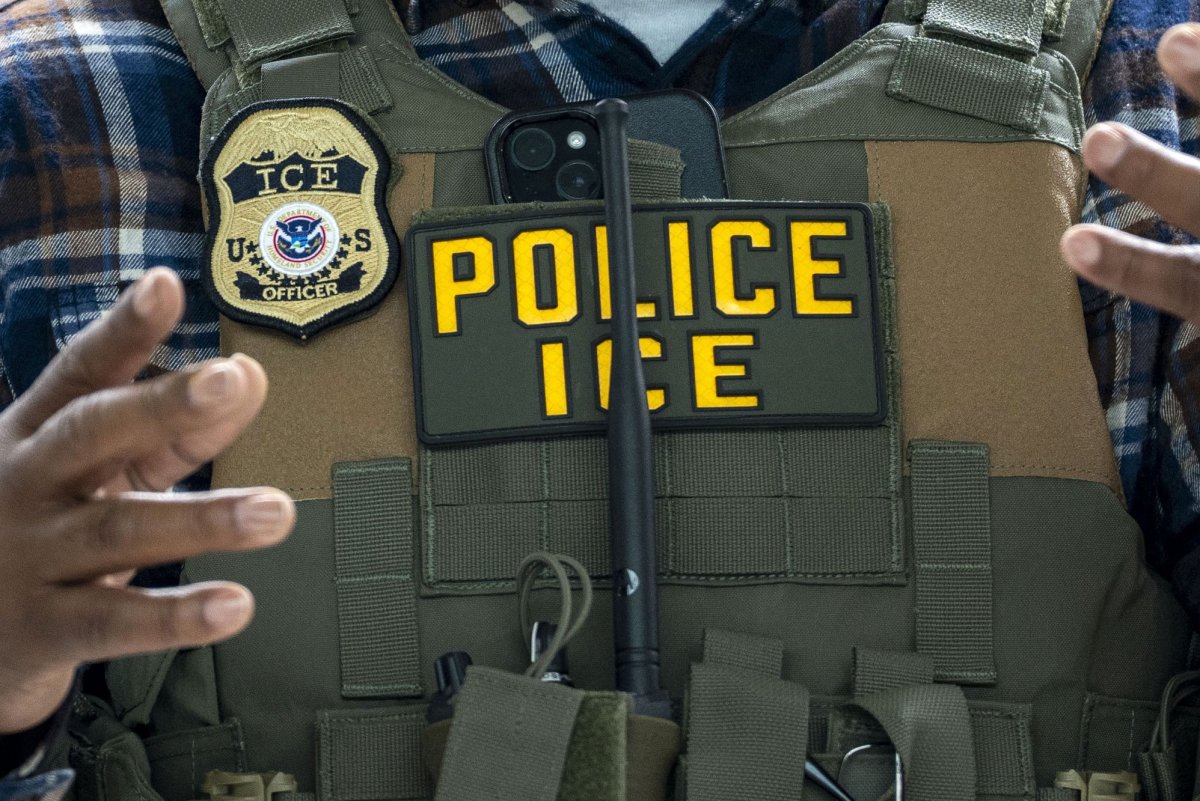
The intersection of federal immigration enforcement and local municipal policy reached a volatile breaking point late Saturday at Wyckoff Heights Medical Center in Brooklyn. An operation conducted by U.S. Immigration and Customs Enforcement (ICE) agents to transport a detained individual for medical treatment escalated into a multi-hour standoff, resulting in eight arrests and significant public disorder. The incident highlights the friction between federal mandates and the operational realities of sanctuary city jurisdictions, where local law enforcement is restricted from assisting in federal immigration actions.
Operational Mechanics of the Wyckoff Heights Standoff
The catalyst for the unrest was the presence of ICE agents inside the medical facility, where they had brought Chidozie Wilson Okeke, a Nigerian national, for treatment following injuries sustained during his initial arrest. According to the Department of Homeland Security, Okeke had overstayed his visa and possessed a prior record involving assault and criminal drug possession. The sight of a handcuffed individual under federal guard within a public hospital triggered a rapid mobilization of approximately 200 protesters, who gathered outside the facility by 10 p.m. EDT.
As the situation intensified, the crowd attempted to physically obstruct the departure of federal vehicles. This led to direct confrontations between protesters and the New York Police Department (NYPD). While the NYPD arrived on the scene in response to emergency calls regarding blocked hospital entrances, officials emphasized that their involvement was limited to maintaining public order. The NYPD maintained that they did not participate in the ICE operation, adhering to New York City’s sanctuary city policies that prohibit local officers from acting as agents of federal immigration enforcement.
Institutional Friction and Policy Constraints
The standoff lasted until approximately 2 a.m., characterized by chaotic scenes including the throwing of refuse containers and the deployment of pepper spray by federal agents. New York City Councilwoman Sandy Nurse noted that the duration of the standoff was driven by the continuous arrival of neighborhood residents attempting to prevent the removal of the detainee. This event serves as a practical case study in the limitations of local sanctuary status when federal agencies operate within municipal borders. While local police may refuse to assist in immigration enforcement, they remain obligated to manage the public safety consequences of federal actions that occur within their jurisdiction.
For market observers tracking the broader landscape of public policy and institutional risk, the incident underscores the unpredictable nature of federal-local jurisdictional conflicts. Such events can create localized operational disruptions for public infrastructure, including healthcare facilities, and force municipal governments into reactive security postures. The financial and reputational risks associated with these confrontations are often difficult to quantify but remain a persistent variable in urban governance.
Market Read-Throughs and Institutional Exposure
While this specific event is localized, it reflects the ongoing tension between federal agencies and municipal authorities that can influence the risk profile of companies operating in sensitive urban environments. Investors should consider how such volatility impacts the operational continuity of public-facing institutions. For those analyzing the broader financial sector, including entities like ICE (Intercontinental Exchange Inc.), it is important to distinguish between the federal agency and the exchange operator, as the former is a government entity while the latter is a private market infrastructure provider.
In the context of stock market analysis, the incident serves as a reminder that regulatory and legal environments are not static. Companies with significant exposure to New York City or other sanctuary jurisdictions must account for the potential for sudden, high-visibility protests that can disrupt business operations and demand significant local law enforcement resources. The divergence between federal immigration policy and local municipal law continues to be a source of friction that can manifest in unexpected ways, affecting everything from local logistics to the public perception of institutional stability.
As the fallout from the Wyckoff Heights incident settles, the focus shifts to how the NYPD and federal agencies will coordinate—or fail to coordinate—in future scenarios involving medical transport or other high-visibility enforcement actions. The eight arrests made during the melee are likely to trigger further legal and political scrutiny, potentially leading to renewed debates over the boundaries of local sanctuary policies and the extent of federal authority in municipal spaces. For observers of the New York Times (NYT), the coverage of these local tensions remains a key component of the broader narrative surrounding urban governance and civil unrest.