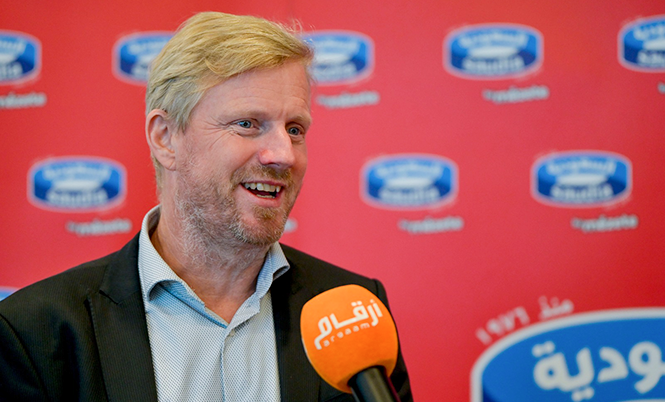
Saudia Dairy and Foodstuff Co. (SADAFCO) is navigating a period of operational transition as it balances volume-driven growth against a challenging cost environment. CEO Patrick Stillhart recently outlined a strategy centered on consolidating market leadership and improving efficiency, even as the company reported a 35% decline in first-quarter 2026 profit. While the headline figure of SAR 82 million represents a significant contraction from the SAR 126.1 million recorded in the same period of 2025, the underlying mechanics of the business suggest a more nuanced story of volume resilience versus margin compression.
The Divergence Between Volume and Margin
The primary narrative for SADAFCO in the current cycle is the disconnect between sales volume and bottom-line profitability. While the company achieved an 8.5% growth in sales volume across its core operations, the profit decline was driven by a cost cycle that has proven difficult to offset. This is a classic margin squeeze scenario where input costs have outpaced the company's ability to pass price increases to consumers, particularly in a segment where demand for essential dairy products remains price-sensitive.
The Polish business unit serves as a critical case study for this volatility. Despite maintaining stable volumes, the unit saw revenues drop by approximately 32% in the first quarter of 2026. Stillhart attributed this directly to fluctuating prices in commodity markets. For investors, this highlights the risk of international exposure where local operational success is often eclipsed by broader commodity price swings that the company cannot control. The 2.9% revenue growth in the rest of the company’s operations serves as a better proxy for the core business health, suggesting that the domestic and regional segments remain fundamentally sound even if the consolidated numbers are weighed down by international volatility.
Strategic Pivot to High-Impact Channels
SADAFCO is attempting to insulate its future performance through a push into high-impact channels, specifically e-commerce, food service, and exports. These channels are currently acting as the primary growth engines for the company. The 8.3% quarter-on-quarter revenue increase for Q1 2026 was largely fueled by this momentum, combined with seasonal demand during the holy month of Ramadan.
This shift is not merely opportunistic; it is a structural response to changing consumption patterns. The CEO noted a growing trend toward long-life milk, which offers consumers convenience and reduced waste. By aligning its product mix toward these higher-margin, longer-shelf-life items, SADAFCO is attempting to build a more defensive moat around its core dairy segment. The success of this strategy will be measured by the company's ability to maintain its 8.5% volume growth rate as the seasonal tailwinds of Ramadan fade and the company enters a more normalized demand environment.
Operational Discipline and Future Catalysts
Looking ahead, the investment case for SADAFCO rests on its ability to execute on operational efficiency. The company is currently in a phase of proactive portfolio management, ensuring that its business units are aligned with a strategy of sustainable growth. Investors should monitor whether the company can successfully stabilize its international operations, specifically the Polish unit, which currently acts as a drag on overall performance.
While the company maintains a strong market position, the current cost cycle remains the primary headwind. If commodity prices continue to fluctuate, the company may be forced to choose between further volume growth and margin protection. For those tracking the broader stock market analysis, SADAFCO’s experience serves as a reminder that volume growth alone is insufficient when the cost of goods sold is subject to external, uncontrollable market forces. The path forward requires a stabilization of these costs to allow the company’s strong domestic volume growth to translate into bottom-line expansion.
For context on broader sector dynamics, firms like ICE (Intercontinental Exchange Inc.) often provide a different look at market infrastructure, currently holding an Alpha Score of 39/100, reflecting a mixed outlook in the broader financial landscape. SADAFCO’s ability to navigate its specific cost cycle will be the ultimate test of its management's ability to maintain long-term value for shareholders.