Stocks● Neutral
Legacy Minerals Scoping Study Validates Mt Carrington Economics
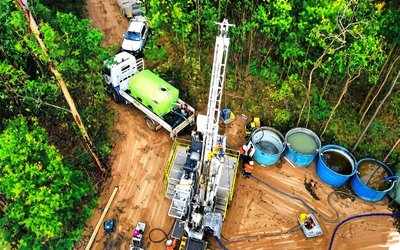
Legacy Minerals' Mt Carrington scoping study shows a $716m NPV and 38% IRR. The project targets 373k oz gold and 9.91m oz silver, moving to PFS with $8m cash.
Continue with
Legacy Minerals (ASX: LGM) has cleared a critical hurdle for its Mt Carrington project in New South Wales, releasing a scoping study that outlines a 19-year mine life and robust pre-tax economics. By shifting toward a conventional 1 million tonne per annum open-pit operation, the company has moved the project from a conceptual asset to a development-ready candidate. The study, prepared by Ausenco, provides a quantitative baseline that allows investors to evaluate the project's sensitivity to metal price fluctuations and its potential for long-term cash generation.
The Economic Case and Capital Intensity
The study presents two distinct valuation scenarios based on metal price assumptions. The spot case, which reflects current market conditions, yields a pre-tax net present value (NPV) of $716 million with an internal rate of return (IRR) of 38%. Under this scenario, the project achieves payback in 32 months. The base case, a more conservative model, still delivers a respectable pre-tax NPV of $542 million and an IRR of 32%, with a payback period of 36 months.
These figures are supported by a life-of-mine pre-tax free cash flow projection of $1.597 billion in the spot case. To unlock this value, Legacy Minerals faces an initial capital expenditure requirement of $220.5 million. This figure encompasses engineering, procurement, construction management, and contingency buffers. While this capital intensity is significant for a small-cap developer, the project benefits from existing brownfield infrastructure, including grid power access, established road networks, and historical tailings facilities, which help mitigate the execution risk typically associated with greenfield developments.
Operational Mechanism and Flowsheet Evolution
A pivotal change in the project’s design is the move to a cyanide-free flotation flowsheet. Historically, operations at Mt Carrington utilized carbon-in-leach circuits. The new design focuses on producing a bulk gold-silver sulphide concentrate through primary crushing, semi-autogenous grinding, and multi-stage flotation. This approach is intended to simplify the processing circuit and potentially improve environmental permitting timelines.
Life-of-mine recoveries are modeled at 78% for gold and 84% for silver. The mining plan targets 17.04 million tonnes of plant feed at a grade of 0.87 grams per tonne gold and 21.45 grams per tonne silver. The operation will extract material from eight shallow pits, including Strauss, Kylo, and Lady Hampden, maintaining a strip ratio of 3.06:1. By utilizing a staged mining schedule, the company aims to preserve a consistent feed grade profile, which is essential for maintaining the concentrate specifications required by third-party refineries.