Stocks● Neutral
Axel REE Shifts to In-Situ Recovery at Brazil’s Caladão Project
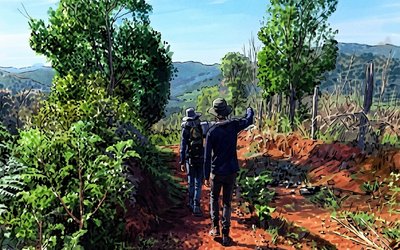
Field trials at the Woolrich site aim to validate low-cost extraction methods. Success could de-risk the project ahead of a potential demonstration plant.
Continue with
A Pivotal Pivot in Rare Earth Processing
In a strategic leap from controlled laboratory environments to real-world industrial application, Axel REE (ASX: AXL) has officially selected the Woolrich site as the location for its inaugural field trial of In-Situ Recovery (ISR) technology at the Caladão project in Brazil. This development marks a critical transition point for the company, signaling an aggressive push to validate its proprietary extraction methods at scale.
For investors and industry observers, the move from lab-scale bench testing to field-scale development is perhaps the most significant milestone in the lifecycle of a junior mining operation. By deploying ISR technology—a method traditionally associated with uranium and copper mining—at a rare earth site, Axel REE is attempting to fundamentally alter the cost-curve and environmental footprint associated with traditional hard-rock rare earth element (REE) mining.
The Strategic Importance of Caladão
The Caladão project has long been viewed as a cornerstone asset for Axel REE. Brazil, already a significant player in the global mineral landscape, offers a favorable regulatory environment for the development of critical minerals. The choice of the Woolrich site for the first ISR field trial is not arbitrary; it represents the culmination of extensive metallurgical testing conducted in pilot facilities, which provided the proof-of-concept necessary to authorize field-level expenditures.
In-Situ Recovery offers a distinct advantage over open-pit or underground mining, as it avoids the need for massive excavation and large-scale crushing and grinding circuits. By circulating a lixiviant solution through the ore body and recovering the mineral-rich fluid, Axel REE aims to minimize surface impact while maximizing recovery rates. Should the Woolrich trials yield results consistent with laboratory benchmarks, it would significantly de-risk the project and provide a blueprint for future expansion across the Caladão tenement.