Iran War Supplemental: $87.6B on Top of a $1.37T Deficit
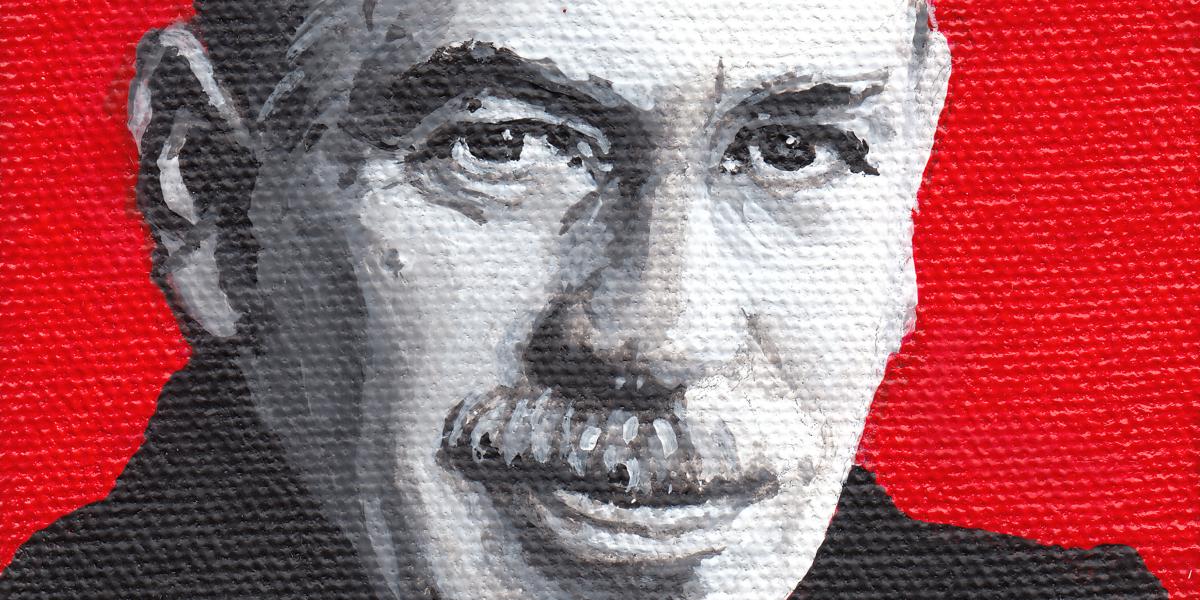
The Pentagon already estimates $37.5B spent on Iran; another $87.6B is requested. Keynes's 1920 inflation warning frames the deficit risk for equities.
The White House is seeking $87.6 billion in additional funding for the attack on Iran. The Pentagon's own estimate puts the spent amount at $37.5 billion. The supplemental request arrives with the federal government running a $1.37 trillion deficit through the first nine months of fiscal 2026.
The essay "Keynes Before He Became a Keynesian" puts both figures on the same ledger. It cites federal receipts of about $4.15 trillion over those nine months and outlays of $5.52 trillion. The state has no money of its own, the essay argues; every dollar was acquired from the private economy through force or the fraud of inflation.
James Madison, chief author of the Constitution, warned that of all the enemies of true liberty, "war is, perhaps, the most to be dreaded, because it comprises and develops the germ of every other." He called war "the parent of armies; from these proceed debts and taxes," the "known instruments for bringing the many under the domination of the few," and added that no nation can preserve its freedom in the midst of continual warfare. Madison signed his own war as president, the essay notes; incentives change when a person becomes a state agent. On today's version of that point: officials who approve the funding do not launch the missiles, and officials who launch the missiles do not explain the civilian deaths. The central bank buys the debt that makes the sequence coherent.
The immediate subject is the war the United States opened on Feb. 28 with a decapitation attack on Iran. A Tomahawk missile struck a girls' school in Minab, killing 156 to 168 people, at least 120 of them children, according to figures cited in the essay. It was the first time the United States started a war without having been attacked first, the essay says.
Voters, the essay says, never received the option of "Trump on the border, Ron Paul on Iran." Elections are bundled transactions. Once inside the government, the people who borrow and strike face different incentives from the people who elected them. The civilian question is "How can we stop the killing?" The state's version, the essay argues, is "How can we stop without losing credibility?"
The Inflation Tax Keynes Described
For the market mechanics of wartime money, the essay reaches back to John Maynard Keynes's The Economic Consequences of the Peace, published in 1920, before Keynes's name became a school of policy. Keynes described the pre-1914 world as one in which a Londoner could order goods from around the earth by telephone and travel abroad without a passport, carrying "coined wealth upon his person." Escape into the middle and upper classes was possible for any man of capacity or character, he wrote, and the inhabitants regarded that state of affairs as "normal, certain, and permanent." The militarism and imperialism that would wreck it were, to them, "little more than the amusements of his daily newspaper." The essay reads the passage as a demonstration of how smoothly a state can shatter an open trading order, and how few people notice the fragility while the shattering is underway.
The sharper warning comes in Chapter Six. "By a continuing process of inflation, governments can confiscate, secretly and unobserved, an important part of the wealth of their citizens," Keynes wrote. The process reorders wealth arbitrarily, enriching some while it impoverishes many. Debtor-creditor relations, which Keynes called "the ultimate foundation of capitalism," became in his telling "so utterly disordered as to be almost meaningless," and wealth-getting "degenerates into a gamble and a lottery."
Keynes quoted Lenin approvingly: "Lenin was certainly right. There is no subtler, no surer means of overturning the existing basis of society than to debauch the currency." The belligerent governments of the First World War had practiced the same method "from necessity or incompetence," doing "what a Bolshevist might have done from design," he wrote. They blamed the miserable state of their economies on "profiteers," the essay says. In a period of rapidly rising prices, every "trader who has purchased for stock or owns property and plant inevitably makes profits," Keynes wrote. He added that most of those governments, even with the war over, continued "out of weakness the same malpractices."
War spending rewards "the industrial recipients of the spending," and each supplemental reads as a successful lobbying campaign, provided the fighting stays over there. The cost lands on the rest of the economy through higher taxes, or through the inflation that covers the rest of the bill.
Deficit Math and the Growth-Stock Discount
For equity investors, the read-through has two channels. War money arrives as Treasury issuance. Whether the central bank monetizes the debt or leaves it in the market, the squeeze lands on the same assets: long-duration growth stocks, whose future cash flows are discounted more heavily at higher real yields, and consumer discretionary names, whose demand depends on real income holding up.
Apple (AAPL) sits at the center of both effects. Services revenue is contracted and recurring, the slice of the business that holds when consumers pull back. Hardware upgrades are what consumers defer, and the stock's multiple, built on long-dated cash flows, tracks the real-yield path set by the Treasury's borrowing needs. A weaker real-income backdrop shows up first in the hardware line, the part of the business without a subscription cushion.
The request works out to about 6% of the nine-month deficit. The essay's point is that the deficit and the war are the same bill, financed by taxes and by the inflation that covers what taxes will not. The remedy it proposes is total: "turn to the free market for governance and end the state."
"The process engages all the hidden forces of economic law on the side of destruction, and does it in a manner which not one man in a million is able to diagnose," Keynes wrote of inflation.
Drafted by a large language model from the source reporting linked above, then screened by automated publishing checks. It is not read by a journalist before publication. Some articles cite our Alpha Score. Verify prices and figures against the original source. Educational coverage, not personalized advice.