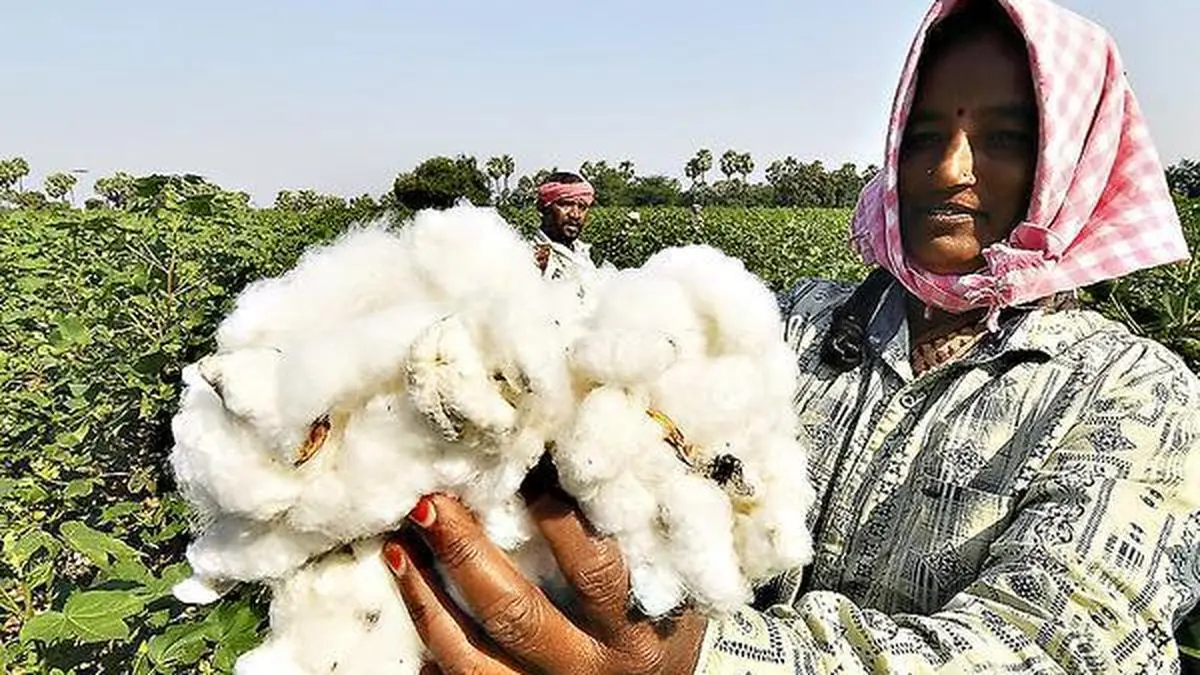
The Indian cotton market experienced a significant repricing event on Monday, as the Cotton Corporation of India (CCI) lifted its selling price by ₹2,900 per candy of 356 kg. This move, representing a single-day increase of over 4 percent, marks the sharpest daily adjustment this season and pushes domestic prices to two-year highs. The shift follows a broader rally in international benchmarks, with July delivery cotton on the Intercontinental Exchange (ICE) touching intraday levels above 84.5 cents per pound. For traders, this is not merely a localized supply adjustment but a reflection of a tightening global trade environment.
The Mechanism of the Price Shift
The catalyst for this move is a combination of sustained international demand and a narrowing basis between domestic Indian stocks and global futures. According to trade data, cotton futures on the ICE have appreciated by more than 28 percent since the start of March. This rally has effectively erased the previous premium of over 10 cents that CCI cotton held against international benchmarks, bringing the price basis to near zero. This competitive pricing structure is designed to clear inventory, and early reports suggest the strategy is working; CCI has successfully moved over two lakh bales despite the sudden price hike. The current inventory landscape, with roughly 40 lakh bales remaining unsold out of a 105 lakh bale procurement, suggests that the corporation has significant capacity to continue its current selling pace if international demand holds.
Supply Chain Disruptions and Export Demand
The surge in Indian cotton prices is fundamentally tied to shifts in global supply chains. As ongoing geopolitical conflicts disrupt traditional logistics, buyers in China, Bangladesh, and Vietnam have increasingly turned to Indian yarn to fill supply gaps. This export-led demand is the primary driver behind the price floor, as it creates a vacuum that pulls domestic supply into the global market. While the commodities analysis often focuses on energy or precious metals, the agricultural sector is currently exhibiting similar volatility driven by these same logistical bottlenecks. The stability of raw cotton (kapas) arrivals, currently estimated at 35,000 to 45,000 bales per day, provides a baseline for production, but the rapid absorption of these stocks by export-oriented mills is preventing any meaningful price cooling.
Downstream Resistance and Operational Risks
While the price increase benefits the CCI and primary producers, it is creating immediate friction for downstream fabric manufacturers. The industry is currently contending with a dual-threat environment: soaring input costs for yarn and a persistent shortage of labor across both airjet and conventional looms. This labor scarcity is causing significant delays in fabric deliveries, which are now being compounded by the inability of some manufacturers to absorb the latest round of yarn price hikes. If these fabric makers continue to face resistance from their own end-customers, the demand for yarn may eventually soften, regardless of the export appetite. Traders should monitor the pace of these deliveries as a leading indicator of whether the current price level is sustainable or if it will trigger a demand-side contraction.
Valuation and Inventory Dynamics
The following table summarizes the current state of the Indian cotton market as reported by trade sources:
| Metric | Value |
|---|
| Single-Day Price Increase | ₹2,900 per candy |
| Total Procurement | 105 lakh bales |
| Unsold CCI Stocks | 40 lakh bales |
| Cumulative Arrivals | 305 lakh bales |
From a technical perspective, the move from a seasonal low of ₹54,600 per candy to current levels around ₹65,600 represents a major shift in the market's equilibrium. The fact that this move occurred despite stable arrivals of 305 lakh bales indicates that demand is currently outstripping the seasonal supply cycle. The AlphaScore for ICE is currently 39/100, reflecting a mixed outlook as the exchange navigates the volatility of these agricultural futures alongside its broader financial portfolio. Investors should note that while the CCI is incentivized to continue selling at these levels, any reversal in the ICE futures price would quickly turn the current zero-basis advantage into a disadvantage, potentially forcing a rapid slowdown in export sales. The next concrete marker for this trend will be the volume of weekly sales reported by the CCI; a sustained pace above the current two lakh bale mark would confirm that global buyers are indifferent to the price hike, while a drop-off would suggest that the market has reached a local ceiling.