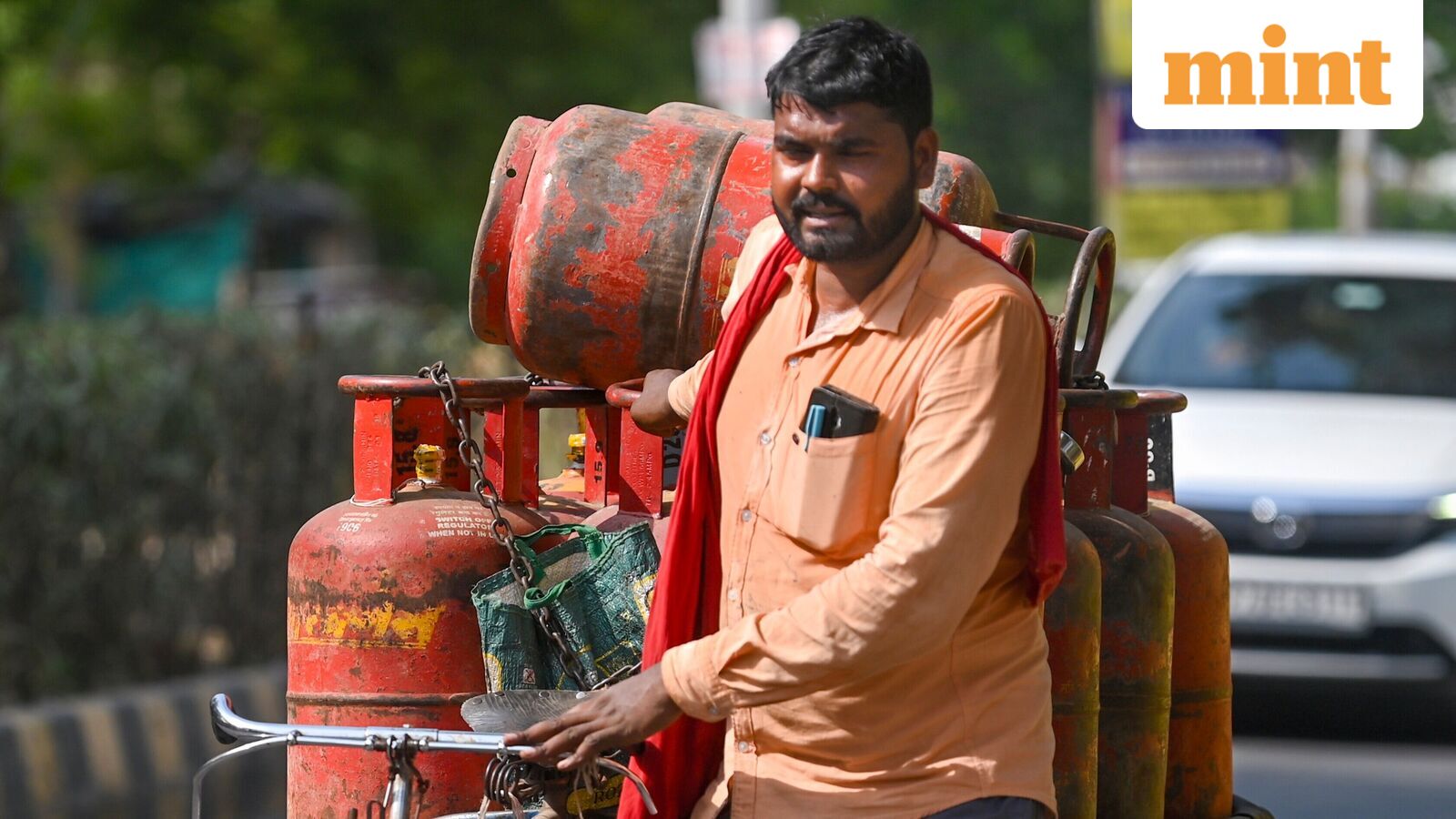
Domestic LPG prices rose by ₹29 per 14.2-kg cylinder effective 7 June, raising costs across major Indian cities. A Delhi cylinder now costs ₹942; Mumbai ₹941.50; Bengaluru ₹944.50; Kolkata ₹968; Hyderabad ₹994. That follows a ₹60 hike on 7 March, leaving state-owned fuel retailers – Indian Oil Corporation (IOCL), Bharat Petroleum Corporation Ltd (BPCL) and Hindustan Petroleum Corporation Ltd (HPCL) – still absorbing deep losses. Industry sources estimate the under-recovery at roughly ₹703 per cylinder after the latest revision.
The move comes against a backdrop of strained global energy markets. The Strait of Hormuz blockade – tied to the US-Iran conflict that escalated on 28 February – has disrupted a route carrying roughly 20% of global oil and natural gas trade. Brent crude has settled around $100 per barrel, keeping import costs elevated for India's OMCs.
This article breaks down the pricing mechanism, the loss structure at OMCs, the demand-side response, and what a trader should track to gauge the next catalyst.
The ₹29 Increment – What Changed and What Didn't
The latest hike takes the cumulative increase since March to ₹89 per cylinder. After the March adjustment, OMCs had made a partial dent in losses. Even so, the under-recovery remained at roughly ₹703, per industry sources. The ₹29 hike cuts that by about 4% – a marginal offset when measured against the total loss.
City-wise price comparison
| City | New Price (₹) | Change vs March (₹) | Trend |
|---|
| Delhi | 942 | +89 | Up, still below coastal ports |
| Mumbai | 941.5 | +89 | Mirrors landed cost |
| Hyderabad | 994 | +89 | Highest due to transport adders |
| Kolkata | 968 | +89 | East coast premium |
| Bengaluru | 944.5 | +89 | Inland logistics included |
The ₹89 cumulative increase since March is roughly 10% of the pre-March price (which was around ₹853 in Delhi). Yet even that fails to cover the full pass-through of global LPG prices, which have surged over 25% year-to-date on the Saudi Aramco Contract Price (CP) basis.
The Strait of Hormuz Link – Geopolitical Risk Translation
India imports roughly 50% of its LPG requirements. A significant portion arrives from the Middle East, primarily Qatar, Saudi Arabia, and the UAE – all reliant on transit through the Strait of Hormuz.
The blockade since 28 February has forced carriers onto longer, costlier diversions. Freight rates for Very Large Gas Carriers (VLGCs) have risen. The Saudi CP for LPG – benchmark for spot imports – has climbed, because the risk premium on Middle East loadings widened. Indian OMCs, which are price-takers on international spot cargoes, have seen their landed cost basis rise sharply.
The mechanism that ties LPG prices to crude
LPG is a co-product of both crude refining and natural gas processing. Its international price is fundamentally linked to crude oil via the naphtha-crude-LPG spread. Historically, LPG trades at a discount to Brent, though it can decouple during supply disruptions. When the Strait of Hormuz risk premium lifts crude, LPG typically follows, albeit with lags.
Joint Secretary in the Ministry of Petroleum and Natural Gas, Sujata Sharma, acknowledged the government has taken steps to secure supply:
Yet domestic production only meets about half of demand. The remainder must be imported at floating international prices, leaving OMCs exposed to under-recoveries whenever retail prices are not fully adjusted.
The ₹703 Under-Recovery – Anatomy of a Retail Subsidy
State-owned OMCs sell domestic LPG at a fixed, government-regulated price. When international prices rise above that, the gap is an under-recovery that either appears on OMC income statements or is offset through direct subsidy transfers from the government. In the current fiscal year, the government has absorbed some of the cost to control inflation. The latest hike signals that the fiscal cushion is thinning.
Loss per cylinder: the numbers
- Under-recovery before latest hike: ₹703/cylinder
- Latest hike offsets: ₹29/cylinder (4.1% reduction)
- Remaining under-recovery: ~₹674/cylinder
- Recent subsidies (March) only partially covered the April-June surge.
OMCs now also face losses on other fuels:
- Petrol: under-recovery ₹11/litre
- Diesel: under-recovery ₹33.6/litre
- CNG: cumulative hike of ₹6/kg since mid-May
These losses compound across the retail fuel portfolio. For BPCL and HPCL, LPG accounts for roughly 10-12% of revenues, yet it carries a disproportionate share of subsidy-related volatility. IOCL, with a larger upstream presence, has some offset from refining margins.
The practical rule for traders: watch the LPG under-recovery number each quarter. If it stays above ₹600, the government is likely to either raise prices further or announce a compensation package. Either move affects OMC cash flows and equity valuation.
Demand Compression – Booking Cycles and DAC Deliveries
Sujata Sharma highlighted three drivers of recent LPG demand moderation:
"There has been a reduction because our commercial and industrial LPG and the other reason is the booking period that we managed, I mean 25 days and 45 days. And the third reason is the DAC [Delivery Authentication Code] linked deliveries."
Mechanism of demand compression
- Commercial/industrial LPG consumption fell as high prices and alternative fuels (electricity, piped natural gas) substituted the product. This is price elasticity at work, amplified by the spring season when heating demand is low.
- Booking cycles were extended to 25 days (refill) and 45 days (new connection), forcing consumers to consolidate orders and reduce frequency.
- Delivery Authentication Code (DAC) – a system requiring a one-time password at delivery – eliminated ghost deliveries and multiple bookings. That mechanically lowers registered consumption, even if actual usage is stable.
The combined effect: reported demand in the March-May quarter likely fell 5-7% year-on-year. That gives OMCs a temporary cushion – lower volumes mean lower subsidy exposure – though it is not a structural fix.
Sector Read-Through – Where the Flow Goes
The LPG price hike ripples through multiple asset classes.
OMC stocks (IOCL, BPCL, HPCL)
Higher retail prices reduce under-recoveries, only marginally. The remaining loss still weighs on margins. If the government announces a direct subsidy compensation – as it did in FY2023 – OMC stocks would rally on balance-sheet clarity. Without it, the stocks remain tied to global crude direction and refinery spreads.
Inflation and CPI
LPG has a weight of roughly 2.5% in the Consumer Price Index (CPI) basket. A ₹29 hike adds about 0.08% directly to headline CPI. The indirect effect – higher transportation costs from diesel pricing – can amplify. The RBI tracks LPG prices as part of its inflation assessment; a persistent rise reduces room for rate cuts.
Household budgets
A ₹942 cylinder in Delhi means a household consuming 10 cylinders per year pays roughly ₹9,420 annually. That is about 4% of per-capita disposable income for lower-middle-class households. It shifts discretionary spending away from FMCGs and durables.
Commercial and industrial users
Commercial LPG (used in hotels, restaurants) is priced higher than domestic and not subsidised. Its costs have already surged – commercial LPG costs surged ₹200 per cylinder in April. The domestic hike indirectly pressures commercial prices by sustaining overall cost levels.
Key insight: the government's recent emphasis on expanding 5-kg LPG cylinders and piped natural gas (PNG) – as detailed here – is a structural shift to reduce per-unit LPG subsidy exposure. Traders should monitor the share of 5-kg sales as a lead indicator of policy direction.
What Would Confirm the Thesis – Next Data Points
A trader needs to track three things:
- Saudi Aramco CP for July – released around 5 July. If the CP rises further, OMCs will need another hike or subsidy injection.
- Booking cycle compliance – actual sales data from OMCs (monthly). A rise in volumes after the DAC system settles would indicate demand resilience, keeping under-recovery pressure.
- Government budget announcements – an explicit LPG compensation line in the July budget or a special disclosure would signal intervention.
What would break the thesis
- A de-escalation in the Strait of Hormuz tension, collapsing Brent to $80 and LPG imports accordingly. The under-recovery would shrink quickly without any retail price action.
- A direct subsidy transfer of ₹500+ per cylinder – that would eliminate OMC losses entirely and make the stock trade on fundamentals.
- A sharp drop in domestic consumption beyond DAC effects, indicating demand destruction that reduces volume, also reducing subsidy exposure.
The Trade and Risk Management Lens
For traders using LPG price exposure via oil proxies (crude futures, energy ETFs), the Indian domestic market is a lagging indicator. The real-time driver remains Brent and the Saudi CP. Yet the under-recovery metric gives a derivative play: if the government announces a subsidy, long OMC stocks; if not, short them against a crude proxy.
Risk to watch
The government's fiscal calculus is a two-way risk. A subsidy announcement would be bullish for OMC equities, bearish for INR (higher fiscal deficit). Conversely, no subsidy and more hikes could boost the rupee by reducing oil demand, straining household budgets and hurting consumer-discretionary stocks.
Summary: The Bottleneck Is Still Global
India's LPG pricing is a microcosm of the broader energy inflation challenge. The ₹29 hike only shaves a small portion off a deep under-recovery. Until the Strait of Hormuz risk recedes or the government foots the bill directly, OMCs remain squeezed. Traders should watch the July CP release and the budget session for the next clear catalyst.
Bottom line for traders: the ₹29 hike is a tactical adjustment, not a structural fix. The swing factor is the government's willingness to absorb losses – and that depends on the election cycle and inflation reading.