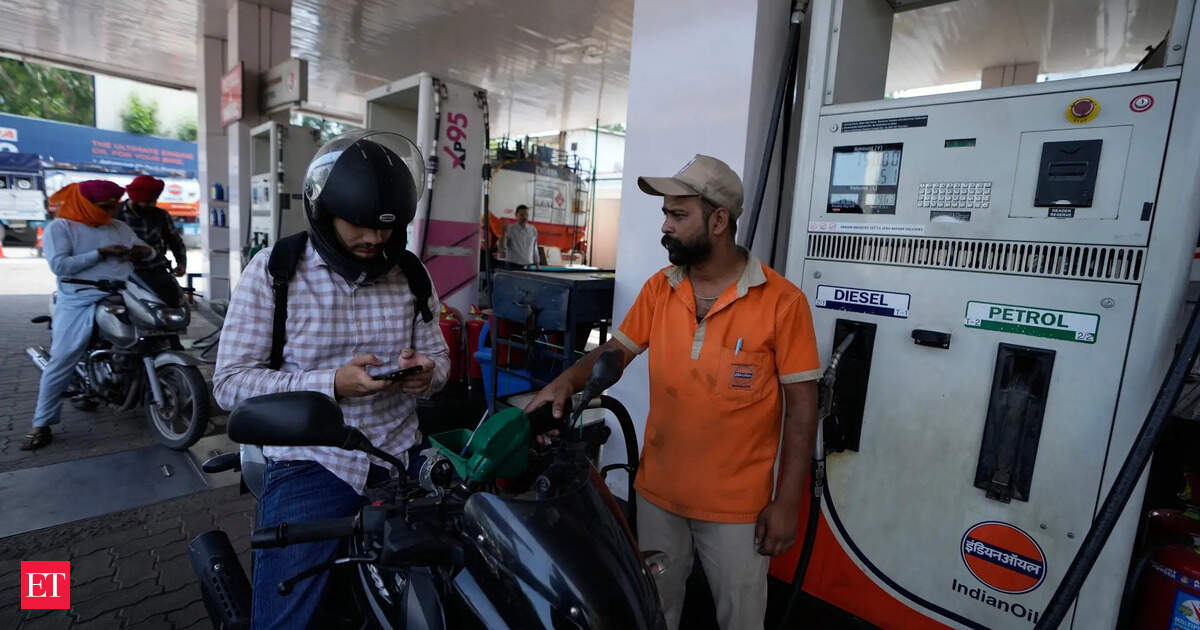
India allowed one of the smallest fuel price adjustments among major economies after a 76-day freeze, raising petrol and diesel by roughly 5% even as Brent crude (BZ) surged on the West Asia crisis. The government used excise duty cuts and forced state-run fuel retailers to absorb much of the crude cost increase, keeping domestic pump prices well below international benchmarks.
That modest pass-through stands in stark contrast to neighbouring markets. Nepal, Sri Lanka and other Asian importers raised petrol by 10–20% over the same period. The divergence reveals how India's fiscal and regulatory toolkit–controls on OMC margins, central and state excise flexibility, and a deliberate pacing of price changes–can decouple domestic fuel costs from volatile global crude benchmarks, at least temporarily.
India's Modest Fuel Price Adjustment After a 76-Day Freeze
From mid-July through early October, India locked petrol and diesel prices flat while crude rallied. The 76-day freeze was the longest such pause in recent years. When it broke, the hike of roughly 5% was well below the 15–20% jump in Brent crude over the same window. The government cut excise duty on petrol by about ₹2 per litre and diesel by a similar amount, sacrificing tax revenue. The remainder of the gap was absorbed by fuel retailers–primarily Indian Oil, Bharat Petroleum, and Hindustan Petroleum–through thinner marketing margins.
This strategy works as long as crude stays within a band the system can tolerate. Once Brent pushes past $85–90/barrel, the loss on every litre sold grows faster than the fiscal buffer. The West Asia crisis has injected a fresh supply risk premium: Brent briefly topped $90 following drone strikes on Red Sea shipping and escalating rhetoric between Iran and Israel. Each additional dollar of crude adds roughly ₹0.10–0.15 per litre to under-recoveries, depending on the rupee–dollar rate.
The Global Context: West Asia Crisis and Crude Supply Risk
The West Asia crisis is not a singular event but a cluster of disruptions: Houthi attacks on tankers in the Bab el-Mandeb strait, Israeli military operations in Gaza and Lebanon, and the risk of direct Iranian involvement. These threats have lifted the risk premium in Brent by $3–5/barrel since early September. India imports about 85% of its crude oil, making it one of the most exposed large economies to a sustained supply shock.
Other nations have reacted by passing costs through quickly. India's measured approach reflates the fiscal deficit in the short term (forgone excise revenue) and pressures OMC profitability in the medium term. Analysts tracking the sector note that the quarterly earnings of state-owned fuel retailers will be a key indicator of the system's capacity to keep absorbing costs without triggering a larger price hike or subsidy payment from the government.
Next Decision Points: Fiscal Space and OMC Margins
The real test comes if crude sustains above $90/barrel for more than a few weeks. India's fiscal arithmetic for FY25 assumes an average crude price of $75–80. Every dollar above that adds roughly ₹8,000–10,000 crore to the import bill and pressure on the budget. If the government chooses not to cut excise further–because it needs tax revenue for other spending–the burden falls entirely on fuel retailers. Their marketing margins would compress, potentially triggering a stock market reaction for upstream and downstream oil stocks.
The next concrete marker is the monthly petroleum planning and analysis cell (PPAC) data on under-recoveries, due in mid-November. If the under-recovery number for October shows a sharp spike, the government will likely face pressure to either allow a second price hike or direct a one-time subsidy payment. Either outcome would signal that India's ability to insulate households from global energy shocks is narrowing.
For traders watching crude and Indian energy equities, the West Asia crisis and India's policy response create a tight feedback loop. A sustained crude rally above $90 would likely force India's hand, widening the gap between domestic and international prices and forcing a repricing of OMC stocks and sovereign credit risk.