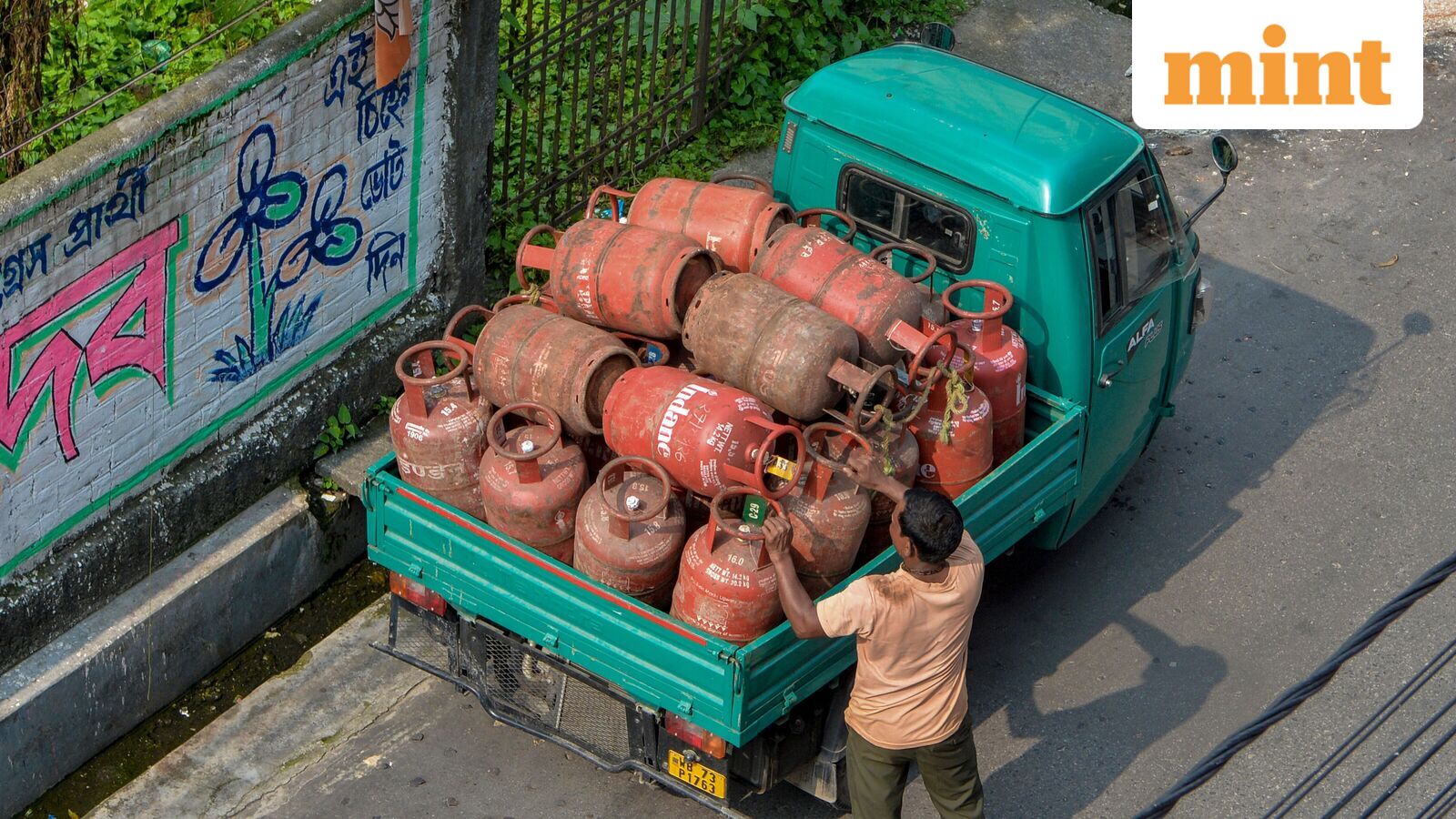
LPG prices held steady this week after a June 7 hike that pushed the domestic 14.2-kg cylinder ₹29 higher and lifted commercial 19-kg cylinders 79% above February levels. The calm does not erase a stubborn exposure: India still draws roughly 90% of its liquefied petroleum gas imports through the Strait of Hormuz, according to government data.
India imports 85–90% of its crude oil and the vast majority of its LPG from West Asian suppliers. When regional conflict snarled the Hormuz transit route in late February, the Saudi Aramco Contract Price – the benchmark for Indian LPG imports – jumped 46% between February and June, Crisil reported. State-owned oil marketing companies (OMCs) absorbed much of that shock to shield retail consumers. The cost was real: cumulative under-recoveries of ₹22,000 crore from March to May, the Petroleum Ministry's data shows.
Joint Secretary Sujata Sharma addressed the pricing calculus at a media briefing Thursday. “As you know, the price of crude went up to USD 120 per barrel. Now it is coming down,” she said, as reported by ANI. “The government is seized of the matter and appropriate decisions regarding retail prices will continue to be taken in line with the evolving international situation.”
India diversified its LPG sourcing quickly after the blockade. The United States now supplies roughly one-third of the country's LPG imports, Crisil found. Argentina, Chile, France and the Netherlands also entered the import basket. That diversification came with a price. The Aramco CP surge and longer shipping routes increased the effective cost of imports.
On Thursday, Indian Oil Corp (IOC) issued tenders to lift LPG from three ports inside the Strait of Hormuz – Ras Laffan in Qatar, Mina Al Ahmadi in Kuwait and Ruwais in the UAE – with lift dates between June 30 and July 4, Reuters reported. The tender shows that, despite diversification, major volumes still transit the choke point. Separately, Reliance executive director Anant Ambani told PTI the company quadrupled LPG production after the conflict to meet national needs.
The Strait of Hormuz Chokepoint
The risk event is straightforward. Any renewed disruption at Hormuz would hit the 90% of LPG supply that still depends on that route. OMCs have not fully recouped the ₹22,000 crore loss, leaving them with an incentive to push through further retail price increases. The commercial cylinder segment already shows willingness to pass through costs – the 79% jump since February reflects that. A sustained crude price decline below $100 a barrel would ease pressure. A fresh blockade or a spike above $120 would force the government to choose between larger subsidies and higher retail bills.
The IOC tender scheduled for lift between June 30 and July 4 provides a concrete near-term gauge. If those cargoes load without disruption, the supply chain remains functioning. Any delay or cancellation would renew fears of tightened LPG availability and push OMCs closer to another price revision.