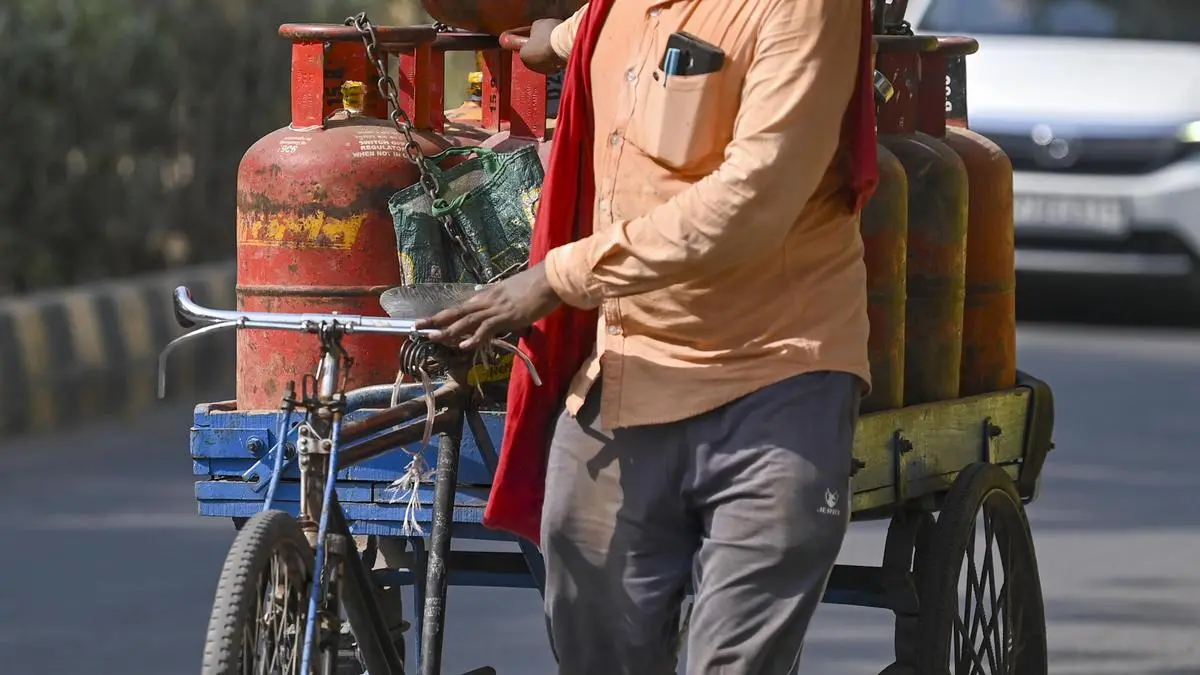
Domestic cooking gas just got costlier for the second time in three months. The price of a 14.2-kg LPG cylinder in Delhi will rise to ₹942 from ₹913 effective June 7, according to industry sources. The ₹29 increase follows a ₹60-per-cylinder hike on March 7. State-owned oil marketing companies (OMCs) continue to absorb deep losses on fuel sales.
Behind the sequential hikes is a single mechanism: the gap between international energy prices and what the government is willing to pass through to households. That gap is wide, and it is not closing quickly.
The ₹29 Hike and the ₹703 Loss Gap
Industry sources estimate that OMCs were losing about ₹703 on every LPG cylinder sold before the latest revision. The ₹29 increase only chips away at that figure. The arithmetic is straightforward: global LPG prices – linked to crude and naphtha benchmarks – surged after the West Asia conflict disrupted supply routes, while Indian retail prices were held artificially low for months.
The same dynamic applies across the fuel basket. Petrol and diesel prices have been raised by a cumulative ₹7.50 per litre since mid-May. OMCs still lose ₹11 per litre on petrol and ₹33.6 per litre on diesel, per industry sources. Compressed natural gas (CNG) rates have increased by about ₹6 per kg.
| Product | Loss per unit (before latest revision) | Cumulative retail hike in 2025 (indicative) |
|---|
| LPG (14.2-kg) | ₹703 per cylinder | ₹89 (March + June) |
| Petrol (per litre) | ₹11 per litre | ₹7.50 (since mid-May) |
| Diesel (per litre) | ₹33.6 per litre | ₹7.50 (since mid-May) |
| CNG (per kg) | Not disclosed | ₹6 per kg (since mid-May) |
How OMC P&L Absorbs the Subsidy
The three main state-run retailers – Indian Oil Corporation, Bharat Petroleum Corporation, and Hindustan Petroleum Corporation – act as the government's pass-through mechanism for fuel pricing. When global crude and product prices rise faster than retail prices, OMC margins compress below cost recovery.
LPG is the most politically sensitive product because it reaches 300 million+ households, many in rural areas. The government has historically preferred a gradual, partial pass-through rather than a one-time reset. That strategy shields voters from price shock but keeps OMC cash flows under pressure.
Marketing Margin Mechanics
The loss per cylinder feeds directly into the marketing margin line of each OMC's income statement. For IOCL, which sells roughly 70 million LPG cylinders annually, a ₹703 per-cylinder loss translates to about ₹49,000 crore in annualised LPG-related burden before the hike. Even after the June revision, that figure remains above ₹45,000 crore unless global prices retreat.
The Fiscal Cushion
The government has so far avoided a full pass-through of higher international energy prices to consumers, absorbing part of the increase through state-owned fuel retailers. The fiscal 2026 budget allocated about ₹1.2 lakh crore for fuel subsidies, including LPG. If global prices stay high, that cushion will be exhausted faster than planned.
Inflation Pass-Through: Sectors in the Path
A ₹29 per cylinder increase is modest for most urban households – about ₹1 per day. The cumulative impact of LPG, petrol, diesel, and CNG hikes since mid-May creates a measurable tailwind for consumer price inflation.
LPG has a weight of roughly 0.8% in the Consumer Price Index (CPI) basket. The direct effect of the June hike is small. The second-round effects are not: higher CNG and diesel costs raise distribution costs for food, packaged goods, and e-commerce logistics, which in turn feed into retail prices.
FMCG Logistics
Fast-moving consumer goods companies – Hindustan Unilever, Nestlé India, and Britannia Industries – rely on diesel-powered trucking for rural and semi-urban distribution. A sustained diesel loss pass-through would lift logistics cost per case by an estimated 1-2%. That margin compression is small but material for companies with single-digit net margins.
Auto Demand Shift
Higher CNG and petrol prices shift the total cost of ownership calculus. Maruti Suzuki, Tata Motors, and Mahindra & Mahindra have seen growing demand for CNG variants. A sustained CNG price increase would slow that shift. The breakeven mileage for CNG versus petrol widens, making the fuel-switch less attractive for price-sensitive buyers.
The Partial Pass-Through Strategy: Why More Hikes Are Likely
The repeated – but modest – price increases suggest the government is stuck between three constraints: (1) keeping household inflation below the RBI's 4% target, (2) protecting OMC balance sheets from becoming a fiscal drain, and (3) avoiding a single large price shock that would trigger public backlash.
The mechanism is a controlled drip rather than a one-time reset. The March and June hikes together amount to ₹89 per cylinder – still far below the estimated global parity price. Industry sources note that the increases have only partly offset losses. That implies more hikes are likely if crude does not fall.
For traders watching Indian energy names, the read-through is simple: OMCs will remain under margin pressure until either global prices correct or the government approves a larger pass-through. The latter is politically difficult before state elections in late 2025. The former depends on OPEC+ output decisions and global demand trends, as tracked in the crude oil profile.
What to Track: Global Benchmarks and Fiscal Signals
- Global LPG benchmark: Mont Belvieu propane prices and Saudi Aramco CP (contract price) for July loading will set the next round of import parity. A decline below recent averages would give OMCs room to keep retail prices stable.
- Government subsidy allocation: The fiscal 2026 budget allocated about ₹1.2 lakh crore for fuel subsidies, including LPG. If global prices stay high, that cushion will be exhausted faster than planned.
- Quarterly earnings of OMCs: IOCL, BPCL, and HPCL report their June-quarter results in August. The GRM (gross refining margin) and marketing margin line items will show exactly how much of the international loss was passed through and how much remains on the books.
The LPG hike is not a catalyst in isolation. It is a confirmation that the Government of India is executing a slow, partial pass-through strategy. That keeps OMC stocks in a range – too costly to ignore the subsidy risk, too cheap to ignore the asset base. Watch the July Saudi CP and the fiscal update for the next directional signal.