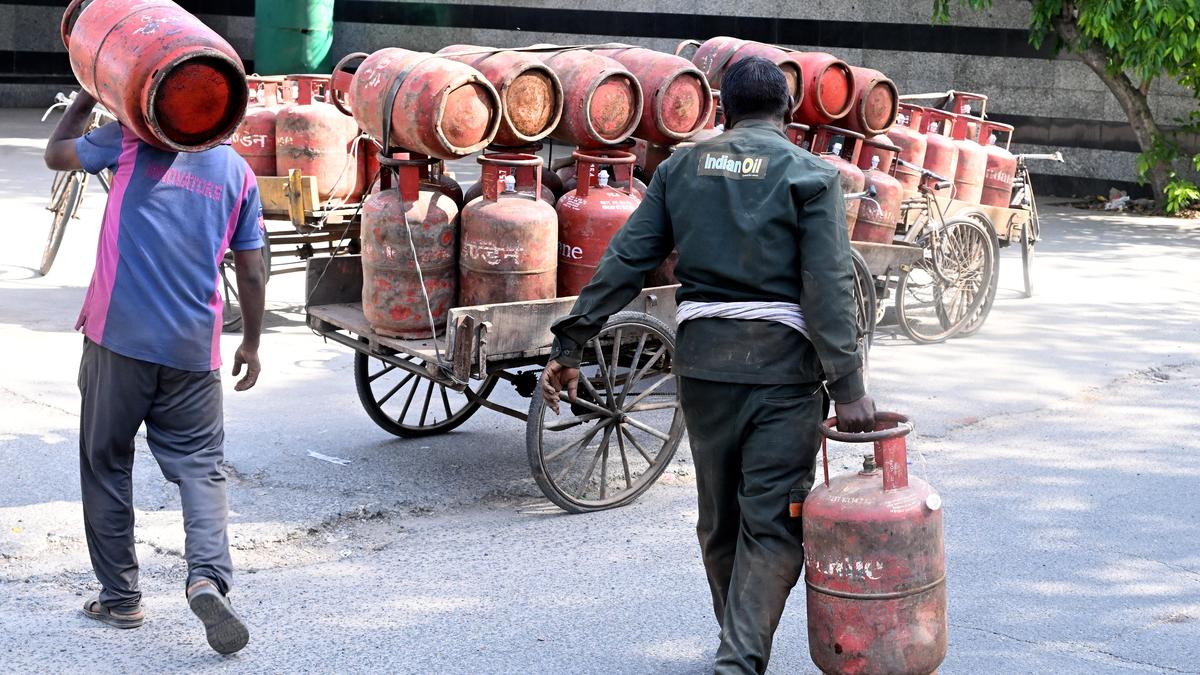
The Indian government raised the price of a 14.2-kg domestic LPG cylinder in Delhi by ₹29 to ₹942 on June 6, 2026. The move is the second hike in three months, bringing the cumulative increase to ₹89 per cylinder since March. The government stated that the cost of supplying a domestic cylinder has risen to more than ₹1,600, meaning the state absorbs roughly ₹658 per cylinder at the new retail price.
Beneficiaries of the Pradhan Mantri Ujjwala Yojana (PMUY) will continue to pay an effective ₹642 per cylinder after receiving a direct benefit transfer of ₹300 on the first four refills annually. This coverage is down from nine refills announced last year. The government said the revision balances shielding households from volatile global energy prices while ensuring continued availability of cooking fuel.
The Mechanism: Saudi CP and the Under-Recovery Gap
The price of LPG in India is linked to the Saudi Contract Price (CP), a benchmark set monthly by Saudi Aramco for propane and butane. India imports about 60% of its LPG requirements, and the landed cost tracks this external benchmark over which the domestic consumer has no control.
How the Benchmark Moved
Before the West Asia disruption in late February, the blended 50:50 propane-butane CP stood at about $543 a tonne. After the closure of the Strait of Hormuz, the April contract price rose to $775 a tonne (propane at $750, butane at $800). By June, the benchmark had edged up further to $790 a tonne, a 46% increase from the pre-crisis February level.
The Under-Recovery Mechanism
State-run oil marketing companies (OMCs) sell domestic LPG at a regulated price below the import-linked cost. The gap between the international cost and the retail price is the under-recovery. Before the June revision, OMCs were estimated to be losing about ₹703 on every cylinder sold.
| Metric | Value |
|---|
| Import-linked cost per 14.2-kg cylinder | > ₹1,600 |
| Regulated retail price (Delhi, post-hike) | ₹942 |
| Under-recovery per cylinder (pre-June) | ~₹703 |
| Cumulative under-recoveries (previous FY) | ~₹60,000 crore |
| Cumulative under-recoveries (year earlier) | ₹41,338 crore |
| Cabinet-approved compensation to OMCs | ₹30,000 crore |
The Union Cabinet has approved ₹30,000 crore in compensation to partly offset these losses. The under-recovery is separate from the PMUY subsidy, which reaches more than 10.58 crore connections at ₹300 per cylinder on the first four refills.
Exposure: Who Bears the Cost and Who Benefits
The pricing structure creates distinct exposures across three groups: the government, the OMCs, and households.
Government and OMC Exposure
The government absorbs the under-recovery upstream rather than passing the full cost to consumers. The cumulative under-recovery on domestic LPG sales rose to about ₹60,000 crore by the end of the previous financial year, up from ₹41,338 crore a year earlier. The ₹30,000 crore compensation package covers roughly half that gap, leaving OMCs exposed to the remainder.
Household Exposure
A non-PMUY household pays about ₹700 below the market-linked cost. A PMUY beneficiary pays an effective ₹642 on the first four refills. The government noted that the domestic household pays about ₹66 per kg after the revision, compared with about ₹164 per kg for the commercial cylinder used by hotels and restaurants.
Practical rule: The domestic LPG price is a political price, not a market price. The gap between the two is a fiscal liability that shows up in OMC balance sheets and, eventually, in the government's subsidy bill.
Commercial Sector Exposure
Commercial cylinders (19 kg) used by hotels and businesses are revised automatically every month because their price is a direct pass-through of the international benchmark. The 19 kg cylinder in Delhi now sells at ₹3,113.50, about ₹164 per kg, after five increases during the West Asia crisis. This segment bears the full brunt of the 46% benchmark rise.
Sector Read-Through: Oil Marketing Companies
The pricing mechanism directly affects the three state-run OMCs: Indian Oil Corporation (IOC), Bharat Petroleum Corporation Limited (BPCL), and Hindustan Petroleum Corporation Limited (HPCL).
Under-Recovery Impact on OMC P&L
Before the June revision, OMCs were losing about ₹703 per cylinder. The ₹29 hike reduces that loss to about ₹674 per cylinder, assuming no further benchmark movement. The cumulative under-recovery for the previous financial year reached ₹60,000 crore, and the ₹30,000 crore compensation covers only half.
What Would Confirm the Thesis
- A sustained decline in the Saudi CP below $700 a tonne would reduce under-recoveries and improve OMC margins.
- An additional compensation package from the government would signal that the fiscal burden is being shared.
- A widening of the gap between the Saudi CP and the retail price without a compensating hike would increase OMC losses.
What Would Weaken the Thesis
- A further 10%+ rise in the Saudi CP without a corresponding retail price hike would push under-recoveries above ₹800 per cylinder.
- A reduction in the PMUY subsidy coverage (already cut from nine to four refills) could signal fiscal strain. This would not directly affect OMC margins.
Supply Chain Resilience: The Strait of Hormuz Factor
The government highlighted that India was among the few countries able to maintain uninterrupted energy shipments through the Strait of Hormuz during the crisis. About 54% of India's LPG imports transit this chokepoint.
Domestic Production Ramp-Up
Domestic LPG production was increased by more than 60%, from about 32,000 tonnes per day to about 52,000 tonnes. Imports were diversified to suppliers including the United States, Canada, and Algeria. The government also encouraged consumers to switch to piped natural gas where available and stepped up enforcement against diversion of subsidised cylinders to commercial use through OTP-based delivery verification.
Key insight: The supply chain response – a 60% production ramp and supplier diversification – is the structural buffer that allows the government to cap retail prices without creating shortages. Without it, the price cap would be unsustainable.
Comparative Pricing: India vs. Neighbours and Advanced Economies
The government stated that domestic LPG prices remain below those in neighbouring countries such as Pakistan, Nepal, Bangladesh, and Sri Lanka. Prices are also significantly lower than in advanced economies including the United States, Australia, and Canada.
The government did not provide specific comparative numbers for other countries. The claim positions the domestic price as a political choice to shield households from global volatility.
The Next Decision Point: Benchmark Trajectory and Fiscal Capacity
The key variable going forward is the Saudi CP trajectory. The benchmark has risen 46% since February and stood at $790 a tonne in June. If geopolitical tensions in West Asia persist or escalate, the benchmark could move higher, widening the under-recovery gap.
What to Track
- Monthly Saudi CP announcements: The next set of contract prices will indicate whether the 46% rise is a plateau or a waypoint.
- Strait of Hormuz shipping data: Any disruption or normalisation will directly affect import costs.
- OMC quarterly results: Under-recovery figures and compensation receipts will show the actual P&L impact.
- Government fiscal data: The ₹30,000 crore compensation is a one-time allocation. A second tranche would signal sustained pressure.
What Would Break the Setup
A sustained decline in the Saudi CP below $600 a tonne would reduce under-recoveries by roughly ₹300 per cylinder. This could allow the government to hold prices steady or even reduce them. A rise above $900 a tonne would push under-recoveries past ₹1,000 per cylinder, forcing either a larger retail hike or a bigger compensation package.
The government's statement makes clear that the current pricing is a deliberate modulation, not a market outcome. For traders tracking OMC stocks, the under-recovery trajectory – not the headline retail price – is the metric that matters.
For a broader framework on how government pricing interventions affect market dynamics, see A Fish-and-Water Principle Every Trader Needs. For context on how geopolitical chokepoints like the Strait of Hormuz affect energy markets, see Strait of Hormuz Drone Intercept: Crude Oil Risk Watch.