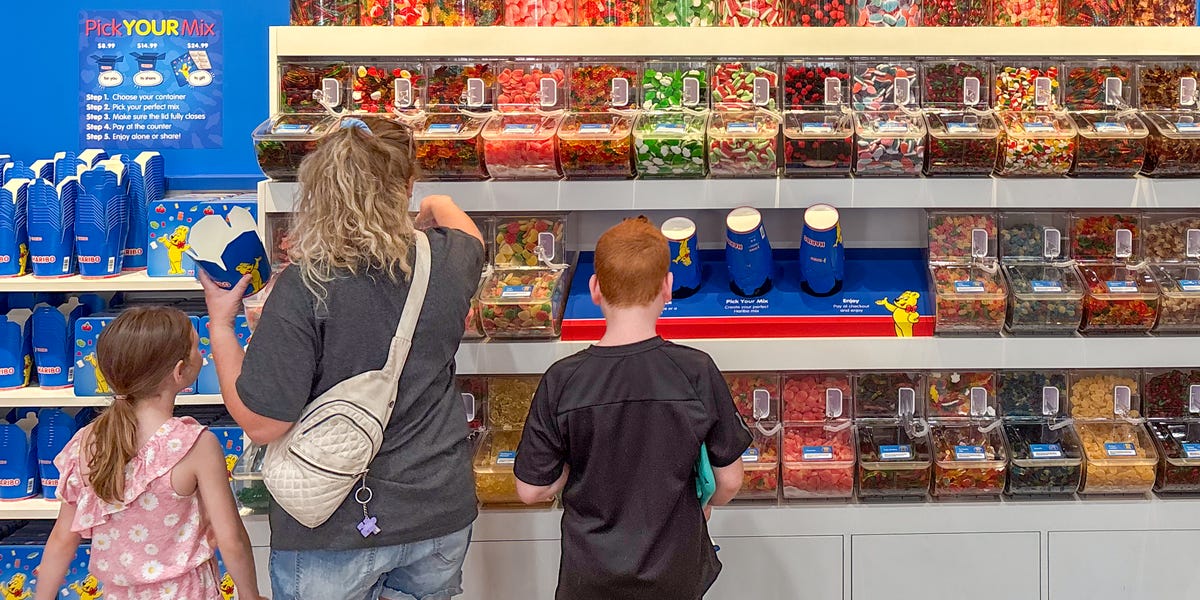
Haribo opens its first dedicated US stores next month, betting the German gummi maker's brand power can draw crowds to outlet malls in New York and Massachusetts.
The locations in Central Valley, New York, and Wrentham, Massachusetts, are designed to be part marketing machine, part sales driver. They feature mystery bags and pick-and-mix walls that encourage shoppers to film unboxing videos for social media. In-store sampling fills the space with a distinctive gummi smell.
"What we're trying to recreate is that feeling you had as a kid walking into a candy store for the first time," Haribo of America CEO Jon Hughes told CMO Insider.
The strategy echoes destination stores from brands like Apple, M&M's, Lego, and Nike – flagship locations that generate buzz and strengthen brand affinity rather than just drive transactions.
Haribo's US push comes as the company has grown its household penetration to 40%, up from about 28% last year and 10% a decade ago, Hughes said. The company has expanded its US head count to 440 people from 200 three years ago.
The brand still spends heavily on TV. Its long-running "Kids Voices" campaign, in which adult actors' voices are replaced with children's, consistently ranks among the top five TV ad spenders in the US candy and gum category, according to iSpot, a TV ad measurement firm. Competitors include Reese's and Hershey's.
Hughes said the company is also leaning on influencers, particularly as it prepares for the store openings.
David Mayer, senior partner at the marketing consultancy Lippincott, said Haribo has good awareness in the US. It is not yet at the level of iconic US confectionery brands like Hershey or Jelly Belly.
Hershey, a major rival, has an AlphaScala Score of 44. (See the HSY stock page for details.)
Hughes argues that Haribo's variety sets it apart. The company says it makes more than 1,000 products worldwide. Later this year, it's rolling out its chewy, poppable Balla Bites candy range in the US.
"We have a variety of products and textures," Hughes said. "That's what makes us a little bit different, this notion of supporting these little moments of childlike happiness."
Mayer noted that US confectionery brands face challenges from changing consumer trends, including a decline in physical convenience store shopping, the rise of GLP-1 drugs, and demand for fewer processed ingredients.
Hughes said Haribo hasn't seen a significant drop in sales of sweet treats.
"People have been enjoying confectionery for hundreds of years," Hughes said. "I think that will continue."
The stores open next month. No date has been set for additional locations.