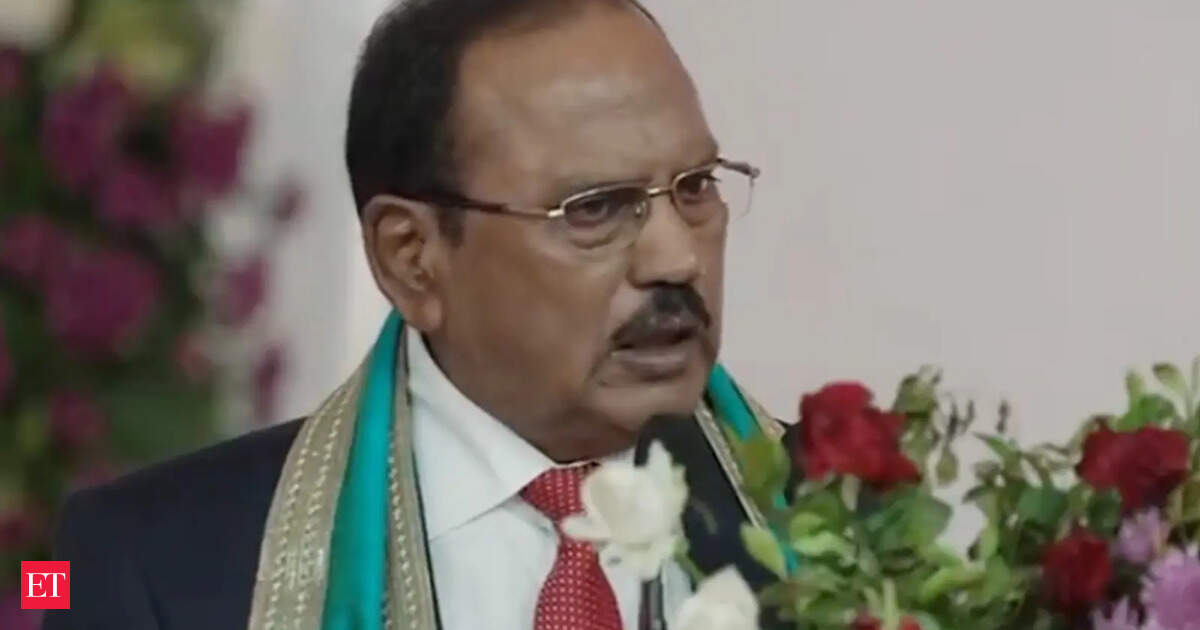
The recent high-level diplomatic engagement between India's National Security Advisor Ajit Doval and UAE President Sheikh Mohamed bin Zayed Al Nahyan signals a deepening of the strategic partnership between New Delhi and Abu Dhabi. By focusing on regional stability and shifting geopolitical dynamics in West Asia, the dialogue underscores a concerted effort to insulate economic corridors from broader regional volatility. The subsequent visit to Saudi Arabia further suggests a coordinated approach to securing trade routes and energy security, which remain critical pillars for emerging market growth.
Strategic Stability and Economic Continuity
For global investors, the stability of West Asian trade routes is a primary variable in the cost of logistics and energy supply chains. The diplomatic outreach by India aims to solidify a security framework that protects the India-Middle East-Europe Economic Corridor. This initiative is designed to bypass traditional maritime bottlenecks and provide a more resilient infrastructure for global trade. When regional powers align on security, the immediate effect is a reduction in the risk premium associated with cross-border infrastructure projects.
This diplomatic activity occurs as institutional capital seeks clarity on long-term regional stability. The ability of India to act as a bridge between the Gulf states and broader global markets is a structural shift that impacts how multinational firms evaluate their regional footprints. If these security discussions yield concrete protocols for maritime and terrestrial transit, the predictability of supply chains will likely improve, providing a more stable environment for capital-intensive investments.
Sectoral Read-Throughs and Regional Integration
The integration of regional security with economic policy has direct implications for sectors reliant on consistent trade flow. Defense, energy, and logistics firms are the most sensitive to these diplomatic developments. As nations like India and the UAE synchronize their security interests, the resulting policy environment often favors firms that can navigate complex regulatory landscapes across multiple jurisdictions. This is similar to the long-cycle revenue models observed in firms like those analyzed in our Northrop Grumman and the Long-Cycle Defense Revenue Model report.
AlphaScala data currently reflects a cautious sentiment across various sectors. For instance, ON stock page holds an Alpha Score of 45/100, while NOW stock page sits at 51/100 and MET stock page at 55/100, all labeled as Mixed. These scores reflect the broader uncertainty that persists despite localized diplomatic progress. Investors should monitor these metrics alongside broader stock market analysis to gauge how geopolitical stability translates into corporate performance.
The Next Marker for Regional Security
The next concrete marker for this diplomatic track will be the formalization of specific security agreements or the announcement of new infrastructure milestones related to the economic corridor. Any follow-up joint statements regarding port management or energy transit agreements will serve as the primary indicator of whether these high-level talks are moving toward actionable policy. Investors should watch for upcoming bilateral summits or updates from the respective ministries of external affairs, as these will provide the necessary detail on the scope of the security cooperation and its impact on regional investment flows.