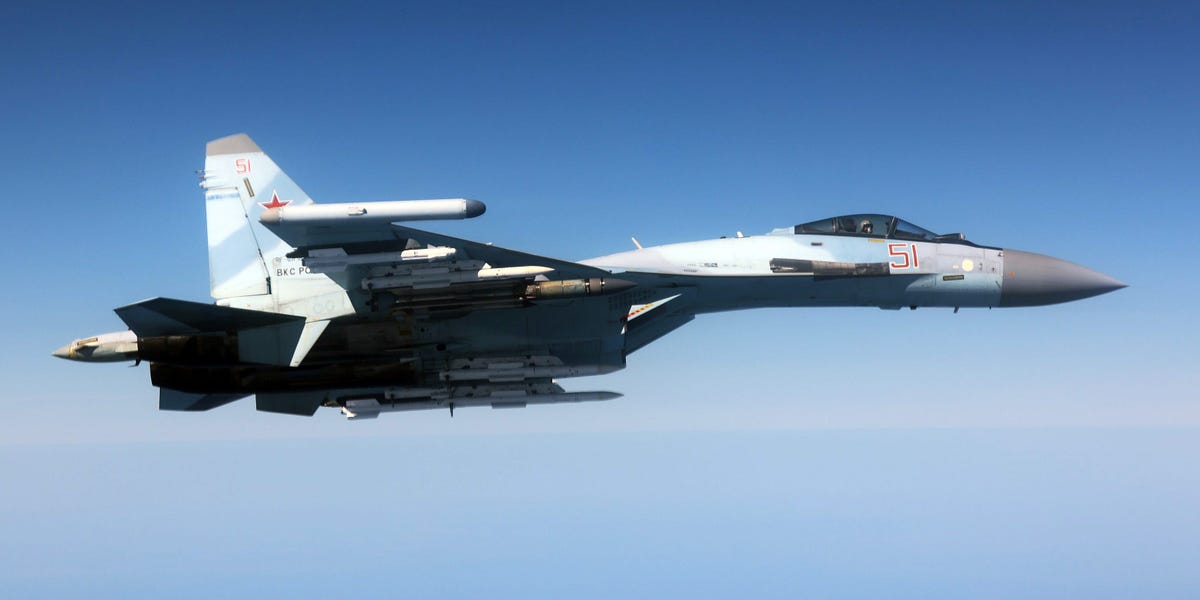
A Russian fighter jet flew within 6 meters of a Royal Air Force spy aircraft over the Black Sea last month. The UK Ministry of Defence confirmed the encounter on its website, stating that the Russian jet made several passes in front of the RAF plane. The proximity caused the spy plane's autopilot to disengage, forcing the crew to hand-fly the aircraft for the remainder of the mission.
The incident is the closest known intercept of a Western surveillance aircraft in the Black Sea region since Russia's full-scale invasion of Ukraine in 2022. It shifts the narrative around NATO's air posture from routine deterrence to a mission carrying measurable operational risk. For traders watching defense equities, this event adds a concrete data point to the geopolitical risk premium argument that has already lifted stocks like BAE Systems, Lockheed Martin, and Northrop Grumman over the past 12 months.
The Black Sea Intercept and Its Mechanical Consequence
The encounter took place over international waters. The RAF crew was flying an RC-135 Rivet Joint signals intelligence aircraft out of RAF Waddington. The Russian fighter's approach forced the crew to break from their planned intelligence-gathering route. In aviation terms, 6 meters at standard patrol speeds leaves no reaction margin. The autopilot disengagement is a mechanical consequence of abrupt evasive input or collision-avoidance logic built into the flight control system. Either interpretation points to a close-call dynamic that NATO commanders will now have to factor into future patrol planning.
The timing matters. Black Sea surveillance flights have increased since 2022. The UK operates RC-135s in coordination with US and French signals intelligence aircraft. A forced autopilot shutdown is rare. It suggests the Russian pilot intentionally closed to a distance that triggered the aircraft's flight control logic, or that the response to the intercept was aggressive enough to cause a physical limitation.
Defense Sector Read-through
For markets, the immediate read-through is not a specific stock reaction. It is a shift in the probability assigned to NATO spending commitments. The incident provides ammunition for UK defense hawks ahead of the next Treasury spending review. The UK already committed to raising defense spending to 2.5% of GDP by 2030. A physical incident of this kind accelerates the timeline debate. If the UK accelerates its procurement timeline, the most direct beneficiaries are domestic defense primes such as BAE Systems, which builds the Eurofighter Typhoon and provides electronic warfare systems, and Rolls-Royce, which supplies engines for the RC-135.
The broader sector also benefits from the geopolitical risk premium that has become a structural feature of defense stock valuation. The S&P Aerospace & Defense Select Industry Index is up roughly 25% over the past 18 months, largely on sustained government demand. This incident does not create new demand. It reinforces the thesis that NATO allies face a sustained threat environment that will keep defense budgets elevated through the 2030s.
Next Decision Point: UK Budget and NATO Response
The concrete catalyst to watch is the UK's upcoming defense budget announcement, expected in the 2024 Autumn Statement. The Ministry of Defence has been lobbying for additional funding to cover a backlog of equipment modernization. The RC-135 incident gives that argument a specific operational failure. The UK may also push for a joint NATO response in the form of increased air policing over the Black Sea, which would put additional strain on alliance resources.
For traders, the question is whether the incident accelerates a procurement cycle that is already priced in. If the UK announces a new intelligence-surveillance-reconnaissance (ISR) platform order in response, stocks in that supply chain get a measurable lift. If the response is diplomatic only, the incident becomes noise. The next NATO defense ministers meeting in October will be the first institutional test of whether this encounter changes behavior.
For context on how geopolitical events filter into broader stock market analysis, the Black Sea incident fits a pattern where headline risk drives sector rotation into defense names. The setup is not binary. It is a probability shift that takes time to play out through budget cycles. The 6-meter gap is now a point in the spreadsheet.