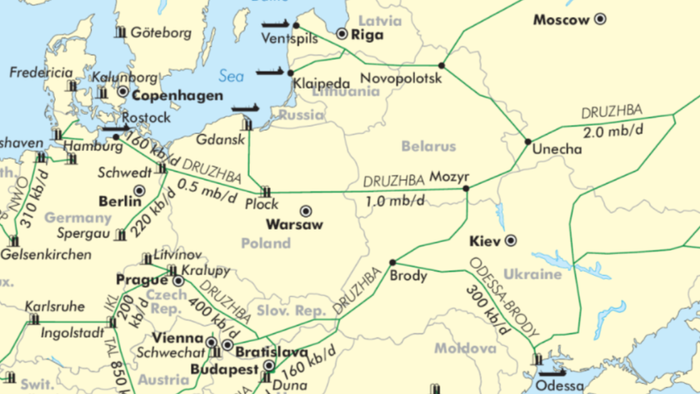
The cessation of Kazakh oil flows to Germany via the Druzhba pipeline marks a significant escalation in the fragility of European energy supply chains. This artery, which has served as a critical conduit for non-Russian crude reaching Central European refineries, now faces a structural blockage that forces a rapid recalibration of regional logistics. The interruption removes a key source of diversification for German refiners who have spent the last two years attempting to decouple from direct Russian pipeline dependency.
Structural Impact on Refining Capacity
The loss of this specific flow creates an immediate supply vacuum for refineries in the Leuna region. These facilities were specifically configured to process the chemical characteristics of the crude arriving through the Druzhba system. Shifting to seaborne alternatives requires more than just a change in logistics; it necessitates technical adjustments to refining processes and introduces higher costs associated with maritime transport and port-to-refinery infrastructure. The reliance on this pipeline was a cornerstone of the post-2022 energy strategy, and its absence complicates the operational stability of downstream energy assets.
Regional Logistics and Market Linkages
This development ripples across the broader energy landscape, forcing a re-evaluation of how Central Europe sources its feedstock. The shift away from pipeline-delivered crude toward global seaborne markets increases the exposure of European refiners to volatility in tanker rates and maritime transit bottlenecks. As seen in other sectors like Malacca Strait Transit Fee Proposal Strains Regional Logistics Outlook, the reliance on fixed-path infrastructure is increasingly vulnerable to geopolitical friction.
AlphaScala data currently reflects a mixed outlook for industrial and cyclical firms as these energy costs fluctuate. For instance, companies like ON Semiconductor Corporation with an Alpha Score of 45/100 and Amer Sports, Inc. with an Alpha Score of 47/100 are navigating a landscape where input cost predictability is declining. While these firms operate in different sectors, the common thread remains the sensitivity of their margins to the underlying energy price environment in Europe.
The Path to Supply Normalization
The next concrete marker for this situation will be the status of transit negotiations and any potential alternative routing agreements that may emerge in the coming weeks. Market participants should monitor the utilization rates of alternative pipelines and the volume of crude redirected through Baltic Sea ports. The ability of German refiners to secure long-term contracts for seaborne crude will determine whether this disruption remains a temporary logistical hurdle or evolves into a permanent increase in the cost of production for the region. Any official communication regarding the duration of the pipeline stoppage will serve as the primary catalyst for further adjustments in regional energy pricing.