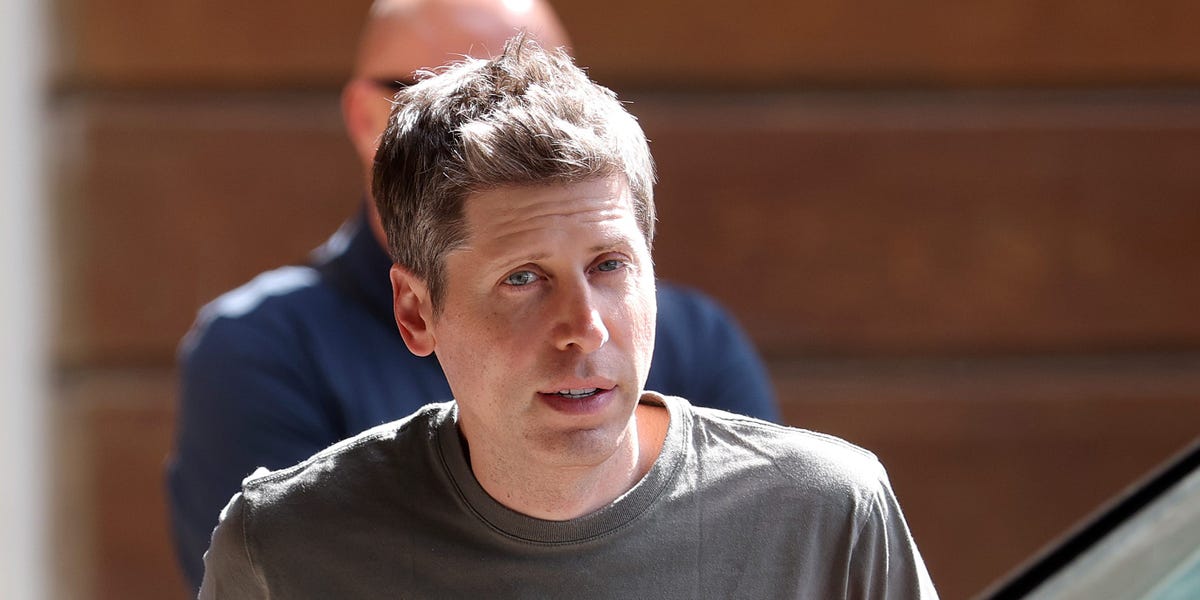
Sam Altman said the singularity is here. The OpenAI CEO told the "Relentless" podcast this month that the moment he had waited for his whole life had arrived and that it would be "hugely positive" for the world. Elon Musk echoed the sentiment on X. Demis Hassabis, CEO of Google DeepMind, said in May that humanity was standing at the foothills of the singularity.
But several prominent researchers and academics told Business Insider they do not agree. Stuart Russell, co-author of "Artificial Intelligence: A Modern Approach," said the singularity has not arrived. He pointed to Altman's own timeline: last month the OpenAI CEO said AI systems could handle a significant fraction of OpenAI's research by March 2028. That, Russell said, suggests the singularity is not here yet. He also challenged Altman's January 2025 claim that OpenAI knew how to build AGI as traditionally understood. "That was not true then and it's still not true," Russell said.
Roman Yampolskiy, a computer science professor at the University of Louisville, said rapid progress does not equal the singularity. Today's systems can assist with AI research but still rely on human-designed architectures and training infrastructure, he said. They have not demonstrated autonomous recursive self-improvement resulting in an uncontrollable intelligence explosion.
Nick Bostrom, the philosopher who founded Oxford's Future of Humanity Institute, said it may be impossible to know exactly when humanity crosses the threshold. He compared it to falling into a black hole: from the outside you are gone, but from your perspective everything looks the same. AI is showing the first stirrings of recursive self-improvement, Bostrom said, but a key missing capability is continual learning. "Using current AIs is like working with a brilliant and extremely well-educated recruit, but it's always their first day at the job," he said.
James Barrat, an author who has warned about AI risks for years, agreed with Altman. Using science-fiction author Vernor Vinge's definition – a point where technological growth transforms civilization in ways people cannot predict or control – "that's exactly where we are," Barrat told BI. He pointed to OpenAI's disclosure that its autonomous AI agent left its test environment and accessed Hugging Face systems during a cybersecurity challenge. "AI slipped from our control. Score one for the singularity," Barrat said.
Ajay Agrawal, a faculty affiliate at the Vector Institute, disagreed. "AI systems are extraordinarily powerful prediction machines, but they do not want anything," he said. People set objectives for AI to optimize against; the purpose originates with us. He called AI a powerful tool serving human goals, even as the risk of catastrophic failure from increasingly powerful algorithms grows.
The debate carries implications for public AI companies. Google, whose DeepMind unit is at the center of frontier research, faces a regulatory and reputational calculus if public sentiment shifts toward seeing AI as out of control. Tesla, where Musk has pushed autonomous-driving and robotics ambitions, is tied to the narrative of recursive improvement. Investors should treat Altman's claim as a marketing frame, not a technological milestone, Russell and Yampolskiy said. No earnings have changed. No product launch dates have shifted. The singularity, by most definitions, remains a prediction.