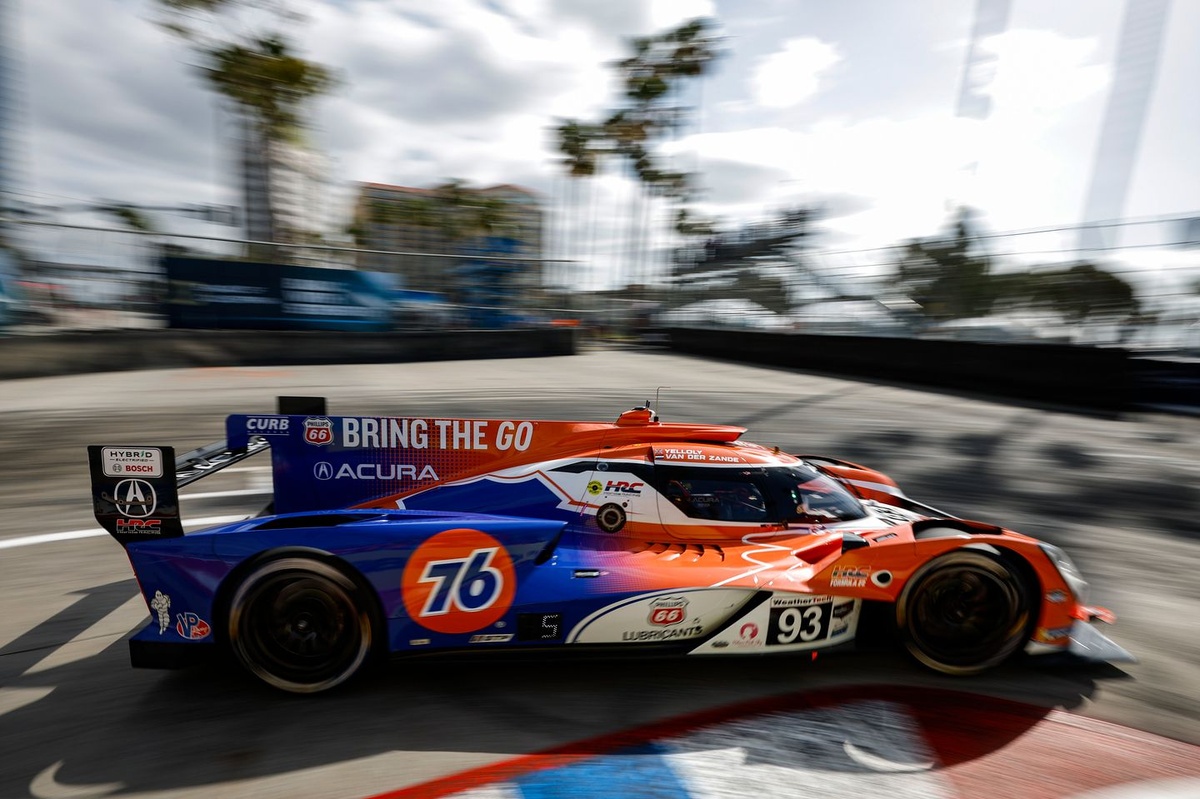
Acura Grand Prix Victory Highlights Strategic Execution for Meyer Shank Racing

Renger van der Zande's victory at the Acura Grand Prix of Long Beach underscores the operational precision required for success in the IMSA series and highlights the importance of tactical consistency in high-stakes racing.
Alpha Score of 23 reflects poor overall profile with poor momentum, weak value, weak quality. Based on 3 of 4 signals — score is capped at 90 until remaining data ingests.
Alpha Score of 47 reflects weak overall profile with moderate momentum, poor value, moderate quality. Based on 3 of 4 signals — score is capped at 90 until remaining data ingests.
Alpha Score of 45 reflects weak overall profile with weak momentum, moderate value, moderate quality. Based on 3 of 4 signals — score is capped at 90 until remaining data ingests.
Alpha Score of 55 reflects moderate overall profile with moderate momentum, moderate value, moderate quality. Based on 3 of 4 signals — score is capped at 90 until remaining data ingests.
The victory of Renger van der Zande for Meyer Shank Racing at the Acura Grand Prix of Long Beach marks a significant operational milestone for the team. By successfully navigating multiple late-race restarts under intense pressure from the Whelen Cadillac entry, the team demonstrated a level of technical and tactical consistency that remains the primary differentiator in high-stakes endurance racing. This win serves as a validation of the team's current mechanical setup and driver rotation strategy.
Operational Precision Under Pressure
The ability to maintain a lead through repeated caution periods is a testament to the team's tire management and fuel strategy. In a circuit like Long Beach, where track position is difficult to reclaim, the ability to execute clean restarts is the primary determinant of success. Van der Zande's performance highlights the importance of driver composure when the field is compressed, a factor that often dictates the outcome of tight championship races. This specific event underscores the team's capacity to convert a strong qualifying position into a podium finish, which is essential for maintaining momentum throughout the IMSA season.
Sector Read-Through and Competitive Dynamics
Performance in high-profile events like the Grand Prix of Long Beach often serves as a proxy for the broader health of automotive racing programs. The involvement of major manufacturers in these series is frequently tied to their ability to showcase engineering reliability and brand prestige in front of a global audience. While this win is a singular event, it reinforces the competitive standing of the Acura program within the GTP class. The technical data gathered during such high-intensity races is often fed back into the development cycles of consumer-facing performance vehicles, creating a tangible link between track success and brand equity.
AlphaScala data currently tracks various sectors with varying degrees of volatility. For instance, the ON stock page reflects a Mixed score of 40/100, illustrating how technology-heavy industrial sectors are navigating current market conditions. Similarly, the T stock page holds a Moderate score of 61/100, providing a baseline for stability in communication services. These scores are part of our broader stock market analysis and help contextualize how different industry players manage operational risks.
The Path to Championship Consistency
The next marker for the team will be the transition to longer-format endurance events, where the variables of pit stop efficiency and mechanical longevity become more pronounced. Success at a sprint-style street circuit provides a morale boost, but the team must now prove that their current setup can endure the rigors of longer race durations. Future filings and technical reports from the IMSA series will reveal whether this victory is a repeatable outcome or a result of specific track conditions. The team's ability to maintain this level of execution will be the primary indicator of their championship viability as the season progresses into its next phase.
AI-drafted from named sources and checked against AlphaScala publishing rules before release. Direct quotes must match source text, low-information tables are removed, and thinner or higher-risk stories can be held for manual review.