World Cup sponsors score: Coca-Cola, Adidas lead Q2 wins
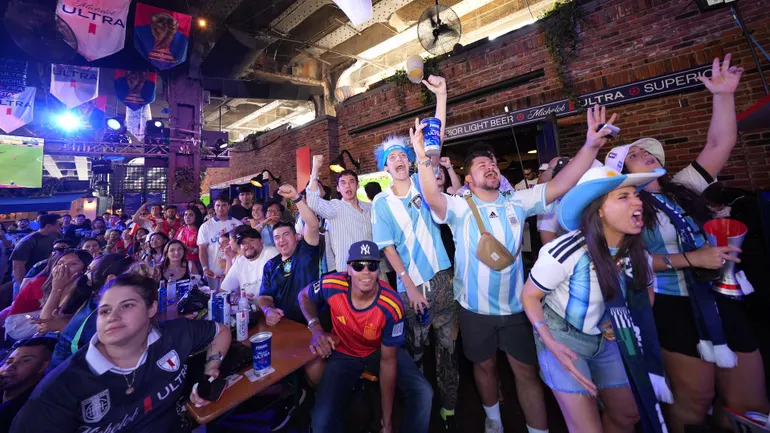
Coca-Cola volume grew 5%, Adidas sales hit records, and Michelob Ultra revenue jumped 21% outside the U.S. as World Cup sponsors reported Q2 results. Q3 earnings will reveal the full payoff.
The 2026 World Cup ran 104 games across three host countries and broke records for U.S. soccer viewership. Advertisers spent a combined $1.42 billion on in-game media across the tournament, per MediaRadar data. The full payoff for sponsors won't be clear until fall Q3 earnings, since the event straddled two quarters. Early results from executive comments suggest some brands scored while others, like McDonald's, missed the net.
McDonald's, the official restaurant sponsor and a FIFA partner since 1994, attributed about one-third of its customer traffic underperformance in Q2 to its FIFA campaign. CFO Ian Borden said on an Aug. 4 earnings call that "the campaign provided a lift to the business and generated excellent system excitement," but it "underperformed versus our expectations."
The winners took different paths. Coca-Cola, Adidas, Unilever, AB InBev and Home Depot all showed measurable gains from their World Cup marketing investments.
Coca-Cola's hyper-local play
Coca-Cola started its campaign in January, spanning over 180 markets and more than 20 million retail outlets. The approach, described by Shakir Moin, chief marketing officer of Coca-Cola North America, as "de-averaging at scale," used passion-point data at the zip code level.
The activation contributed to trademark Coca-Cola volume growth of 5% in Q2 2026, the brand's strongest volume growth in 17 years excluding COVID recovery, per an earnings call. The execution, which included Powerade, drove an average incidence of over 80% at tournament venues, about one drink per attendee, a World Cup record for the company since its first sponsorship in 1978.
Coca-Cola collected more than 25 million first-party data points and generated over 9 billion views through digital and social activations. CEO Henrique Braun said on the earnings call that the insights give the company "a stronger foundation to better understand consumers, tailor our decisions, and improve how we show up in the marketplace."
Brand metrics moved a month before the tournament, with buzz and social awareness more than doubling, per Kantar data. James May, co-lead of Kantar's Sports Marketing Practice, said TV anchored the campaign but social drove Gen Z engagement, feeding into stronger brand consideration and higher net promoter scores.
Adidas leans into soccer heritage
Adidas has been the official ball supplier since 1970 and outfitted 14 qualifying teams in 2026, the most of any manufacturer, including finalists Spain and Argentina. Currency-neutral revenues rose 14% in Q2 2026 to record net sales of about 6.7 billion euros, or $7.7 billion, per an earnings report. Operating profit hit 574 million euros despite spending 212 million euros more on marketing than a year earlier.
That incremental investment spooked investors, but executives stood by it. CEO Bjørn Gulden said on the earnings call that the spending "doesn't have a payback in commerciality in the same period," adding that the brand needed media investment and global activations to build heat during the tournament.
The campaign, including the match ball, team kits, boots and even pet clothing, was the only World Cup-related effort nominated for an Emmy. Adidas led full-tournament sponsor mention share of voice and ranked second for engagement share of voice, per Meltwater data. Gulden acknowledged that connecting marketing to conversion "doesn't really work in the real business," but said everything measured in the upper funnel helped all the way down to the lower funnel.
Unilever's social-first model
Unilever, the official personal care sponsor, activated 35 brands across more than 120 markets with over 50,000 content creators reaching a combined audience of more than 600 million consumers. CEO Fernando Fernandez called the World Cup "a pivotal moment" and "proof of what Unilever is creating in terms of a new social-first model of reach and engagement."
Personal care brands saw underlying sales growth of 5.9% in Q2, amplified by the World Cup marketing, which also built new capabilities in creator-led content and AI-enabled asset creation, CFO Srinivas Phatak explained on the call.
Rexona had branding on the armpits of fourth officials and stood up a New York Sweat Club activation. Fernandez said the company doesn't do an event like FIFA for a two-month impact, but to increase awareness and differentiation through immersion in a massive cultural event, expecting a residual effect on brand strength.
AB InBev's continent-wide rollout
After being blocked from selling beer at the 2022 Qatar World Cup, AB InBev executed its long-gestating plan this year, rolling out Michelob Ultra across the U.S., Canada and Mexico. The low-cal beer's revenue grew 21% outside its home market, with 40% of volume growth coming from outside the U.S., per the Q2 earnings report.
CEO Michel Doukeris said on the earnings call that the Michelob Ultra rollout "will be one of the best outcomes of this investment that we've made for FIFA." AB InBev invested $7.9 billion in sales and marketing over the last 12 months, up 9% organically in the first half, with spending skewed toward Q2 and Q3. The World Cup is expected to provide 20 to 30 basis points of full-year volume benefit.
AB InBev led engagement share of voice at about 31%, per Meltwater data, helped by FIFA's amplification of assets like the Michelob Ultra Player of the Match. Pitchside Club activations in New York and Santa Monica received more than 100,000 RSVPs.
Home Depot wins the Beckham bowl
First-time World Cup sponsor Home Depot launched its campaign in March, centered on a TV spot following David Beckham's DIY efforts. The ad made Home Depot the most-seen brand by TV ad impression share of voice, per iSpot data, and helped the retailer engage with Gen Z, according to Kantar.
Mike Griffin, vice president within the insights division at Kantar, said some brands over-focused on the celebrity, but connecting the brand effectively to the star delivers best-in-class performance. May noted that Gen Z isn't buying big houses with built-in TVs, so the DIY angle was "a really smart plan."
AlphaScala data shows KO at a 61/100 Alpha Score (Moderate) and UL at 58/100 (Moderate), both in Consumer Staples. HD sits at 49/100 (Mixed) in Consumer Discretionary. The Q3 earnings reports in the fall will show whether the World Cup momentum carried through the quarter.
Drafted by a large language model from the source reporting linked above, then screened by automated publishing checks. It is not read by a journalist before publication. Some articles cite our Alpha Score. Verify prices and figures against the original source. Educational coverage, not personalized advice.