Stocks● Neutral
Why Asymmetric Warfare Reshapes Defense Earnings
The Iran conflict mirrors Agincourt and Ali's rope-a-dope: cheap drones defeat expensive platforms. Defense earnings may shift from shipbuilders to drone makers.
Continue with
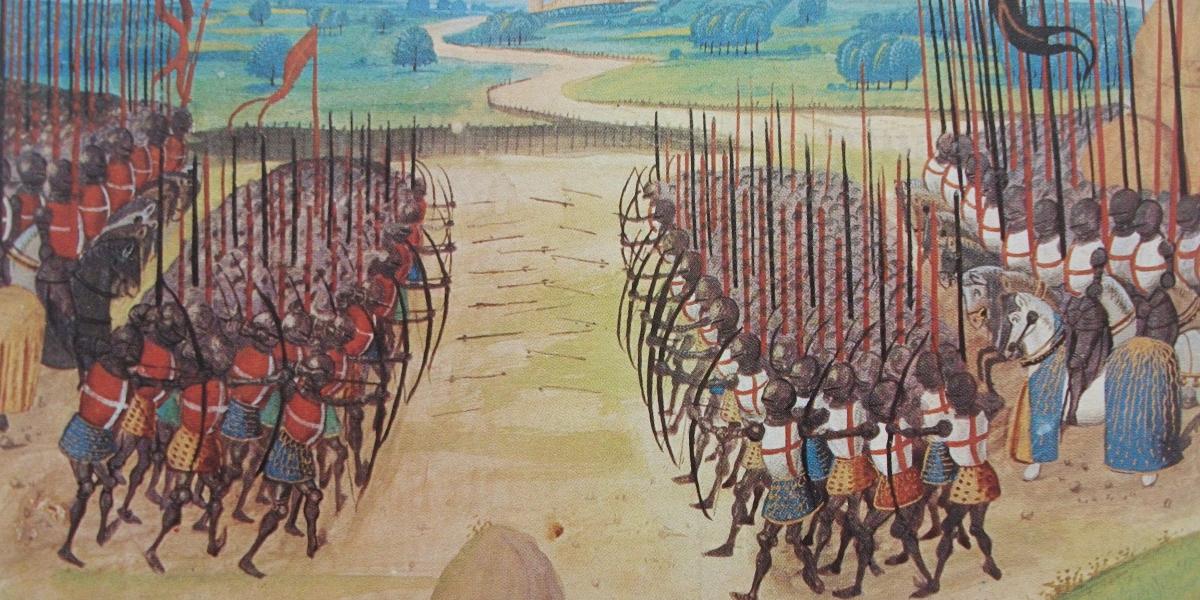
The 1415 Battle of Agincourt is often taught as a military history footnote. English archers, outnumbered and lightly armed, defeated French knights who were bogged down in mud. The cheaper weapon system won. The parallel to the Iran conflict is direct: cheap drones and dispersed missiles closed the Straits of Hormuz and damaged U.S. naval facilities in Bahrain, the Wall Street Journal reported. The cost advantage that longbows held over plate armor now applies to drones over warships.
Muhammad Ali's rope-a-dope against George Foreman in 1974 is another version of the same principle. Ali let Foreman spend his capital – energy and punches – until Foreman had nothing left. Ali then landed the knockout. In business terms, the fighter with lower operating costs and a longer time horizon wins against a high-capital, high-burn opponent. The Pentagon's military-industrial base, built around expensive platforms, faces a similar vulnerability. A defense contractor that relies on a few big-ticket programs (ships, fighters) may find its earnings model disrupted by the proliferation of cheap, expendable systems.