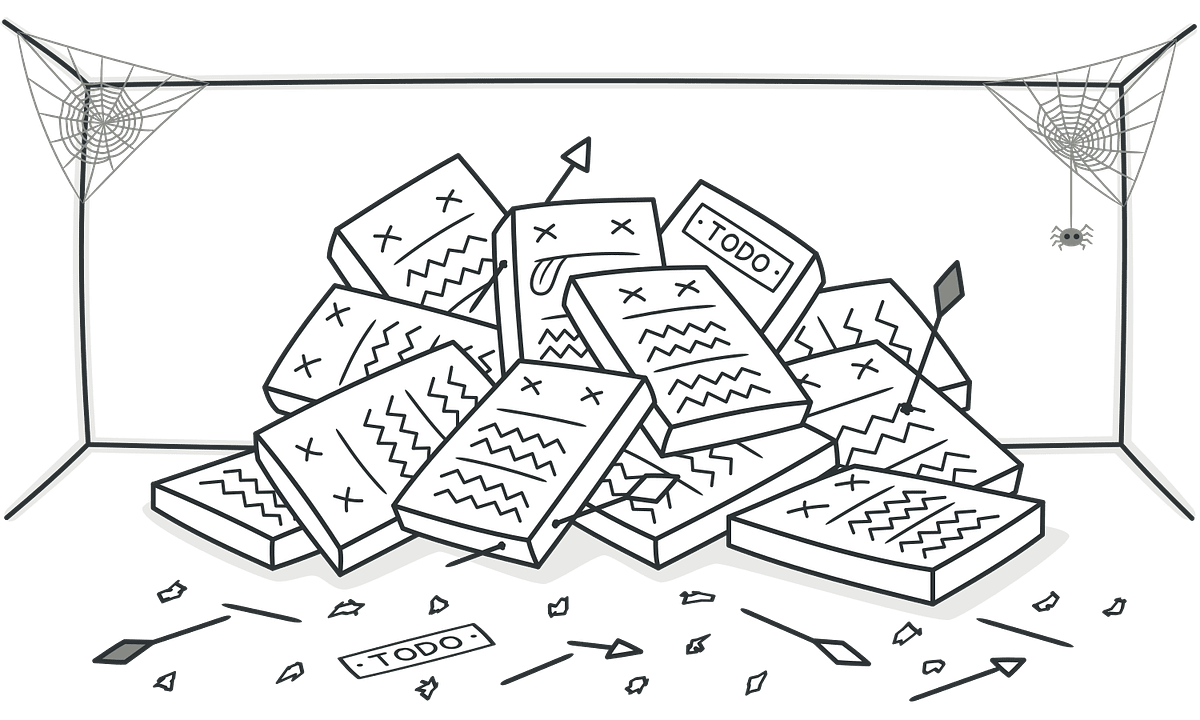
Every piece of software carries a graveyard. Code that no longer runs. Functions no one calls. Entire modules switched off years ago but never removed. Developers call it dead code. They rarely talk about what it costs.
Apple's iOS is a good example. The operating system has grown over a decade and a half. Engineers who worked on early versions have moved on. New hires inherit a codebase where no one fully knows which lines are live and which are relics. The result is a system that is harder to change, harder to test, and harder to trust.
Dead code is not a bug. It is the digital version of keeping old letters in a drawer. You know you will never read them. Deleting them feels like erasing a piece of history. Software keeps memories the way people do.
Why Engineers Leave It In
Ask any developer why a project is full of commented-out variables and unused imports. You will get the same answer: code is fragile. A single line removed can silently break a feature that seemed unrelated. Systems grow so complex over time that even the people who built them lose the map.
Instead of deleting, they turn it off. Instead of removing, they comment it out. Instead of facing the unknown, they leave it there – untouched, unexplained, slowly forgotten. It is not laziness. It is caution passed down like a family belief: do not touch what you do not understand.
A 2023 study by the software analytics firm Stripe found that developers spend roughly 30% of their time dealing with technical debt. Dead code is a big part of that. The cost is not just wasted effort. It is slower feature development, more bugs, and higher turnover among engineers who get frustrated working in a cluttered codebase.
The Emotional Cost of Holding On
Every unused function is a decision someone made and then changed their mind about. Every commented block is a moment of doubt frozen in time. Every old file is proof that a team at some point cared enough to build something – even if it did not last.
Codebases are like old houses. You can walk through them and see the additions, the changes, the rooms no one uses but no one has the heart to remove. Dead code is the locked room everyone knows is there but no one opens.
This hoarding has a price. Codebases filled with dead parts become harder to read, harder to maintain, and harder to onboard new developers. New engineers often cannot tell what is actually running the system and what is just there. Ghosts in the machine.
Why Cleaning Up Is Rarely a Priority
Cleaning up code is seen as low-priority work. No one gets praised for removing things. In reality, the act of removing dead code is one of the most disciplined skills a developer can have. It takes confidence. It takes letting go. It takes trust that you understand the system enough to know what is safe to remove.
Apple's recent push to unify its chip architecture across Mac and iOS forced engineers to confront years of accumulated dead code. The transition to Apple Silicon required stripping out support for older hardware and software paths. Engineers told Bloomberg that the process was painful but ultimately made the codebase leaner and faster.
What Dead Code Teaches About Business
Letting go is a skill, not an instinct. Companies keep old systems – in code, in processes, in product lines – not because they are useful but because deleting them feels like admitting they never mattered. Or worse, that they might need them again one day.
Just like in software, holding onto everything has a cost. The system slows down. It becomes harder to understand. It becomes harder to grow.
Sometimes the bravest thing a company can do – in code and in strategy – is delete the thing it is scared to lose and trust that what is left is enough. Apple's earnings next quarter will reflect the efficiency gains from cleaner code, but the real payoff is years away.