Pretending you know every detail about a company is a fast way to lose money. The market punishes certainty that isn't earned. That lesson lands hardest when you're staring at an earnings report that flips your narrative.
Take a stock like Apple (AAPL). It's one of the most analyzed companies on earth. Analysts cover it from every angle. Yet every quarter brings surprises–supply chain snags, currency swings, or a Services margin that doesn't behave the way models predicted. The traders who make money are the ones who start the quarter with a question, not a conviction.
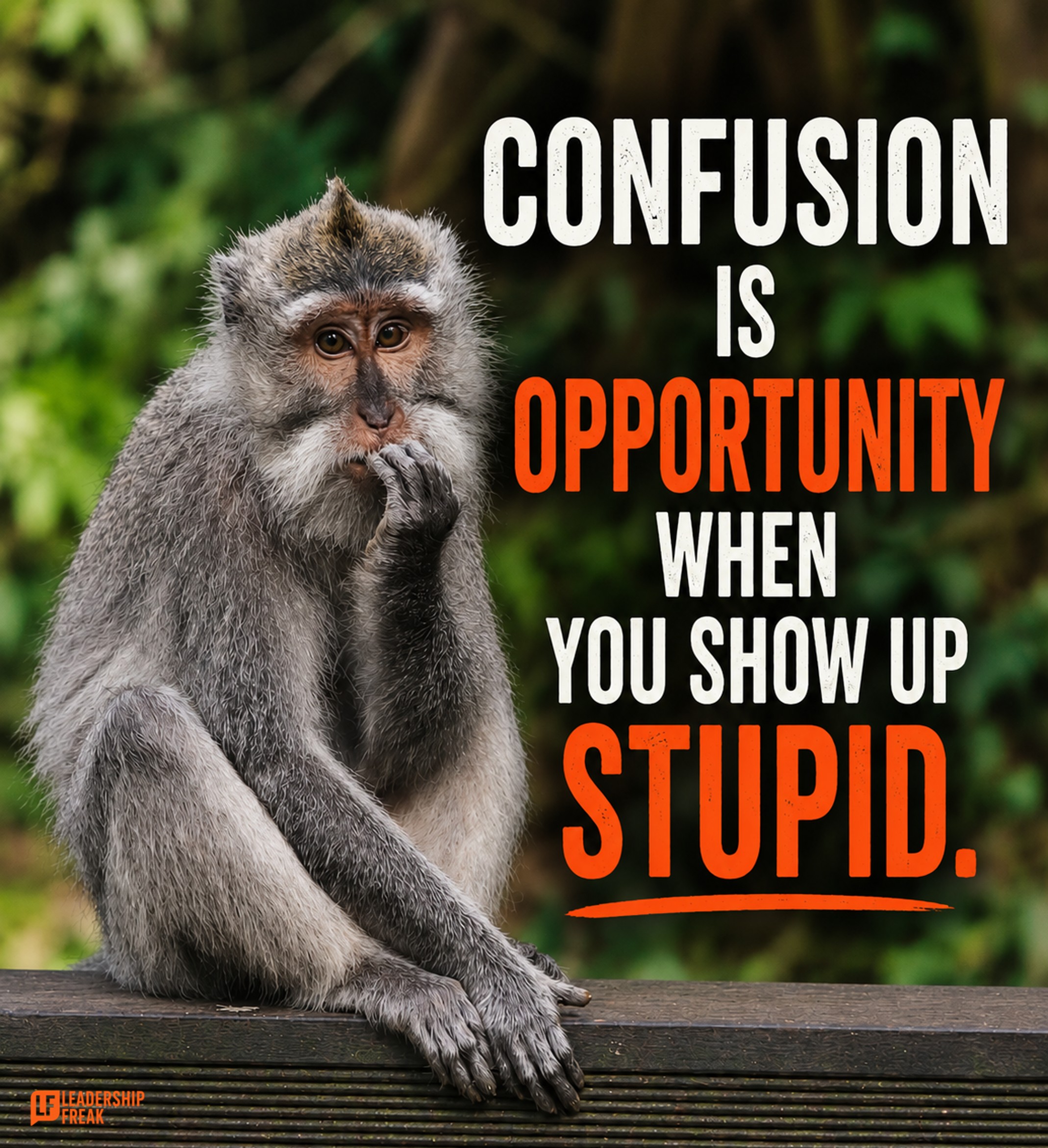
Confusion is useful. It means you haven't locked into one story. A trader who says "I don't know how the iPhone cycle will play out" is better positioned than one who insists demand will hold. The first person watches the data. The second misses the data.
Show up stupid, in the leaderly sense. Walk into each trade knowing that the company's own management often gets the outlook wrong. When Apple's CFO walks back a forecast on the next call, the humble trader already had a plan for that. The know-it-all trader is still scrambling.
The danger for know-it-all investors is the same as for know-it-all leaders. You stop listening. You ignore the early warning signals–a distributor destocking, a rival's pricing move, a regulatory step that adds cost. Every signal is noise until it isn't.
Admitting you don't know forces you to build a flexible position. You size smaller. You set wider stops. You check the thesis against new numbers instead of defending the old one. That discipline is what separates traders who survive the drawdowns from those who blow up.
The best way to use confusion is to treat it as a window, not a wall. When a stock like AAPL gets hammered on a headline and you can't tell if it's noise or signal, sit on your hands. Wait for the next piece of data–a competitor's earnings, a supply report, a key level break. The confusion buys you time. Use it.
A leader who pretends to know everything eventually loses the team. A trader who pretends to know everything eventually loses the capital. Same principle. Show up curious, not certain. The market rewards the second look, not the blind conviction.