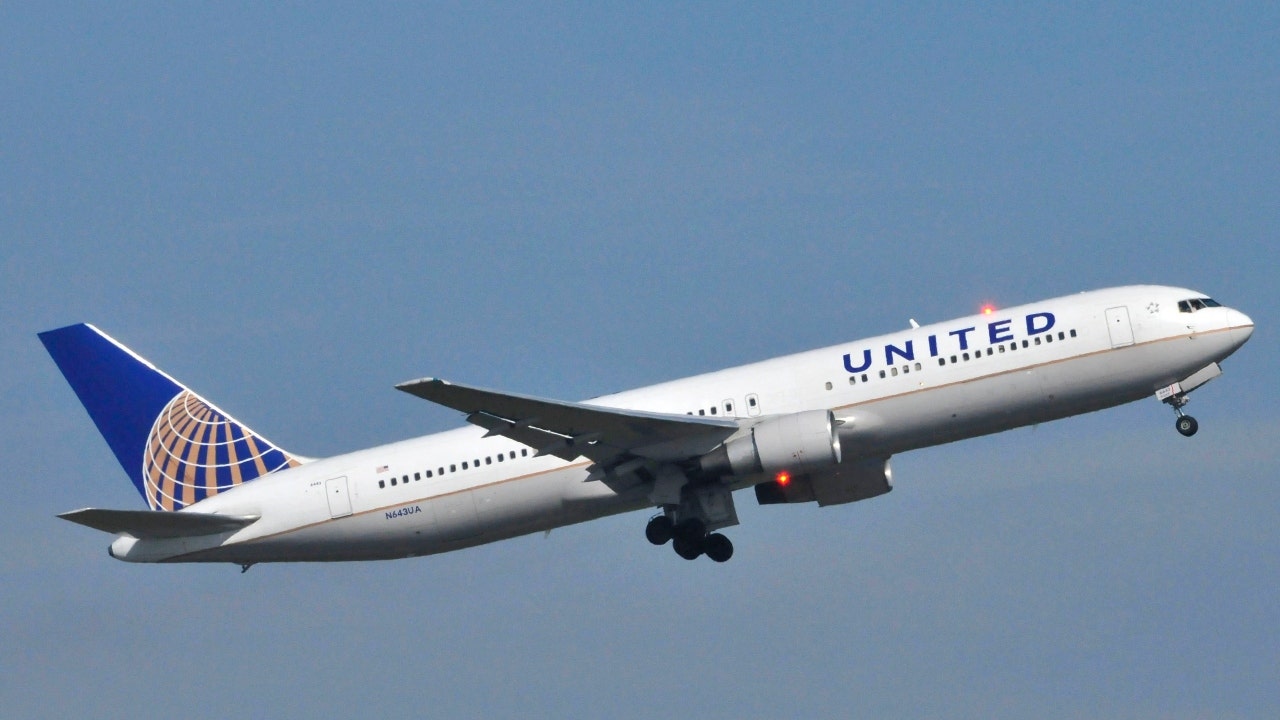
United Airlines Holdings Inc. (UAL) now faces the operational cost of a single passenger's Bluetooth device. Flight 236, a Boeing 767 carrying 190 passengers and 12 crew, departed Newark Liberty International Airport for Palma de Mallorca, Spain on Saturday evening. About 90 minutes into the trip, the aircraft reversed course over the Atlantic and returned to Newark. Reports from AirLive.net indicate the cause was a Bluetooth device whose discoverable name included the word "bomb".
United confirmed the diversion in a statement. "United flight 236 from Newark to Palma De Mallorca, Spain safely returned to Newark to address a potential security concern," a spokesperson told FOX Business. "The flight continued to Palma De Mallorca with a new crew."
After landing, law enforcement and security personnel met the plane. Passengers were removed with only limited personal items, then rescreened before boarding a replacement flight. The original aircraft and its checked luggage underwent additional security screening. United has not publicly identified the passenger or said whether charges are being considered.
The incident is a low-probability, high-disruption event. For UAL (Alpha Score 71/100, label Moderate), the direct cost of a mid-Atlantic diversion includes fuel, crew time, passenger compensation, and airport security fees. The bigger question for investors is whether this is a one-off or a signal that airlines now face a new class of operational vulnerability: digital provocations that force a return decision.
United Flight 236: Cost of a Digital Prank
Escalation Sequence
Flight attendants initially asked passengers to disable Bluetooth connections. Passengers reported that the crew repeatedly warned the request came from United's operations center and that the flight could not continue unless the issue was resolved. The warnings grew more urgent as crew members attempted to identify the source of the device. Air traffic control communications reviewed by AirLive.net confirmed that the return decision was linked to the device's discoverable name.
Security Response
After landing, law enforcement and security personnel met the aircraft. Passengers exited with only limited personal items. The aircraft and checked luggage underwent security screening, while passengers were rescreened and transported around the airport. The operation added hours of delay and created secondary operational burden: re-crewing and rebookings that cascade through United's network.
Key insight: A Bluetooth name is not a weapon. The response cost is real because the potential cost of under-reaction could be catastrophic. Every airline must calibrate how seriously to treat a digital prank when the consequence of ignoring a real threat is unthinkable.
Sector Read-Through: All Airlines Face the Same Threat
UAL's Direct Exposure
United operates a large international network. This incident hit a long-haul route where diversion costs are highest. The same carrier recently raised ticket prices by up to 20% as fuel costs surged. Any additional operational friction – even from a single flight – pressures margins already squeezed by input costs and labor constraints.
Investor attention should focus on whether United or regulators introduce new protocols around personal electronics naming. A requirement to disable discoverable Bluetooth names on aircraft would be minor for passengers. It could, however, add to pre-flight announcements and crew training, further slowing an already strained boarding process.
Broader Industry Implications
All airlines face similar exposure. A deliberate or accidental Bluetooth name containing threatening language can force a diversion. The industry lacks a rapid method to identify the device without landing. Unlike a physical security threat, there is no on-board screening for a digital name.
- Delta Air Lines, American Airlines, and Southwest Airlines have not commented on the incident. All operate international or domestic routes where a mid-air turn could generate comparable costs.
- The Federal Aviation Administration and other regulators may issue guidance on Bluetooth naming or device discoverability in flight, adding a compliance layer.
- Airline insurers may adjust premium models to account for this type of disruptive event, especially if incidents recur.
The read-through is not a one-stock move. The market will likely treat it as an isolated event for now. Repeated incidents – or a regulatory response – would create a broad sector headwind.
The Boeing Angle
The aircraft involved is a Boeing 767. The incident has no mechanical or design link. Boeing (BA) (Alpha Score 31/100, label Weak) is already under intense scrutiny for safety and quality issues. Any aviation incident that amplifies negative headlines about flying – even a non-mechanical event – risks further damaging Boeing's brand and government relationships. This risk is heightened if United or other airlines blame the 767's configuration for complicating the security response. No such claim has been made so far.
Valuation and Positioning: What Confirms or Weakens the Narrative
What Confirms a Structural Risk
- Multiple similar incidents at any airline within a quarter. That would force operational changes and likely raise insurance costs.
- Regulatory action, such as an FAA mandate to disable Bluetooth discoverability on all flights, adding to airline compliance costs.
- UAL stock underperformance relative to the S&P 500 or the Dow Jones U.S. Airlines Index over the following month. That signals investors are pricing in higher operational risk or reputational damage.
Bottom line for traders: Watch for follow-on incidents or FAA bulletins. Without them, the market will discount the event.
What Weakens the Thesis
- No repeat incidents and no regulatory follow-up. The market will treat the event as a statistical outlier. UAL's stock price should recover any short-term dip.
- Quick adoption of voluntary protocols by United that resolve the concern without significant cost. A simple policy change – reminding passengers to set devices to non-discoverable mode – would be seen as a low-cost fix.
- Passenger identification and prosecution, which would act as a deterrent and reduce the probability of copycat events.
For now, the incident is a reminder that airline operations are vulnerable to human behavior in ways that cannot be engineered away. A Bluetooth device with a provocative name is a new vector. The underlying risk – a single passenger causing a $100,000+ diversion – is as old as aviation.
Investors should watch UAL's next quarterly filing for any increase in operational irregularity costs or security-related expenses. Flat numbers will let the market move on. A tick up would turn this incident into a leading indicator.
AlphaScala's proprietary rating system gives UAL a score of 71 out of 100 (Moderate), reflecting moderate fundamental strength. BA scores 31 out of 100 (Weak), highlighting manufacturer-side exposure to airline safety incidents, even those unrelated to mechanical factors.
For broader context on airline and industrial stocks, see AlphaScala's stock market analysis. For the latest on UAL specifically, visit the UAL stock page.