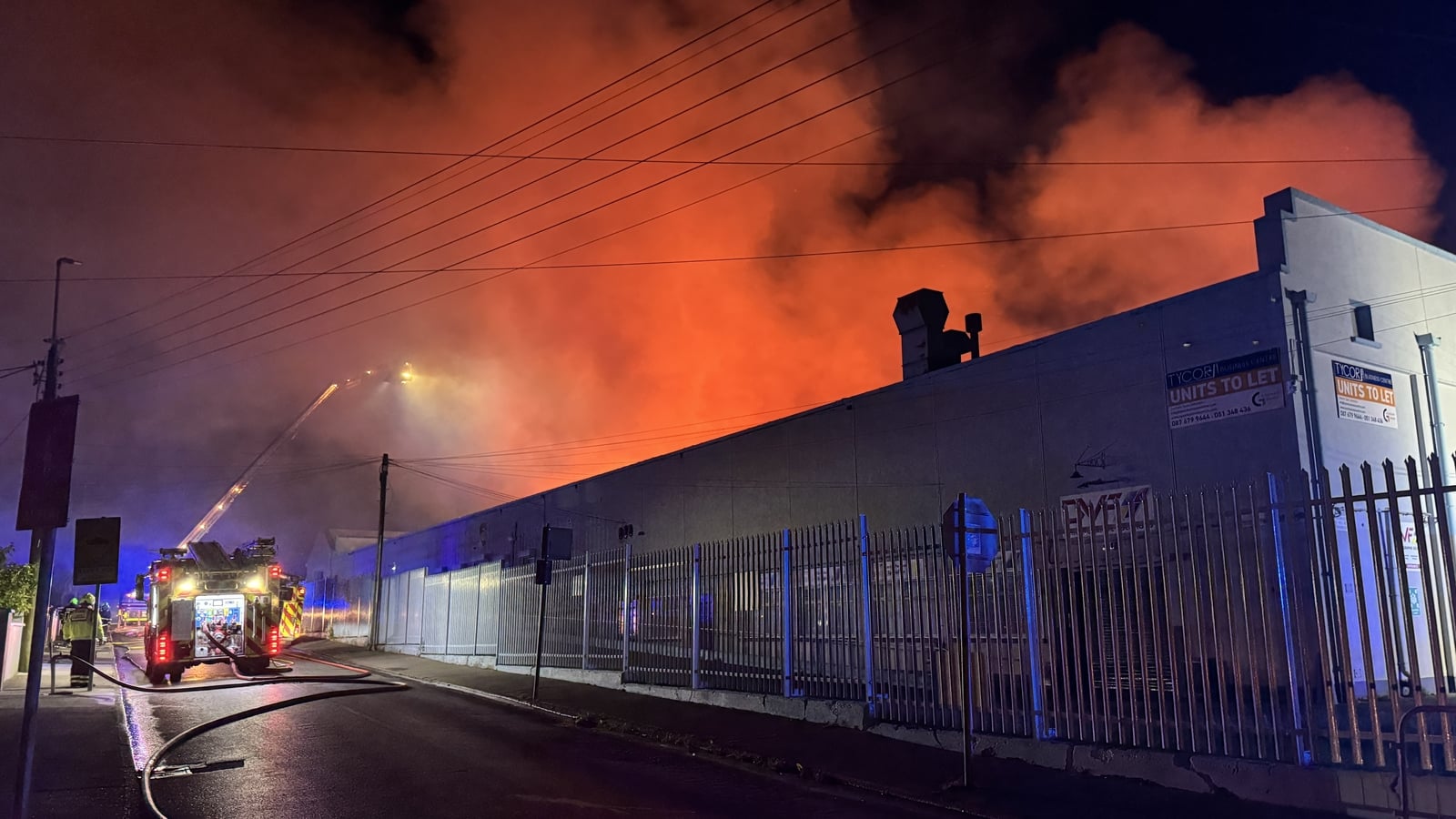
Up to 40 premises destroyed, hundreds affected. The speed of a tailored support scheme and the extent of insurance gaps will determine how many businesses survive.
The fire that destroyed up to 40 units at the Tycor Business Centre in Waterford city last weekend has left hundreds without workplaces. The financial recovery now depends on two variables: the speed of a government support scheme and the size of insurance shortfalls among tenants. The cause remains under investigation, with CCTV footage handed to gardaí. The immediate risk for the local economy is not the origin of the blaze. It is the mismatch between what businesses lost and what their policies will actually cover.
The fire broke out at the site of the former Jute Factory, a multi-unit business park owned mainly by Causeway Group, a Waterford-based property management company. The blaze ripped through the centre on Saturday night. Electricity was cut off at 7.30pm. The CCTV system was still recording at that point. Causeway Group CEO Sean Johnston confirmed that the fire started in one area, moved up the middle of the complex, and then doubled back, destroying units that initially appeared salvageable. The fire service, under Chief Fire Officer Niall Curtin, fought the blaze in what Johnston described as "very, very difficult circumstances." No injuries were reported. Johnston stressed: "Nobody got hurt, no legs, ankles broken."
The physical toll: up to 40 units are gone, occupied by a mix of private businesses, social enterprises, and community groups. The number of people directly affected runs into the hundreds. For a regional city like Waterford, that concentration of lost economic activity is material, even if no single listed company is involved.
Johnston said the company has "full security in the centre, it's full CCTV," and that footage from the entire week leading up to the fire is now with gardaí.
"All we know is we have full security in the centre, it's full CCTV. And the CCTV footage was still recording up until the electricity was cut off at 7.30pm on Saturday night," Mr Johnston said.
"Anyone that was in that premises or anyone who was in that business park in the previous week are all on CCTV footage, of which the guards have, and they are going through it at the moment," he added. The area of origin is known, and the fire's path is mapped. What is not yet public is whether the cause was accidental, electrical, or something else. That determination will shape any liability claims and, potentially, insurance recoveries for the property owner and tenants.
The tenant mix at Tycor makes this more than a simple commercial property loss. The centre housed business owners, service providers, social enterprises, and community groups, each with different balance-sheet capacity to absorb a sudden wipeout of premises, stock, and equipment.
At a meeting with ministers and council officials at the Tower Hotel, the range of distress was evident. Some operators had full insurance; others had none. Some were underinsured, meaning their policies will cover only a fraction of the rebuild or restocking cost. Social enterprises and community groups, often reliant on grant funding and volunteer labour, face a particularly steep climb: they may lack the cash reserves to bridge the gap between loss and any eventual support payment.
Minister for Enterprise Peter Burke put the problem plainly after the meeting:
"Some people have insurance, some have not. Some are under insured. And we need to know exactly what each requires."
That triage is the core of the financial risk. For businesses with no cover, the loss is total unless government steps in. For the underinsured, the shortfall between policy limits and true replacement cost will determine whether they can reopen. The survey now being circulated by the Local Enterprise Office is designed to quantify those gaps. Until the data comes back, the aggregate exposure is unknown.
A memo has gone to Cabinet for a cross-departmental support package, branded the Tycor Back to Business Support Scheme. The design is deliberately flexible. That flexibility also introduces execution risk: the scheme's final shape depends on survey responses that are still being collected.
Minister of State for Local Government and Planning John Cummins said the Government wants "feedback to come back in from the businesses" and that the local enterprise office survey will "feed into the shape" of the scheme. Minister Burke added that the aim is to "respond quickly" once the local authority collates the results. The speed of that collation and the subsequent political decision-making will determine how long affected businesses have to wait for cash. In the meantime, they are burning through whatever reserves they have.
A separate operational risk sits with the site itself. The local authority confirmed that asbestos-containing materials were identified in the area and have been removed from surrounding roads and footpaths. Clean-up of external areas of private houses near the old Jute Factory began yesterday. Air quality monitoring continues, and "no elevated levels of asbestos fibre concentrations have been reported." That is the good news. The complication: specialist contractors are still on site. Any discovery of further hazardous material inside the damaged structures could slow the re-entry of business owners to salvage what remains.
The fastest way to cap the economic damage is a rapid, well-calibrated support payment that bridges the gap between insurance payouts and actual needs. Several factors would help.
If the survey data is collected and analysed within days, and if the Government moves a supplementary estimate quickly, cash could flow before businesses exhaust their working capital. The local authority's role as the collating body gives it a direct line to the affected tenants, which should speed up the process relative to a fully centralised scheme. Any signal from insurers that they will expedite claims for covered losses would also reduce the liquidity squeeze.
A swift conclusion to the garda investigation, particularly if it rules out foul play, would remove a layer of uncertainty. If the cause is traced to a specific failure, such as an electrical fault in a common area, the property owner's insurance may respond, potentially covering common-area damage and reducing the burden on individual tenants. If the cause points to a tenant's operations, that tenant's liability cover becomes the focus. Either way, clarity unlocks the claims process.
Three factors could deepen the financial hit and prolong the disruption.
While air monitoring has so far shown no elevated asbestos fibres, the presence of asbestos-containing materials on a fire-damaged site always carries a tail risk. If further testing inside the building shells reveals contamination that requires a longer, more expensive remediation, the timeline for any business to retrieve assets or consider rebuilding stretches. That delay would increase the holding costs for property owner Causeway Group and could push some tenants past the point of viability.
A support scheme that takes weeks to design and approve, rather than days, would force uninsured and underinsured businesses to make irreversible decisions: liquidate remaining stock, lay off staff, or simply walk away. The political will appears strong. The mechanics of cross-departmental coordination and EU state-aid rules can introduce friction. Any public disagreement between departments over funding sources would be a warning sign.
The Tycor centre housed a cluster of small enterprises that likely bought from and sold to each other and to the wider Waterford economy. A prolonged outage at 40 units will ripple through suppliers, landlords of nearby properties, and service providers. If even a fraction of those businesses fail, the local tax base and employment picture weaken, making the government's eventual bill larger than the direct support payments alone.
No publicly traded company is directly exposed to the Tycor fire in a way that moves a share price. The event does, however, reinforce a pattern that matters for anyone tracking small-business insurance markets or regional economic resilience. Underinsurance among SMEs is a known structural problem. Fires like this one turn that latent risk into a realised loss. For insurers, the event is a reminder that even a single-site blaze can produce a cluster of claims with varying coverage levels, complicating loss estimates. For policymakers, it is a live test of how quickly a targeted support scheme can be stood up when the affected parties range from fully insured to completely uncovered.
The immediate next marker is the completion of the Local Enterprise Office survey and the subsequent Cabinet discussion on the scheme's funding. Until then, the affected businesses are operating on hope and whatever cash they have left. For broader context on how localised economic shocks can filter into market sentiment, see our stock market analysis.
Drafted by the AlphaScala research model and grounded in primary market data – live prices, fundamentals, SEC filings, hedge-fund holdings, and insider activity. Each story is checked against AlphaScala publishing rules before release. Educational coverage, not personalized advice.