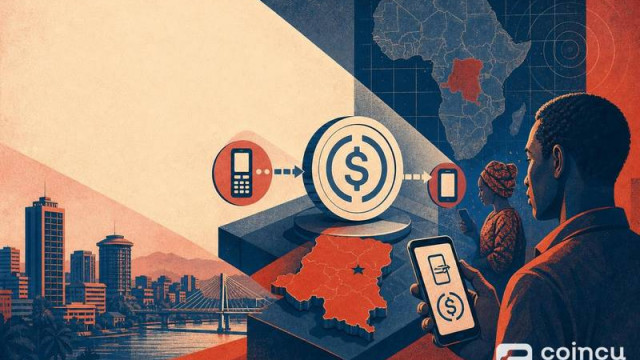
Visa, M-Pesa and Onafriq have started testing stablecoin-based cross-border transfers in the Democratic Republic of Congo. The pilot pairs blockchain settlement with mobile money's existing reach. It is not a commercial launch. Visa said the test targets the friction points that make traditional remittance corridors slow and expensive in a market where correspondent banking is thin.
The mechanics are designed to be invisible to users. Senders and recipients interact only with M-Pesa's mobile money interface. The stablecoin conversion and settlement happen at the infrastructure layer, handled by Onafriq's bridging platform. On the user side, nothing changes.
The DRC is a logical test market. It has a large unbanked population, rising mobile money adoption, and high demand for cross-border transfers. Traditional corridors route through multiple intermediary banks. Each adds a fee and processing time. A stablecoin settlement layer could collapse that chain into a single digital dollar bridge.
Pilot status means the partners have not solved every operational question. Regulatory frameworks across African jurisdictions remain uneven. The DRC's own stance on digital assets is still being shaped, the companies said. Liquidity management is another hurdle. Maintaining stablecoin reserves on both sides of a corridor requires market makers that may not exist at scale in the DRC yet.
For the stablecoin market, the pilot is a real-world test of utility beyond trading and DeFi. If it works, it could expand stablecoin use in remittance corridors across Africa. If it stalls due to regulation or liquidity, it reinforces the view that stablecoin infrastructure still needs institutional-grade on-ramps and clearer rules. Crypto market analysis tracks similar efforts.
Settlement and custody also raise questions. Who holds the underlying reserves? How are disputes resolved? What consumer protections apply if a transaction fails? Visa said those details are being worked out during the pilot phase.
The GSMA's 2026 State of the Industry Report on Mobile Money noted sub-Saharan Africa remains the fastest-growing region for mobile money accounts. That backdrop is why the DRC was selected as a launch market. The pilot's outcomes will determine whether Visa and Onafriq extend the model to other corridors.