Stocks● Neutral
Vietnam Breaks Ground on $910M Laos Expressway
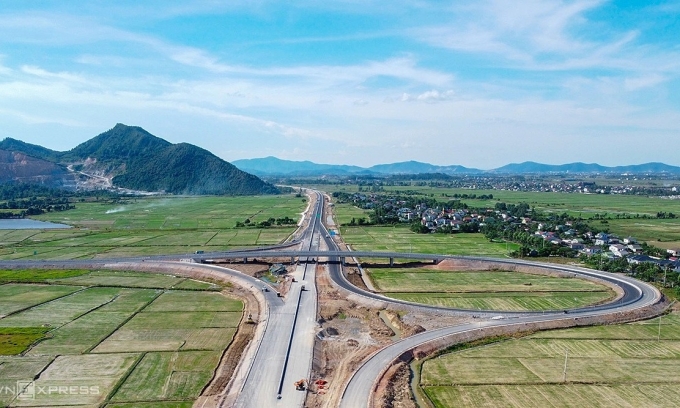
Vietnam starts construction on the $910M Vinh-Thanh Thuy expressway linking Laos to seaports. Deo Cao Group leads the consortium. Completion by 2029 is the key revenue catalyst for the contractor and a milestone for cross-border trade.
Continue with
Vietnam has started construction on the Vinh-Thanh Thuy expressway, a $910 million segment of the planned Hanoi-Vientiane corridor that will connect landlocked Laos to Vietnamese seaports. The project, approved by the National Assembly in December 2025 under a public investment resolution, is scheduled for completion by 2029. A consortium led by Deo Cao Group, one of the country's largest infrastructure builders, holds the main construction contract.
The expressway begins at the Hung Tay interchange in Nghe An Province, linking to the Dien Chau-Bai Vot section of the eastern North-South Expressway, and ends at the Thanh Thuy-Nam On border gate on the Laos frontier. The first phase will build four lanes on a six-lane design. Design speeds range from 100 to 120 kph on main sections and 60 to 80 kph through difficult terrain. Major bridges and the most challenging terrain will be constructed to the six-lane standard from the start.
Construction Begins on Vietnam-Laos Corridor Link
For Laos, Southeast Asia's only landlocked country, the expressway promises a faster overland link to Vietnamese seaports. For Vietnam, it deepens trade, tourism and logistics ties with Laos and, beyond it, Thailand, as part of a broader east-west economic corridor. The Vietnamese leg of the corridor runs about 370 kilometers, roughly 310 of which overlaps the existing North-South Expressway. Once finished, the expressway is expected to sharply cut travel time between the Thanh Thuy border gate and Nghe An's cities and seaports. It also opens easier access to tourism sites such as Cua Lo beach, Pu Mat National Park and the Kim Lien relic site preserving President Ho Chi Minh's birthplace.
Project Specifications and Scale
Builders will construct 51 bridges, 58 underpasses for local traffic, six interchanges, and a 485-meter tunnel bored through the Dai Hue mountain range with two separate tubes for opposing traffic. The project requires about 582 hectares of land, including nearly 98.5 hectares of headwater protection forest, 141 hectares of production forest and more than 221 hectares of rice fields.
| Component | Quantity |
|---|---|
| Total length | 370 km (310 km overlaps North-South Expressway) |
| Bridges | 51 |
| Underpasses | 58 |
| Interchanges | 6 |
| Tunnel | 485 m (two tubes) |
| Land required | 582 ha (including 98.5 ha headwater forest, 141 ha production forest, 221 ha rice fields) |
Deo Cao Group Faces Execution Test on 370km Expressway
Deo Cao Group leads the consortium executing the construction. The company has a track record in large-scale Vietnamese infrastructure, including tunnels and expressways. For a stock with direct project exposure, this contract provides multi-year revenue visibility through 2029. The public investment funding structure reduces payment risk relative to public-private partnerships where revenue depends on traffic guarantees.