Unitree Robotics Soars 460% in Shanghai Debut Amid AI Hype
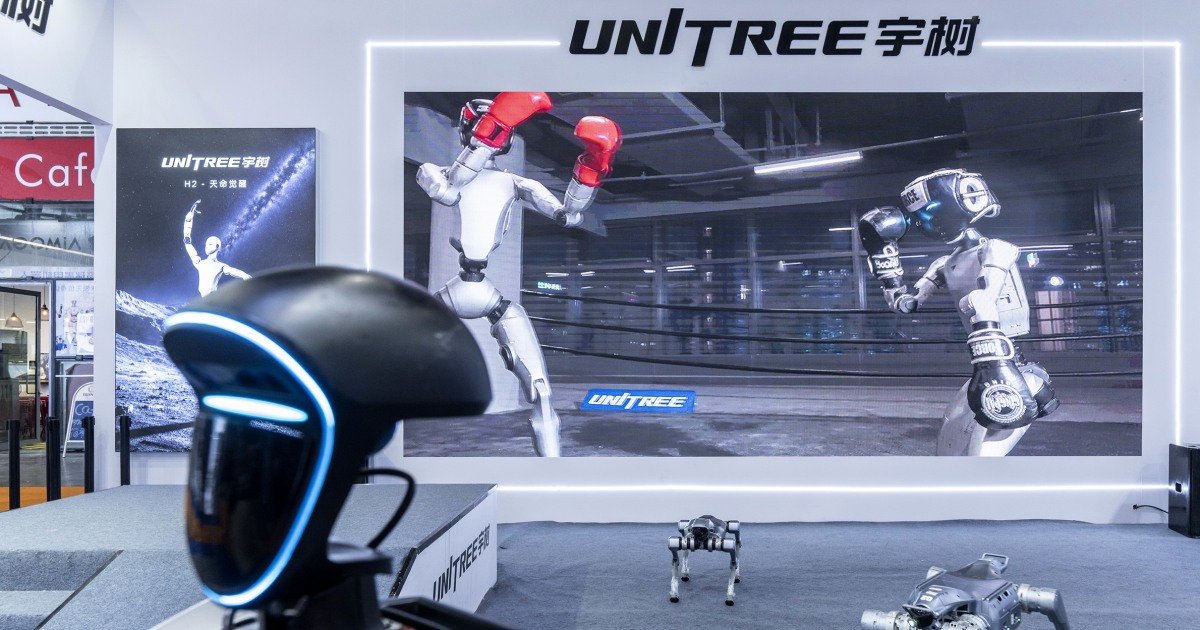
Unitree closed at 845 yuan, up 460% from its IPO price, in a blockbuster debut that underscores China's appetite for AI and robotics stocks. The company is now valued at $50 billion.
Unitree Robotics, the Chinese maker of humanoid robots that can run, dance, and do backflips, closed its first day of trading on the Shanghai STAR Market at 845 yuan ($125.40) per share – a 460% gain from the IPO price of 150.8 yuan. The stock hit an intraday high of 1,100 yuan, up 629%, before settling. The rally valued the company at roughly $50 billion, according to Reuters calculations.
CEO Wang Xingxing, who founded Unitree in 2016, owns about a fifth of the company. His paper wealth after the debut exceeded $12 billion.
The listing came as hundreds of Chinese companies gathered at the World Robot Conference in Beijing, a showcase for Beijing's push to lead the global robotics industry. China has placed advanced robotics at the center of its latest five-year plan, vowing to “target the frontiers of science and technology.” Unitree and AgiBot together accounted for more than 70% of the roughly 13,000 humanoid robots shipped globally last year, according to Omdia, a Singapore-based market research firm.
“Chinese retail buyers tend to be more driven by hype,” said Lian Jye Su, a chief analyst at Omdia. “But the most important thing about the IPO is the fact that this is going to be the bellwether for the humanoid robotics industry.”
Unitree’s surge follows a similar blockbuster by CXMT, a Chinese memory chipmaker that went public on the same exchange last month. CXMT’s shares jumped 466% on the first day, and it surpassed Tencent to become the most valuable company listed on a mainland Chinese exchange. Investors are betting on China’s entire AI supply chain – from memory chips to robotics.
Unitree is profitable, which sets it apart from most humanoid robotics startups. Still, its products are sold mainly to universities and research institutions, not for commercial use. The company is also cut off from the U.S. market. In June, the U.S. Defense Department added Unitree to a list of Chinese military companies, describing it as a “contributor to the Chinese defense industrial base.” The designation does not carry sanctions, but it prohibits direct U.S. military contracting. Existing models can still be sold in the U.S.
“The industry is still in a very nascent stage,” Lian said. “The first thing I’m seeking an answer for is sort of how real is the demand?”
Several other Chinese robotics companies are preparing to list on the STAR Market, making Unitree’s performance a closely watched signal for the sector.
Drafted by a large language model from the source reporting linked above, then screened by automated publishing checks. It is not read by a journalist before publication. Some articles cite our Alpha Score. Verify prices and figures against the original source. Educational coverage, not personalized advice.