Beijing's Tech Summons Signal Caution, Not 2021-Style Freeze
Beijing summoned a dozen tech giants in 2025. Analysts say the economy's weakness and AI rivalry prevent a repeat of the $1 trillion wipeout that hit Chinese tech stocks in 2021.
Beijing has stepped up corporate regulatory enforcement this year. Analysts say the actions are unlikely to herald a repeat of the 2021 crackdown that wiped out more than $1 trillion from Chinese tech stocks.
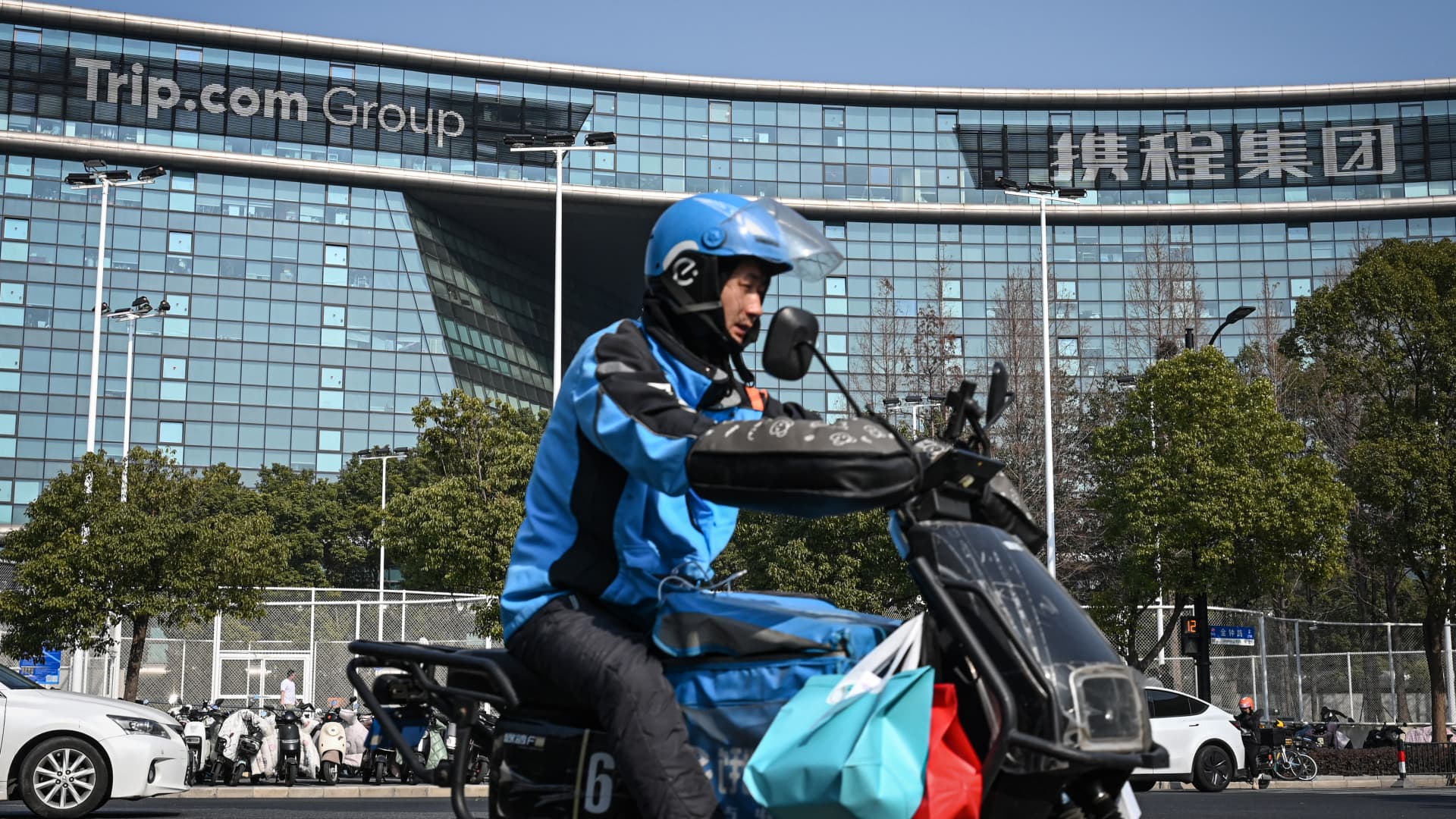
Since January, officials have opened a formal antitrust probe into Trip.com, the country's largest online travel agency. They have also summoned a dozen tech giants including Alibaba, Tencent, ByteDance's Douyin, Baidu, JD.com and Meituan over aggressive price competition and promotional claims ahead of the June "618" shopping festival. Earlier this month, they sent a stern warning to Walmart China over repeated food-safety failures at its Sam's Club wholesale chain.
"The concentration of actions and number of companies involved inevitably brings back memories of the regulatory crackdown on internet platform companies" from more than five years ago, said Neo Wang, chief China strategist at Evercore.
The 2021 campaign was sweeping. Beijing blocked what would have been the world's biggest stock-market debut by Alibaba's fintech Ant Group, forced ride-hailing giant Didi Global to delist from the U.S., and intensified oversight across sectors from after-school tutoring to property developers. "The state was reasserting political control over data, capital expansion, tutoring ideology, overseas listings, platform power, and over-financialization," said Paul Triolo, partner and technology policy lead for China at DGA-Albright Stonebridge Group.
The game has changed, Triolo said. Policymakers are worried about an economy weighed down by lackluster domestic demand and a sluggish job market. They need private tech companies to boost investment in computing infrastructure underpinning the country's AI ambitions. Beijing is attempting to act. Its aim is not to "trigger another broad investor panic," he said.
Han Shen Lin, China country director at The Asia Group, put it bluntly. "Beijing needs private-sector confidence, jobs and technology investment far more than it did in 2021," he said.
Beijing pivoted to support the private sector after years of regulatory clampdown. In February 2025, Chinese President Xi Jinping held a rare closed-door symposium with top entrepreneurs, including Alibaba's Jack Ma, telling them to "showcase their talents" in a new era for the country's private economy.
China has now made the so-called anti-involution campaign a policy priority. The campaign is meant to tackle ruinous price wars and overcapacity across industries that fuel deflation.
Why the Trip.com Probe and the Anti-Involution Push Differ
In January, Beijing launched an antitrust probe into Trip.com for alleged "abuse of market dominance." The company forced merchants into exclusive agreements before hiking commission fees. The move sent Trip.com's Hong Kong shares nearly 20% lower in one day. Citibank analysts estimated the probe may incur a fine of up to 4.9 billion yuan ($723 million).
In May, Chinese market regulators issued their most forceful food-safety penalties. They hit several e-commerce and food-delivery platforms with a combined 3.6 billion yuan in fines for hosting unverified vendors competing on price.
In the lead-up to the "618" festival, Beijing's municipal regulator summoned online retailers including Xiaohongshu, which has reportedly prepared to confidentially file for an initial public offering in Hong Kong. The regulator cited misleading subsidy advertisements and a hidden fee mechanism that shifts costs onto merchants.
That same week, the State Administration for Market Regulation summoned Walmart China's senior management for a formal accountability meeting over repeated food-safety failures at Sam's Club. Sam's Club has set up a rectification task force to overhaul supply-chain inspections and replaced its chairman with Liu Peng, a former executive at Alibaba.
Still, the moves amount to "calibrated signaling rather than a sustained crackdown," said Ciel Qi, research analyst at Rhodium Group.
Why AI Infrastructure Caps the Risk
Another reason for Beijing's restraint is the intensifying artificial-intelligence development rivalry with the U.S. Washington continues to pressure Chinese platforms' AI infrastructure buildouts. The threat of further restrictions looms. Beijing is eager to avoid undermining the competitiveness of its leading companies, Triolo said.
"Regulators are considerably more constrained than in 2021," he said. "They need these companies to invest in AI infrastructure, cloud, logistics and consumer services."
Alibaba and Tencent, both summoned in the June price-competition talks, carry Alpha Scores of 44 and 48 respectively out of 100, reflecting the mixed signals from Beijing's calibrated approach. The score suggests a market still processing the gap between headline risk and underlying regulatory intent.
Drafted by a large language model from the source reporting linked above, then screened by automated publishing checks. It is not read by a journalist before publication. Some articles cite our Alpha Score. Verify prices and figures against the original source. Educational coverage, not personalized advice.