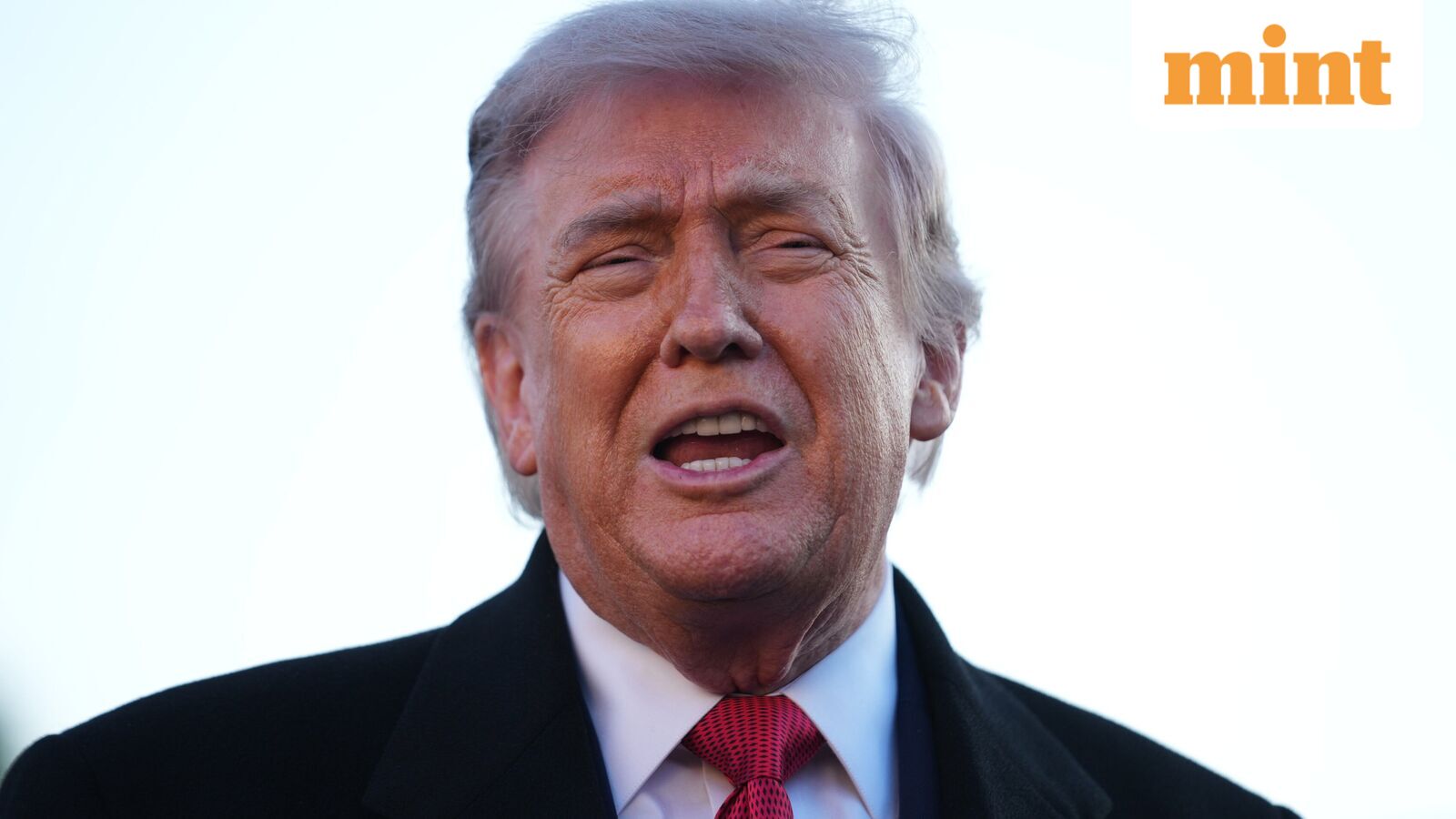
Donald Trump's latest public remark is not a policy announcement, a tariff threat, or a cabinet pick. It is a single sentence about time: "I try to learn from the past, but I plan for the future by focusing exclusively on the present. That's where the fun is." For a market participant, the quote matters because it describes the operating rhythm of a president who, in his second term, has already shown he will move faster than institutional Washington expects. The statement is a catalyst not because it moves an earnings estimate, but because it clarifies the decision-making tempo that will drive fiscal, trade, and regulatory action over the next four years. That tempo will land inside specific sectors. One of them is consumer cyclical, and one name inside that sector with a direct, if indirect, link to the Trump brand is Acushnet Holdings Corp. ($GOLF).
The Quote as a Decision-Making Framework
The words are simple, but the mechanism they describe is specific. Trump is not advocating for impulsiveness. He is describing a sequence: extract the lesson from a past outcome, then immediately redirect attention to the action that can be taken now to shape a future result. In a business context, this is how a developer who filed for six corporate bankruptcies in the 1990s and 2000s still ended up with a Forbes-estimated $6.2 billion net worth, much of it still in real estate. Each failure produced a data point. The data point informed the next deal structure. The deal structure was executed in the present. The future took care of itself.
That same sequence is already visible in the early weeks of the 47th presidency. Executive orders are being signed at a pace that treats the first 100 days not as a planning window but as the main event. The lesson from the first term–that personnel and legal challenges can slow even a determined executive–has been absorbed. The present action is a flood of directives designed to front-load the agenda before opposition can organize. The future plan is a remade regulatory and trade landscape by mid-2025.
For a trader, the framework matters because it changes the half-life of a policy rumor. In a normal administration, a tariff trial balloon floated on a Monday might take weeks to become a formal proposal. In this one, the same balloon can become an executive order by Friday. The market does not yet price that compression consistently.
Why Consumer Cyclical Absorbs the First Shock
Consumer cyclical stocks sit at the intersection of disposable income, import costs, and sentiment. When a president signals that he will act quickly on trade, tax, and spending, the sector reprices faster than defensives or tech because its inputs are more directly exposed to policy shifts. A tariff on Chinese goods raises the landed cost of footwear, apparel, and sporting equipment. A tax cut puts more cash in consumers' pockets. A deregulatory push can lower operating costs for retailers and leisure operators. All three levers are in play.
The golf industry is a narrow but useful lens. It is discretionary, import-dependent for hard goods, and unusually sensitive to the brand of one person. Trump owns golf courses. He plays golf. He uses the game as a backdrop for diplomacy and dealmaking. When the president's personal brand overlaps with a consumer category, the category gets free media and, occasionally, policy attention. That does not guarantee a demand tailwind, but it does guarantee that the sector will not be ignored.
Acushnet Holdings: The Mixed Score Behind the Brand
Acushnet Holdings is the parent of Titleist and FootJoy. It is the largest pure-play golf equipment company by market share. The stock carries an AlphaScala Alpha Score of 42 out of 100, a reading labeled Mixed. The score aggregates technical, fundamental, and sentiment signals and lands in the middle of the range, which means the data is not giving a clear directional edge.
A mixed score in a consumer cyclical name with a Trump adjacency creates a specific decision problem. The bull case is that tax cuts and deregulation lift consumer spending, golf participation stays elevated post-pandemic, and the president's visible enthusiasm for the game keeps the category in the cultural conversation. The bear case is that tariffs raise the cost of clubs, balls, and shoes sourced from Asia, squeezing margins or forcing price increases that dampen unit volume. The mixed score reflects the fact that neither case has yet taken control of the data.
From a positioning standpoint, the stock does not screen as cheap or expensive on a simple multiple basis, but the Alpha Score's neutral reading suggests that the market is waiting for a catalyst to break the tie. Trump's present-focused action style is exactly the kind of force that can break it.
The Tariff Mechanism and Margin Risk
Golf equipment is a physical good with a complex supply chain. Clubheads are often forged in China or Vietnam. Shafts come from multiple countries. FootJoy shoes are manufactured in Asia. A broad-based tariff on Chinese imports, or a narrower one targeting sporting goods, would flow directly into Acushnet's cost of goods sold. The company can mitigate some of that through supplier diversification, but that takes time–time that a present-focused policy timeline does not grant.
If tariffs arrive in the second quarter of 2025, the impact hits the back half of the fiscal year. Gross margin compression of even 100 to 200 basis points would change the earnings trajectory enough to matter for a stock that is not priced for perfection. The Alpha Score's mixed label is partly a reflection of this uncertainty: the fundamental picture is okay today, but the forward path is unusually dependent on a single policy variable.
The Demand Side: Participation and the Trump Effect
The counterargument is that demand could surprise to the upside. Golf participation in the U.S. has been on a multi-year upswing, and the sport's demographic profile is broadening. A president who plays regularly and hosts events at his courses provides a level of exposure that no advertising budget can buy. If that exposure converts into higher rounds played and more equipment sold, the volume gain could offset some of the tariff-driven cost pressure.
This is not a forecast. It is a path. The Alpha Score of 42 does not say the path is closed; it says the data has not yet confirmed that the path is open. A trader looking at $GOLF right now is essentially pricing the probability that the demand tailwind arrives before the tariff headwind does. Trump's quote suggests he will not wait to act, which means the tariff headwind may arrive first.
What Would Confirm or Weaken the Setup
The decision point for $GOLF is not whether Trump likes golf. It is whether the policy sequence favors the cost side or the demand side first. A concrete tariff announcement on sporting goods or a broad China tariff that includes the relevant HTS codes would be a negative catalyst. Confirmation would come from the text of an executive order or a USTR notice. Until that happens, the risk is asymmetric: the announcement can come with little warning, while the demand benefits take quarters to show up in reported same-store sales or shipment data.
On the other side, a clear signal that tariffs on consumer goods are being delayed or narrowed would remove the primary near-term risk. That could shift the Alpha Score higher as the fundamental uncertainty recedes. The mixed reading would likely resolve to the upside if the margin risk is taken off the table while participation trends remain intact.
For now, the stock sits in the middle. The AlphaScala data says the market has not chosen a direction. Trump's operating framework says the catalyst that forces a choice is probably closer than a traditional policy calendar would suggest. That is the practical takeaway: the time to decide on $GOLF is compressing, and the mixed score is a warning that the data is not yet on your side either way.
The Broader Sector Read-Through
The same logic applies to other consumer cyclical names with import exposure. Retailers of sporting goods, apparel, and home furnishings all face the same tariff-versus-demand calculus. The difference with $GOLF is the direct brand link to the president, which adds a layer of sentiment volatility that a generic retailer does not have. That can create opportunity for a trader who is watching the news flow and understands that the present-focused decision style means the window between rumor and reality is short.
A mixed Alpha Score across the consumer cyclical space would not be unusual right now. The sector is caught between a strong consumer and a policy wildcard. The stocks that resolve their scores first will be the ones where the catalyst lands with the most force. $GOLF is on that list.
For a deeper look at how Alpha Scores are constructed and how to use them in a catalyst-driven market, the stock market analysis section provides the methodology. The $GOLF stock page updates the score and the underlying signals as new data arrives. If you need a broker that can handle fast execution when a policy headline breaks, the best stock brokers list compares platforms on speed, cost, and reliability.